






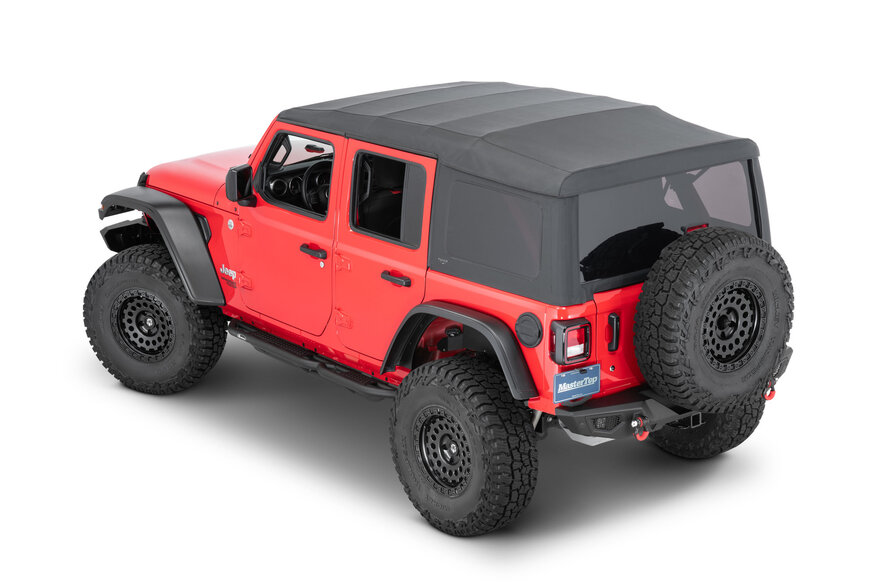
by Quadratec
Soft tops have come far over the years. You may remember the older CJ and YJ style tops that were about as cooperative as a toddler in a toy store when it was time to leave.
These days, tops are quite a bit easier to operate, and they come in many different options. They can include a bow assembly frame or be frameless, and some offer a flip-back front feature with the ability to fold all the way down. Fabrics can vary in thickness, feel and look as well. One style may include zippers while another uses channels to slide the windows into their proper location.
But what is best for you between ordering a factory, or factory-style soft top, versus purchasing an aftermarket frameless top?
Here's what you need to know.
If you purchase a Wrangler with a soft top you receive a high-quality, top-of-the-line Mopar branded soft top. Mopar is Jeep’s factory parts brand, and these soft tops have two fabric options: Sailcloth material or the thicker, softer Twill material. You will see the same fabric options also available with aftermarket soft tops. As you can see, whether it is factory or aftermarket material, these are basically identical.
Where the differences become apparent is with the overall look, hardware and functionality of the top. Frameless tops do not have any metal support framework—thus befitting their name. With the lack of a frame, there is less material and an associated reduction in price compared to a factory-style soft top.
Do you enjoy folding down your soft top all the way for that open-air feel? If so, it is quicker to go topless with one that utilizes a factory bow assembly than it is with a frameless soft top. This difference is due to the overall hardware design. A full hardware assembly is engineered specifically to allow you to fold your top all the way down. This was the case on many CJ, YJ, TJ, JK vehicles and is the case on current JL factory soft tops as well. This is due to tradition over the decades, from when the first Jeeps started receiving full fold-down soft tops.
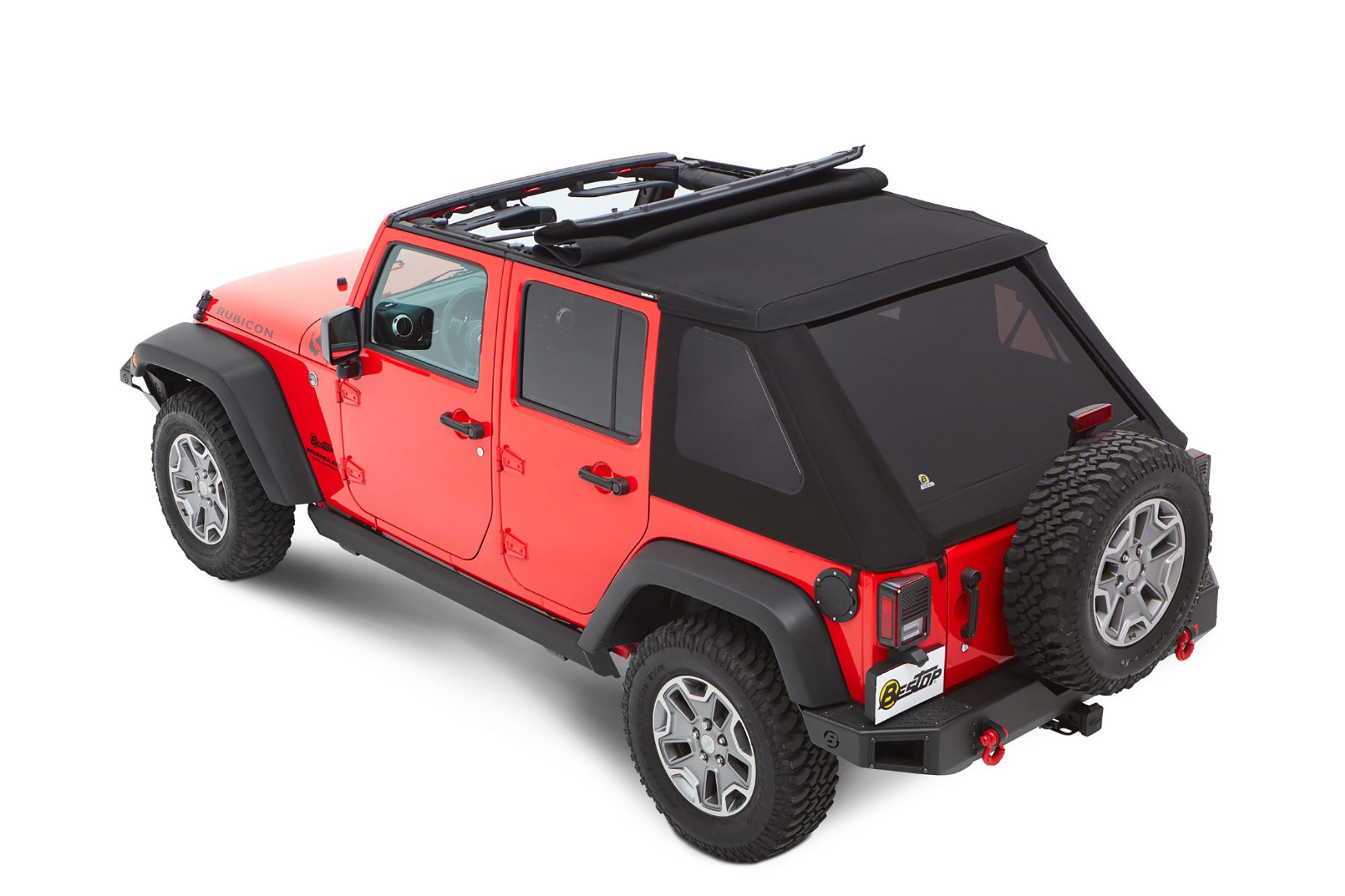
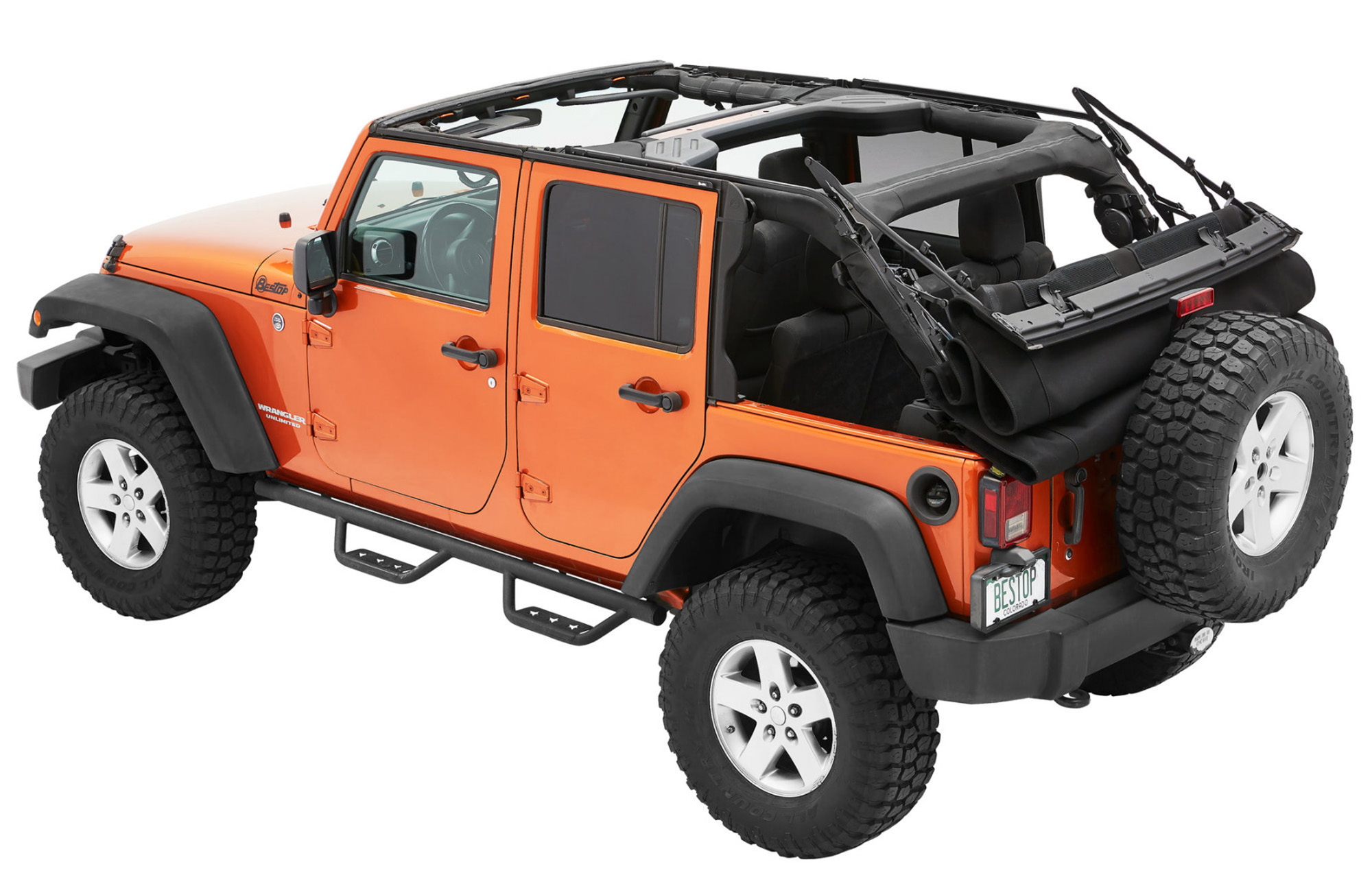
If you often drive with rear passengers in the Jeep, then you may want to consider a factory hardware or factory-style hardware soft top. Why? The bow assemblies with these tops have crossbars in all the right places to provide headroom for those in the rear seats. Frameless soft tops often have an angled back to them which can limit comfort for rear passengers. However, some frameless tops have caught on to this issue and have begun adding additional supports that mount separately from the top itself. These are usually made of fiberglass, plastic, or metal and do make up for this slight limitation.
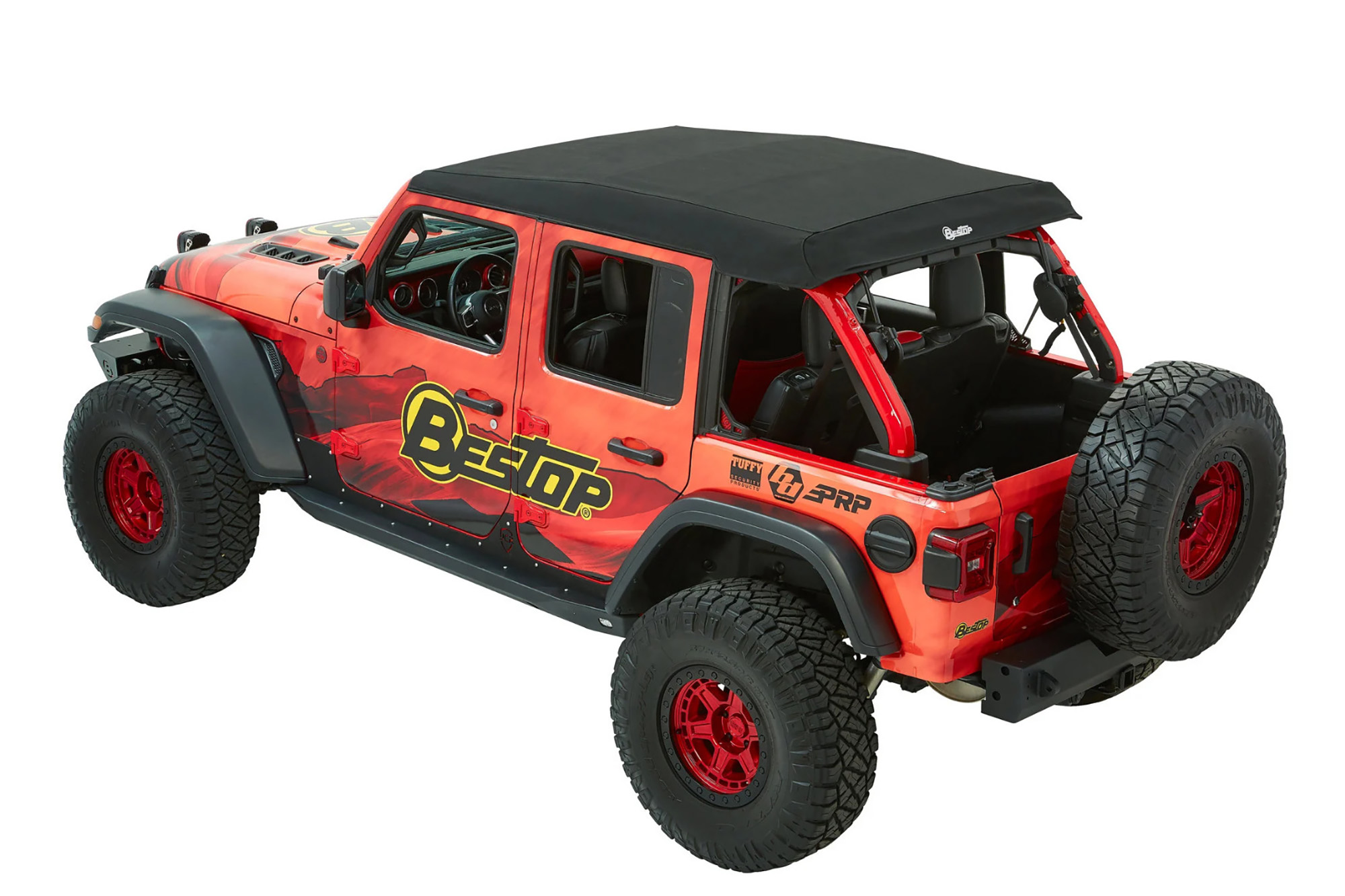
We have covered why it’s easier to fully fold down a factory top versus a frameless one. But, what if you prefer to leave the top in place while removing the rear windows for a bikini-style look? The frameless style tops win here. Most frameless tops have a bikini top built into their design. You just add the windows, and you have a full soft top. Many of these designs also feature zipperless windows so it is fairly simple to add in or subtract these windows. On a factory top, you can remove the rear windows but you still have the rear corner flaps. These flaps can be rather loud, especially at highway speeds. You can fold or tie them out of the way, but then your top isn’t as secure.
Just a few years ago these differences were fairly substantial because a frameless top could not fully fold down for a true topless feel. However, Bestop has brought to market frameless tops that now have the added benefit of folding down all the way. For example, Bestop's Trektop Ultra for the Wrangler JL can function as a bikini top with the windows removed, or has a Sunrider feature where the top can be folded halfway back, or even offers a fully reclinable option. This is truly a revolutionary feature in the soft top market.
Recommended Reading:
How To Keep Your Soft Top Windows Safe