





by Matthew Konkle
Managing Editor
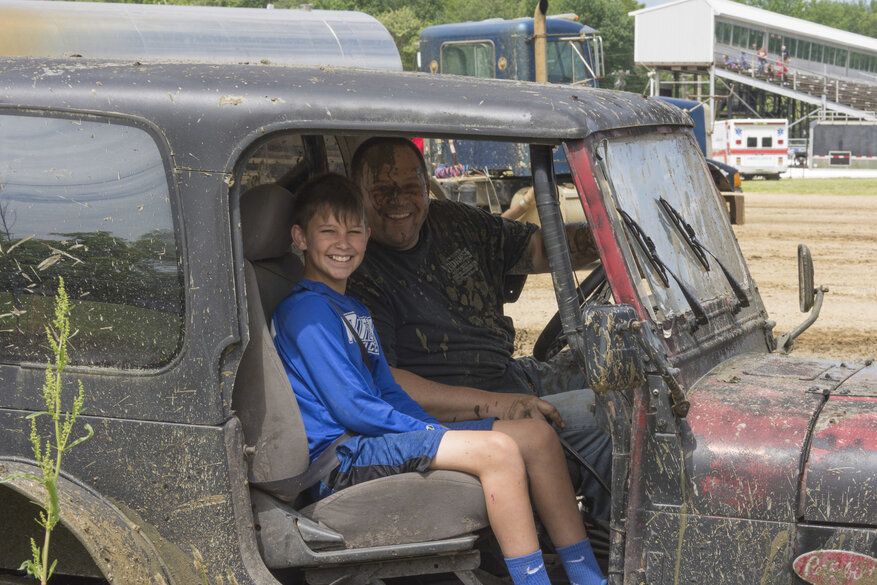
Long before backup cameras, lane assist systems, and giant touchscreen dashboards, many of us learned to drive sitting behind a worn steering wheel with the doors removed, the top folded back, and someone in the passenger seat calmly saying:
“Easy on the clutch.”
Usually, that someone was Dad.
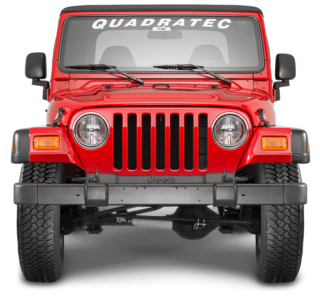
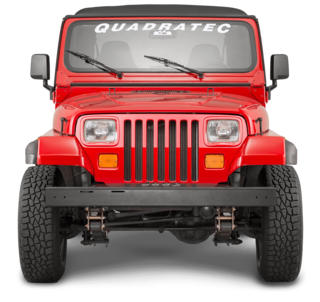
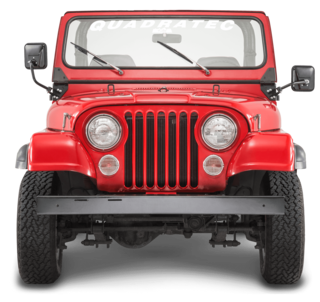
Maybe it was a faded CJ with a third pedal that demanded a bodybuilder’s leg strength just to depress. Or perhaps a Wrangler YJ, characterized by missing paint and a soft top that surrendered to rain the moment a cloud appeared on the horizon. Could have even been a TJ that somehow served as both a reliable daily driver and a weekend trail rig, despite accumulating enough trail scars to document three decades of family history.
Whatever the model, the Jeep was never just transportation. It was more like a classroom. A rolling learning experience where dads all around were teaching future enthusiasts how to navigate the world, not only from behind the wheel but, more often, from underneath the hood.
We were taught to remove the doors and fold back the top. Swap parts. Fix things. And we learned strange mechanical vocabulary at an unnecessarily young age so that, by the time adulthood rolled around, Torx bits could be identified faster than kitchen utensils.
That all didn’t happen accidentally. It was taught.
The Jeep Was Never Just a Vehicle
Most cars or trucks eventually fade into the background of family life. The old Civic gets traded in. The Corolla disappears. That minivan goes away with nary an emotion.
Dad taught us that Jeeps are different.
Perhaps because he treated it like a permanent resident of the driveway. Something bearing witness to first jobs, college moves, marriages, rebuilds, and every questionable trail decision any of us ever made. Dad didn't just own the thing; he curated it, showing us that when you put your sweat and time into something, it stops being a machine and starts being a member of the family.
“If You Want to Drive It, You’ve Got to Know It”
Dads also knew that if we were going to pull the doors off or fold back the top, we had to understand what made the thing tick. He didn’t want us to just be drivers or passengers; he wanted us to be partners.
So we learned with a wrench and pliers, right? Understanding the difference between a Torx bit and a socket before most of us even had a license.
Dad would watch as we complained about greasy hands and the vehicle’s strange sounds, but he knew he was teaching something bigger: that owning a Jeep isn't a passive hobby. It’s an invitation to participate, to solve problems, and to take pride in the repair.
“Always Bring Tools”
One of the biggest lessons Dad taught was probably something that made us roll our eyes the first time. The sight of him insisting on packing recovery straps, extra sockets, a bag full of tools, and a coffee can stuffed to the top with spare bolts, all for a simple weekend adventure.
It seemed like overkill. But the moment something rattled loose three hours from home, and he pulled exactly what we needed from the back, he suddenly looked like an off-road prophet.
He was teaching us mechanical repair, sure, but we all realized later that the other lesson was true independence comes from being prepared for the worst while expecting the best.
Jeep ownership rewards those who plan ahead, and it is a philosophy that has saved us more times in life than it ever did on the trail.
“Always Wave Back”
To the uninitiated, the Jeep Wave looks like a ridiculous, arbitrary ritual. But from the driver’s seat, Dad made sure to show the gesture was something far more meaningful: it’s part of the vehicle’s culture.
He’d lift two fingers off the wheel, offer a subtle nod, and explain to us that an acknowledgment between strangers matters. He also wanted us to understand that Jeep ownership isn't transactional, it’s communal. You don't just drive the vehicle; you join a community, and like all important traditions, it’s something that needs to be shown before you can truly own it.
“Cheap Parts Usually Cost More”
Dad always had a way of cutting through the noise. Whenever we tried to justify those bargain-bin suspension parts or the no-name LED lights found during a late-night online search, he’d just shake his head and give us that look. That universal look implying “cheap parts usually cost more.”
Some of us never listened, of course, until the squeaks started and the lights failed on the trail six months later. And then the lesson finally stuck: buying quality once is much better than buying something a second time. It’s a rule that applies to everything from Jeep builds to life itself.
“Getting Stuck Is Part of the Story”
This is another important lesson the Dads out there taught.
As beginners, most of us thought that getting bogged down in the mud or high-centered on a rock was a mark of failure. Proof we didn't know what we were doing.
But as we sat stewing at our mistake, we’d watch Dad just laugh, reach for the recovery strap, and remind us that getting stuck isn't the end of the trip. It’s just the most interesting chapter of the story.
He taught that if you’re never stuck, you’re never testing your limits. And really, aren’t the best tales the ones beginning with a winch line stretched tight in the middle of nowhere?
The First Time Dad Handed Over the Jeep Keys
Most Jeep owners remember this moment with unusual clarity. That first solo drive, the first trail. The first time you grab that transfer case knob and shift into four-wheel drive.
Or, even better, the first nervous attempt at learning manual transmission while trying not to stall in front of everyone.
Sure, it was all about learning how to operate a vehicle. It was also about learning trust.
Because driving a Jeep feels different when you’re young. The hood sits high, and the steering feels mechanical. The doors might not even exist.
Then there is the ride quality, where every bump feels amplified, and every noise sounds important.
Luckily, there was someone nearby, calmly pretending not to panic while saying things like: “You’re riding the clutch.” “Look farther ahead.” “Easy on the brakes.” “You’ll get it.”
Needed advice from a dad who never judged, and who showed patience along with understanding. After all, he once had someone who taught him, too.
Most people eventually forget the first commuter car they drove. Jeep owners usually remember forever. Maybe because Jeeps demand more involvement, or maybe because the memories attached to them tend to feel larger than the vehicle itself.
Somewhere Between the Garage and the Trail, the Jeep Became Family History
Jeep ownership rarely stays isolated to one person; it’s often a torch passed from father to child. These vehicles don’t just transport us; they act as the keepers of our family history.
Think of the old CJ a grandfather drove, or that TJ Dad stubbornly refused to sell because he knew it was the only vehicle that could haul his life (and eventually ours) across the years. We come to understand that they aren't really machines so much as landmarks of our upbringing.
The memories are written in grease and dirt. We remember holding the flashlight at the wrong angle, the frustration of a lift kit installation that went sideways, and disappearing into the garage with Dad for six hours to finish a job he promised would take twenty minutes. At the time, it was just a long afternoon. Looking back, those hours in the garage were the quietest, most important lessons of our lives.
Jeeps, like Dads, aren't perfect, and that is their greatest gift. They are loud, occasionally impractical, and they sometimes demand our attention. But by requiring involvement, they force us to be present with one another. In a Jeep, we feel the weather, we hear the road, and we smell the forest. More importantly, we feel the person sitting next to us.
Dads knew that when you strip away the insulation of a modern car, you’re left with something rare: a space to actually talk. And because they all insisted on those moments, those memories didn't just happen; they stuck. They became the bedrock of who we are today.
Why Jeep Ownership Gets Passed Down
Sure, there are more reliable vehicles than a Jeep, and certainly more comfortable ones. Yet very few vehicles create the kind of lasting emotional attachment that Jeeps do, and that’s because the Jeep experience is never about perfection.
It is really more about the participation of driving, fixing, exploring, teaching, and passing something meaningful down to the next generation.
So maybe that is why so many of us eventually find ourselves repeating the same lessons once heard from the passenger seat years earlier. We learn to bring the tools, wave back at fellow owners, and never fear getting a little dirty. We learn to take the top off whenever possible and, most importantly, to keep both hands on the wheel when we are the ones teaching someone else how to drive. Except, that is, when we wave.
It is the ultimate way to honor the lessons our own dads taught us, ensuring that the next generation understands exactly what it means to be part of the Jeep family.
Related Jeep Guides, Tips & Trail Advice:
Built for Dad: 15 Jeep Gifts That Say “Thanks for the Adventure”