











by Matthew Konkle
Torque Editor-in-Chief
Not all off-road driving needs to be over rocks, mud, snow, slickrock, or gravel-strewn surfaces.
Especially this time of year when the days are longer and the weather much warmer.
All of those other terrain types are certainly fun and can be challenging, but driving on sand (whether at an ocean beach, lake, desert, or in an authorized dune area) can be just as exciting and definitely presents its own bit of demands.
And it doesn’t need to be hardcore off-roading either. Maybe you are someplace like North Carolina’s Outer Banks, have local access to a beach area, and are able to drive out to set up a spot for the day. Maybe you are out west and have some dunes you want to try.
Regardless, off-roading in the sand presents a unique set of thrills and requirements that make it a favorite among Jeep owners, and understanding how to navigate this tricky surface is essential for a safe and enjoyable adventure.
So here are some essential tips to help you conquer the sand:
Preparation
Perhaps you remember a somewhat obscure John Cusack movie from the mid-1980s called ’One Crazy Summer’. It’s okay if you don’t—the thing wasn’t an Academy Award winner. But one of the actors did have a good line: “When there’s no plan, there’s no attack. No attack, no victory.”
So before you even step one tire into the sand, make sure you plan for the journey. Of course, that means loading all the basic stuff you’ll need like charged smartphones, food, water, clothing, towels, sunscreen, etc.
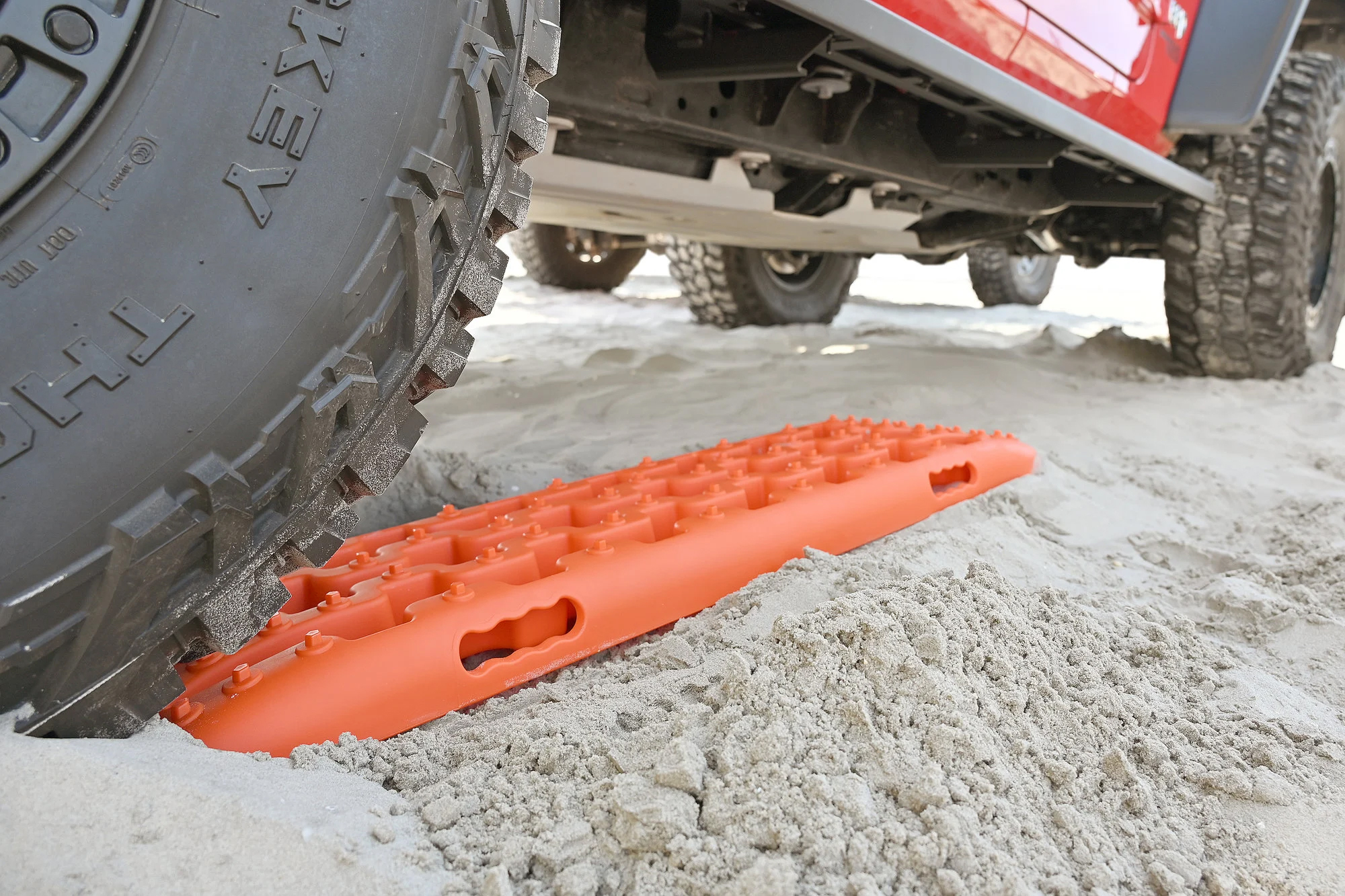
But it also means having some essential recovery gear as well. Items like a tow strap, recovery boards, shovel, gloves, D-rings or a soft shackle, and a first aid kit are just as important as the basic items.
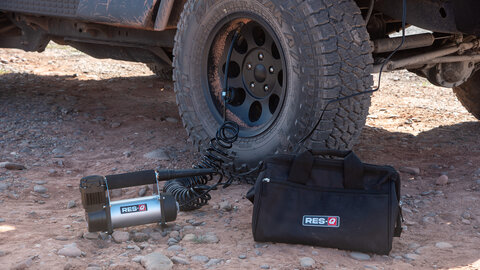
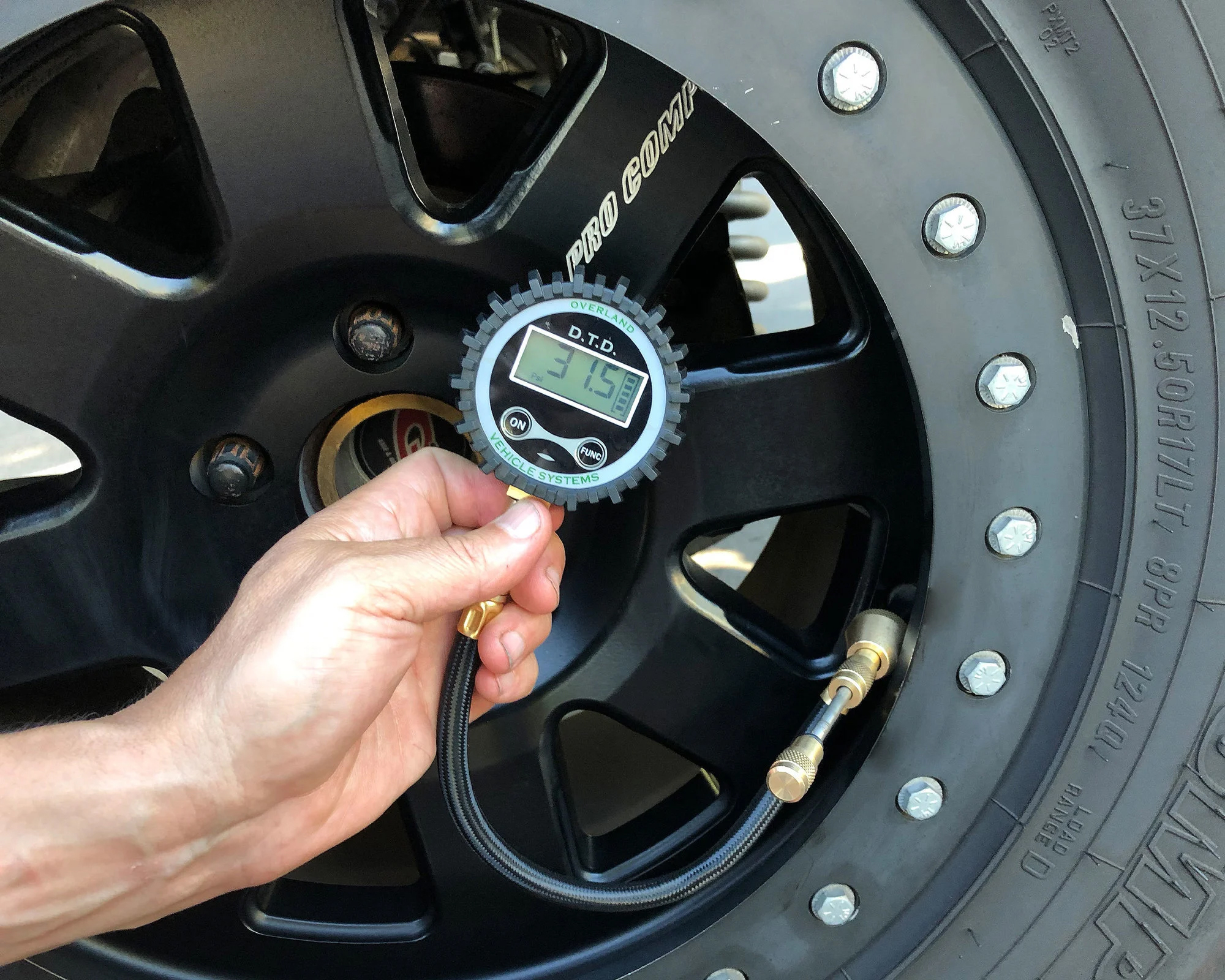
Additionally, while you may be able to get where you are going and back using your stock tire pressure, lowering that pressure to around 15-20 pounds-per-square-inch (PSI) will increase the tire’s surface area — enhancing traction and helping prevent you from sinking in the sand. It usually is the safer option.
While you are lowering that tire pressure, it is definitely a good idea to check fluid levels and make sure there are no leaks that could spill hazardous liquid into the same. Ensure your vehicle’s air filter is clean as well to prevent sand from entering the intake system.
You also need to understand the area and its local regulations, hazards, weather, environmental restrictions, and whether you’ll need any permits to go where you want to go — especially if you are venturing into a new and unfamiliar location.
Driving Techniques
Hopefully, you already understand how to use your Jeep’s four-wheel drive system, but if not, then it is a good idea to review the differences between 4-hi and 4-low. Generally, 4-hi is better for most sand driving, but that sand can change throughout the day depending on water and wind conditions. For softer sand, 4-lo may provide more traction. If the sand is hard-packed for your entire journey, then 2-wheel-drive should be fine.
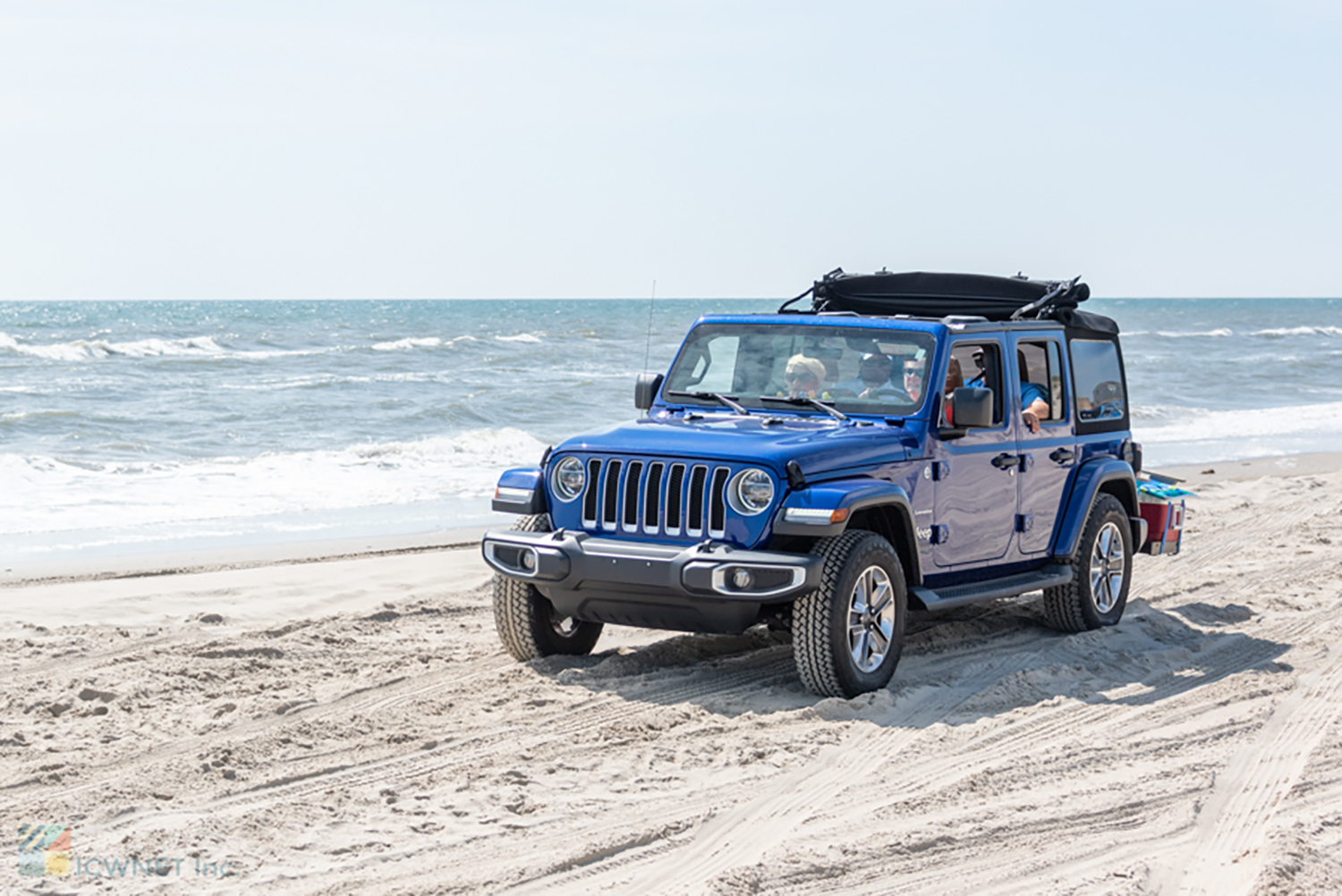
Most importantly, when you head out on the beach, do your best not to drive through any area where the water meets the sand. Stick to the sand only. Social media is full of images or videos of vehicles that strayed too close to the water and ended up stuck — often with disastrous results. Don't be one of those images or videos.
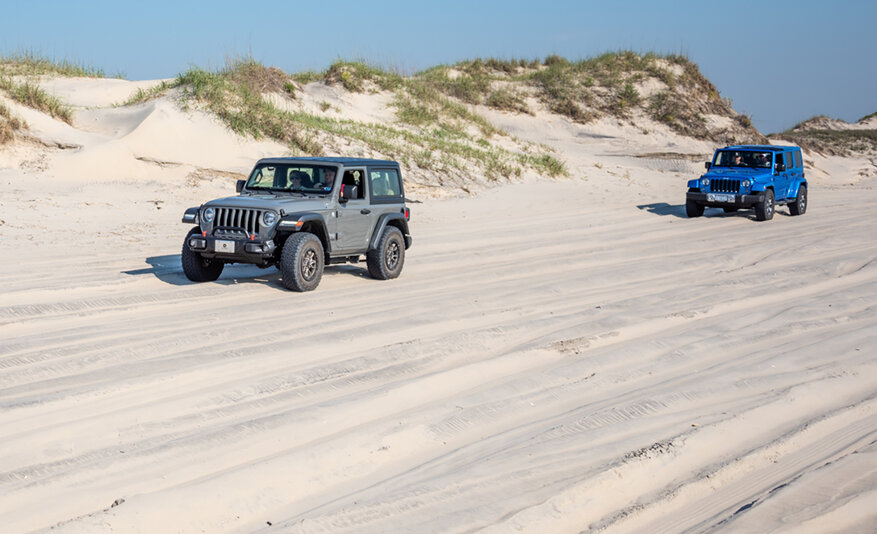
Always remember that momentum is your friend when traveling on sand. Any sudden acceleration or braking may cause your wheels to dig into the sand and then start spinning. So accelerate gently and, when possible, try to drive in tracks made by other vehicles. These tracks generally are already compacted and offer better traction.
Additionally, avoid making any sudden or sharp turns on the sand. Doing this may cause you to lose traction. So do your best to make wide, gradual turns to maintain control.
Also, if your wheels do start to spin, then try not to panic and do not slam down the accelerator. The faster your Jeep wheels spin, the more they will dig deeper into the sand, which increases the likelihood of you getting stuck.
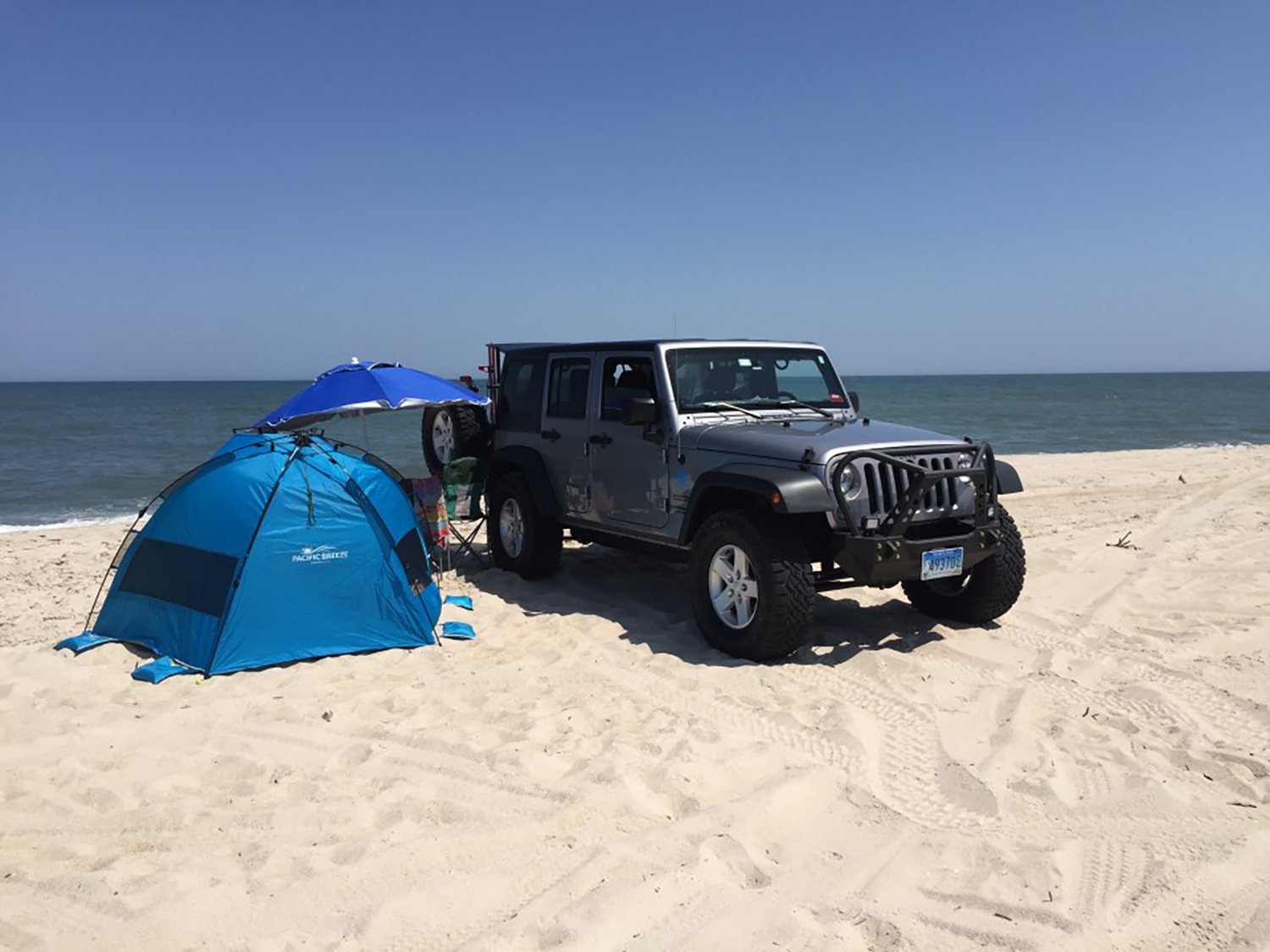
When you are ready to park, find a firm, dry spot that is above the tide line.
Recovery
Hopefully, this is a section you’ll never need. But just in case, here are the basics.
If you do find yourself stuck in the sand, again, don’t panic. That may sound obvious, but we’ve seen plenty of people lose momentum and suddenly gun the accelerator and throw sand everywhere. Only to get nowhere.
So take a deep breath and remember that you prepared for this issue.
If you simply lost traction and haven’t dug yourself deeper into the sand, then put the Jeep into reverse and see if you can go backward a few yards, then go back into drive and try to softly ‘rock’ your way out. Often, by reversing and then pulling forward, you can pop through that softer sandy area.
If not, take some time and assess just what is keeping you from moving. Are your wheels down too deep? Are you on an incline? Or is the vehicle high-centered?
You may be able to remove enough sand around the wheels with a shovel so they regain traction. If not, you can use traction boards. When using those boards, determine which tires have the least sand and which direction will be the easiest to travel. When you do, place the boards down so one edge sits under each tire, and the board extends out. Then, gently apply the throttle so the tires pop up on the boards. Accelerate out smoothly and maintain momentum while making sure not to spin the tires. Too much wheel spin will cause the tires to slide off the boards, and you’ll have to start again.
If your vehicle is high-centered, or trapped too deep in the sand, you’ll probably need a tow strap to get free. You’ll need another vehicle to help and one that has recovery points to attach the strap. Place the tow strap on your vehicle’s recovery point with either a tow hook, soft shackle, or D-ring mount, ensure the strap is properly mounted on the other vehicle, and then gently have them pull you out.
Environmental Respect
No matter if it is sand, rocks, snow, or some other off-road trail, you always need to stay on a designated route. For trails and sand dune areas, that route may be well-marked with signage warning you where the trail ends.
On the beach, not so much. So it is up to you to pay attention.
As you are pulling into the area, there may be nature preserve locations or other vegetation that should be avoided. Fragile plants and grasses often grow on dunes around the beach and help stabilize the dunes against erosion, so those are also ‘no-go’ spots. Make sure to cross onto the beach only at authorized locations to prevent any kind of environmental damage.
Some beaches have endangered or protected wildlife areas for birds and other creatures. These should have highly visible signage and need a wide berth from your vehicle.
Finally, channel your inner Tread Lightly! self and ‘Do Your Part’. Minimize your impact, and if you are on the beach or have a campsite in the dunes, pack out what you bring in so there is no trash left anywhere around your area. Clean up any fire pit debris and carry it out as well. Always leave your location better than you found it to protect the environment for future visitors.
Recommended Reading:
How Do I Air Down My Jeep's Tires?
Jeep Air Compressor Buyer’s Guide: Best Options for Trail and Travel