















by Quadratec
A Jeep’s exhaust system usually gets your attention one of two ways: you want a better sound, or you hear something you definitely don’t want. A ticking noise under the hood. A rattle beneath the floor. A familiar exhaust note that suddenly gets considerably louder.
Knowing what’s underneath your Jeep makes it easier to figure out what needs attention—and what you actually need to replace. From the manifold at the engine to the tailpipe out back, each component has a job in routing exhaust gases, and the layout varies by engine and model.
Whether you’re tracking down a worn pipe, planning a repair, or considering an aftermarket upgrade, here’s how the main Jeep exhaust components fit together and why each one matters.
How a Jeep Exhaust System Fits Together
Below are the parts of a Jeep exhaust system, listed in the order gases travel from the engine to the tailpipe.
Exhaust Manifold
The exhaust manifold is typically made of cast iron or steel tubing. In non-cast manifolds, the tubes are welded directly to a flat-faced surface, which bolts to the engine cylinder head with a gasket in between. A cast iron manifold has very short exhaust runners that quickly combine into one unit called the collector.
Exhaust Pipe
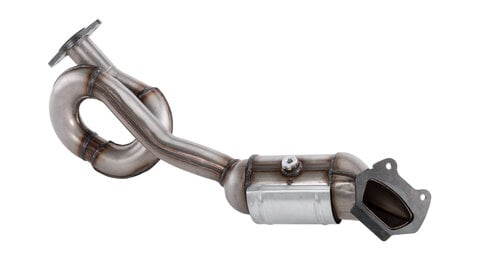
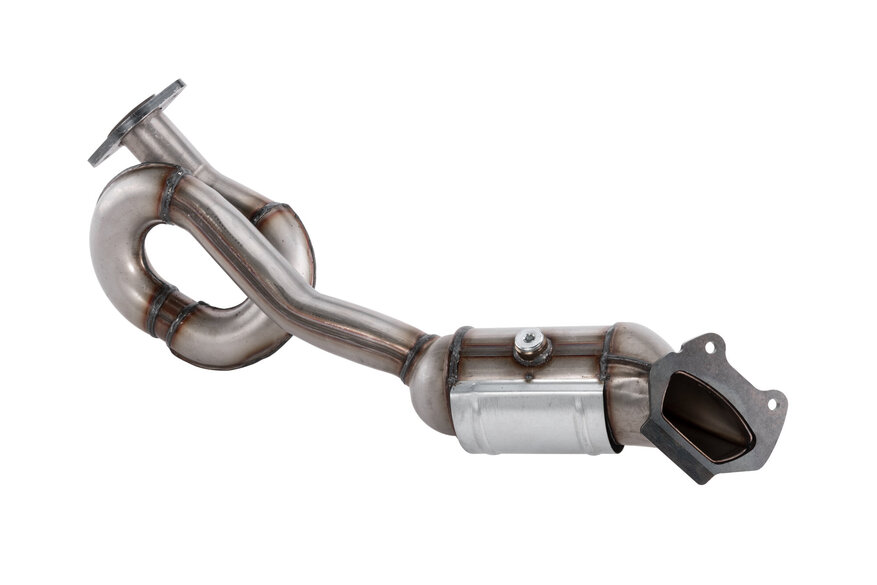
The exhaust pipe carries the collected gases and vapor from the exhaust manifold into the catalytic converter (if equipped) and then into the muffler before exiting out of the tailpipe. Among the Jeep exhaust system components, this pipe does the most work, since it connects nearly every other part along the way.
Y-Pipe
The "Y" pipe is a section of the exhaust pipe that connects both exhaust manifolds of a split-manifold engine design, forming a single exhaust system.
H-Pipe and Balance Pipe
The "H" pipe is an exhaust pipe section in a dual-exhaust system, with a connecting pipe between the left and right exhaust banks. This cross tube, also known as a balance pipe, merges exhaust pulses from both banks to reduce harsh sounds, equalize pressure, and increase power and economy, making it one of the more overlooked components of a Jeep exhaust.
Crossover Pipe (X-Pipe)
A "crossover" pipe, or "X" pipe, is similar to an H-pipe, but its design allows for even better flow of exhaust gases. It connects the left and right exhaust banks to equalize pressure, with a shape that increases flow more than a standard H-pipe.
Intermediate Pipe
The intermediate pipe connects in one of two ways, depending on your vehicle's configuration. It can run from the exhaust manifold to the catalytic converter, or from the catalytic converter to the muffler, depending on where the catalytic converter sits relative to the muffler and manifold. This makes it one of the more flexible parts of a Jeep exhaust system.
Tail Pipe
The tailpipe is the remaining section of the exhaust system after the muffler outlet. It carries exhaust gases to a safe exit toward the rear of the vehicle.
Tailpipe Tip
The tailpipe tip is the very last section of the exhaust system. It's usually one piece with the tailpipe unless the exhaust is aftermarket. Its main purpose is to give exact placement of the exhaust gas exit, with styling as a secondary benefit.