











by Quadratec
Airing down before the trail is easy. Whether you have a tool that does one tire at a time, or a set of four deflators, it doesn’t take long to get those tires down to trail pressure. The question comes later, when they need to get back to pavement pressure, and everybody else is packing up for the drive home.
That is where a portable compressor earns its space in the cargo area. Sure, some trail systems (or off-road parks) have air systems, but why risk it? And among the best you can get for the price is the RES-Q 30 Amp Portable Air Compressor.
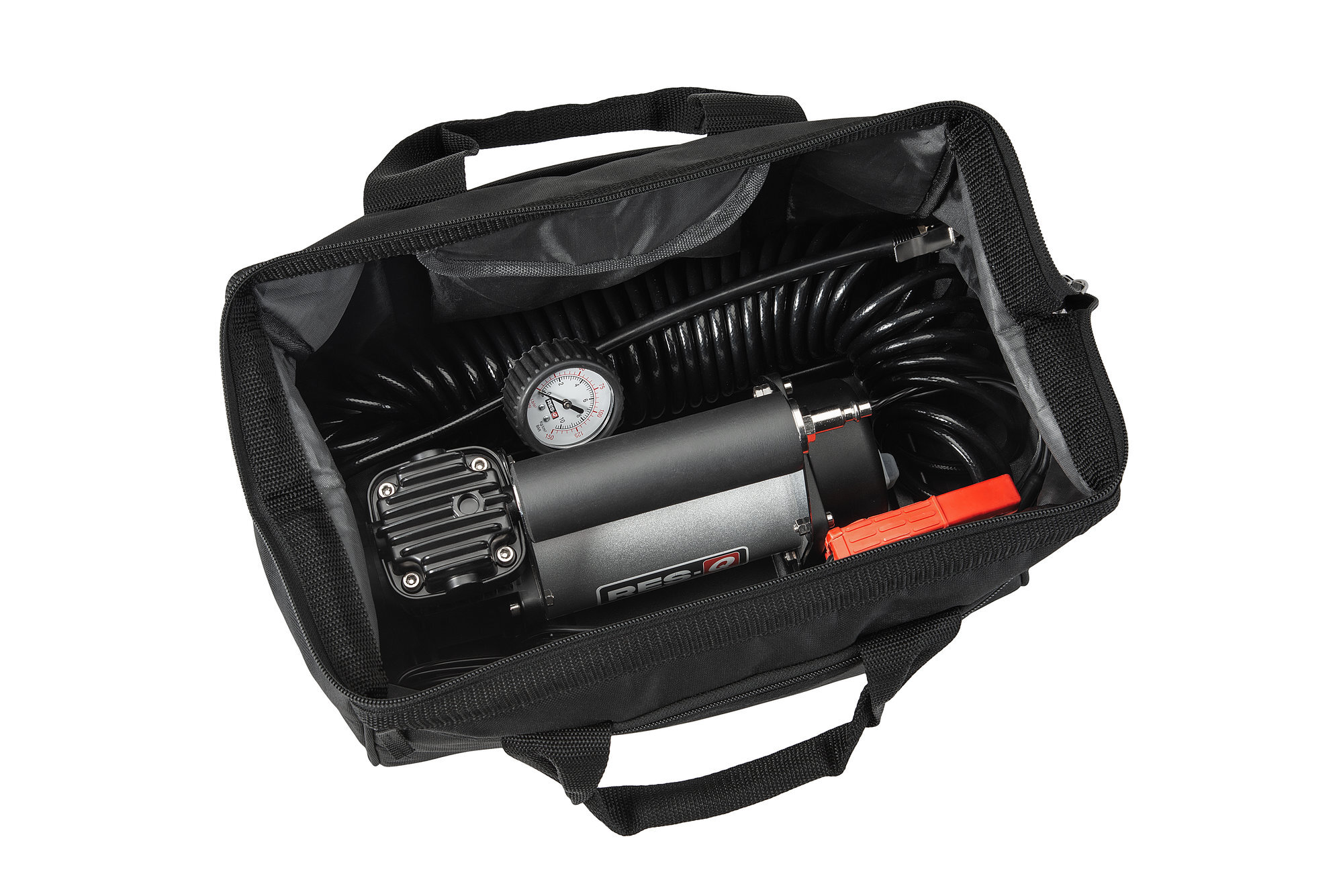
It connects to the vehicle battery, stores in a carrying bag, and is rated for tires up to 37x12.50R17.
We recently took one of these compressors for an off-road excursion to give it a thorough test on vehicles equipped with 35- and 37-inch tires to see just how it compares to other versions.
First Impressions & What Comes In The Bag
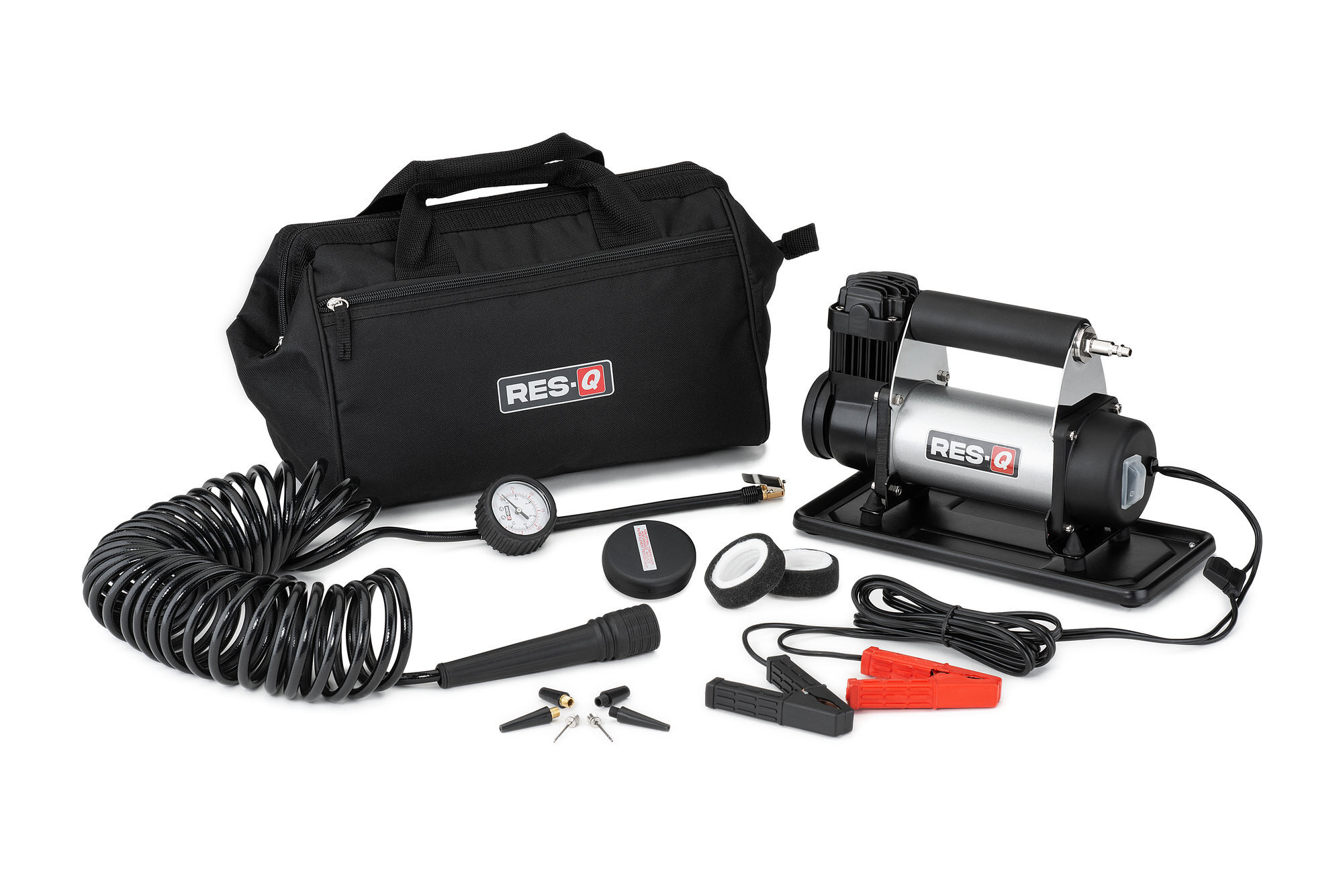
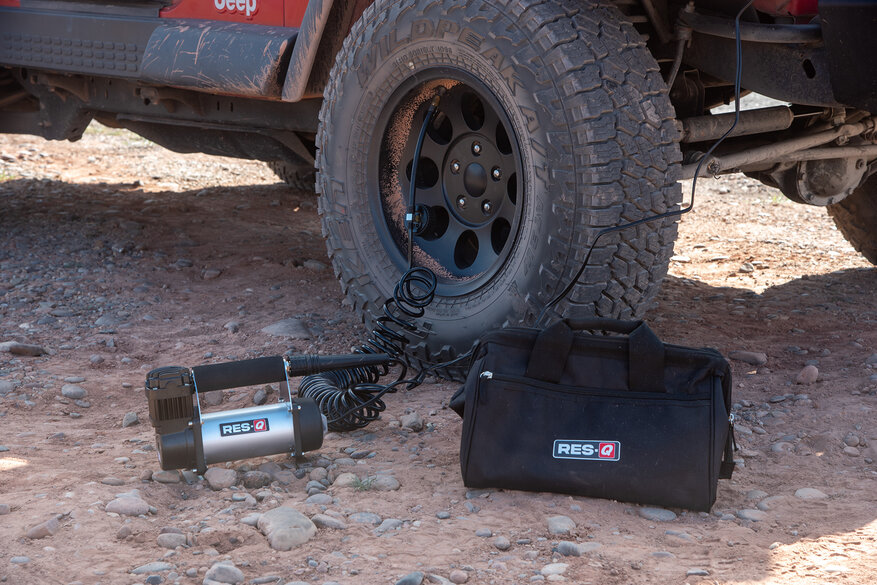
The Res-Q Compressor kit covers the essentials: compressor unit, carrying case, battery-clamp power cord, coiled air hose with analog gauge and quick-release chuck, and adapters for other inflatables. It weighs a listed 10.58 pounds in the bag, and it felt light enough to move between vehicles, while securely stowing away in the cargo area when not in use.
The 25-foot coiled hose is a useful choice for a Jeep. Position the compressor near the battery, and you should have room to work around the vehicle without moving the unit at every corner. Its quick-release chuck also matters more than it may sound. When you repeat the same job at four valve stems, a connection you can attach and easily remove saves you from fiddling in the dirt.
Setup
The system isn't permanently installed, and the power cord uses red and black clamps at the battery terminals rather than a 12-volt accessory socket, which makes sense for a compressor with a listed maximum draw of 30 amps. But it does mean opening the hood and setting up the hose each time you use it.
Make sure to set up the compressor so the hose can reach all four tires before connecting the clamps, and keep the unit on a stable surface during operation. When the tires are filled, let the equipment cool as directed before putting it back in the bag. This is a straightforward trailhead routine, although it will take more setup than an onboard air system.
Air-Up Capability
Res-Q lists airflow at 2.5 cubic feet per minute at zero pressure. That is a free-air figure, so don't read it as the flow rate throughout an entire tire fill. More useful are the estimates for going from 10 to 30 psi: about three minutes for a stock tire, three minutes and 35 seconds for a 33x12.50R17, four minutes for a 35x12.50R17, and four minutes and 45 seconds for a 37x12.50R17.
For a Jeep on 35s, that four-minute estimate means roughly 16 minutes of active inflation across four tires, plus the time spent moving the hose and checking pressures. That is a planning figure, not a stopwatch result from our own test. Use the pressure specified for your vehicle and tire setup for road travel, and verify the final reading with a separate gauge you trust.
While real-world times will depend on the tire, starting pressure, target pressure, and conditions, we found these times to be within an acceptable range when airing up 35-inch Nitto Ridge Grapplers and 37-inch Mickey Thompson Baja Boss tires.
The duty-cycle figures deserve a careful read. They specify up to 60 minutes of continuous use at 30 psi and 73 degrees Fahrenheit, but a 33 percent duty cycle at 100 psi. Those numbers describe different operating conditions. The 150-psi maximum working pressure is a compressor limit, not a suggested Jeep tire pressure or a promise of the same fill speed at every pressure.
Any Downsides?
The battery clamps and single hose suit an occasional, one-tire-at-a-time air-up routine. For those Jeep owners who are on the trail every weekend, or do a lot of overlanding, may prefer a higher-output or permanently installed setup. The Res-Q’s analog gauge is convenient for watching inflation progress, though a separate tire gauge remains a sensible final check.
Portability also means making room for the bag and laying out the cord and hose at each stop. None of that is unusual for this kind of compressor. It is simply part of the choice between equipment you can carry and an air system already mounted in the Jeep.
So, What Is The Final Verdict?
The RES-Q 30 Amp Portable Air Compressor makes a practical (and affordable) case for Jeep owners who air down for occasional trail days and want a self-contained way to air back up. Its battery-clamp power connection, long coiled hose, quick-release chuck, and published fill-time estimates put it in a useful middle ground for tires up to the stated 37-inch size.
While more powerful systems exist, the Res-Q kit hits that sweet spot for anyone who wants an easy-to-use setup that won’t hurt the wallet.
Related Jeep Guides, Tips & Trail Advice:
What Are The Best Tools For Your Jeep Recovery Kit?