





by Matthew Konkle
Executive Editor
A new face. Fresh power under the hood. And, potentially, a suspension change that could stir the kind of debate Jeep owners haven’t had since coil springs replaced leaf springs a few decades ago.
There is all kinds of speculation right now about what Jeep will, or will not, do as it looks for a major refresh of its Wrangler and Gladiator models.
One thing for certain, at least according to Stellantis CEO Antonio Filosa, is that we’ll get a first glimpse of those refreshed vehicles late in 2027.
Filosa offered no specifics about what will change on either vehicle during the recent announcement, but his comments on the time frame during a press conference point to a more serious mid-cycle refresh of the JL and JT platform, not a full generational change.
Jeep, though, may have already provided a few reasons to pay attention to what’s coming.
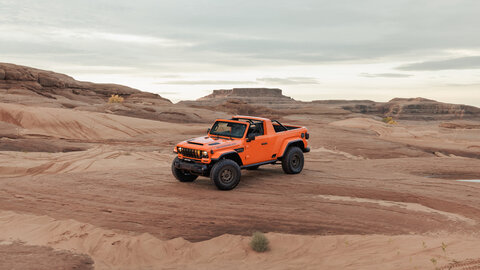
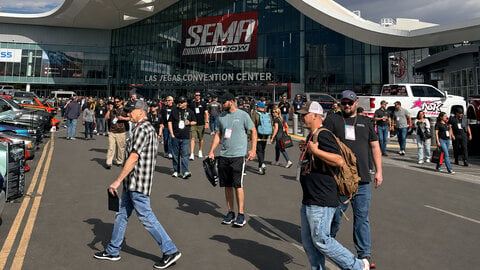
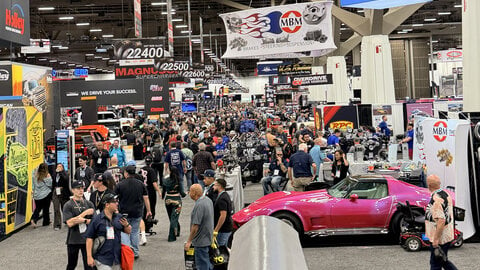
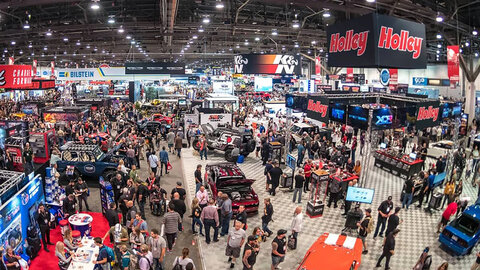
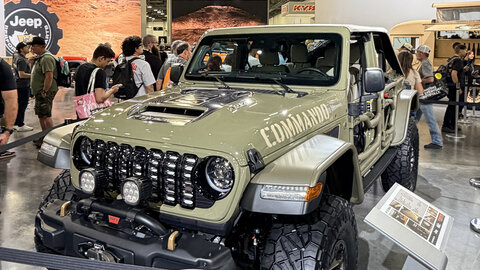
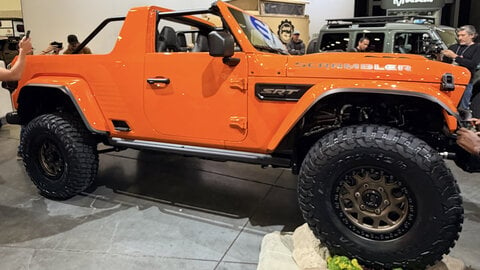
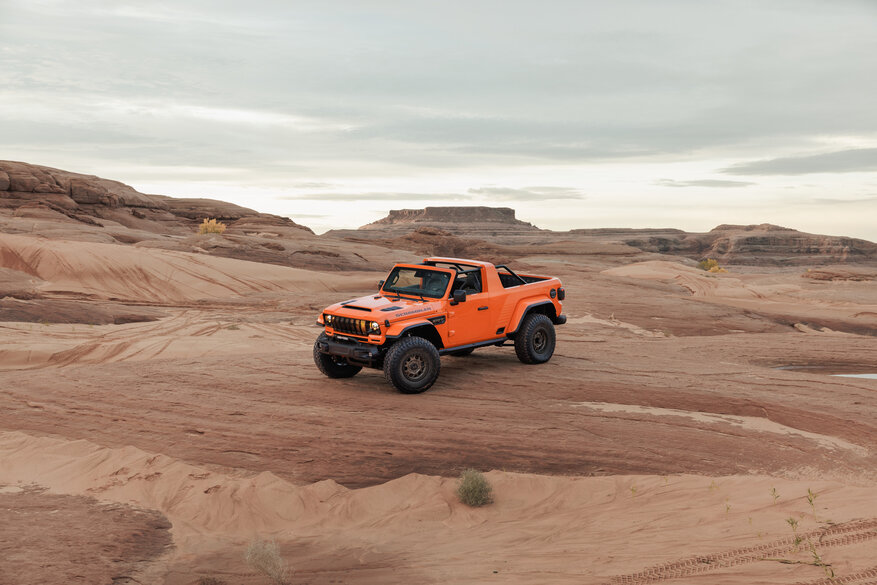
Two of them were parked just yards apart inside Mopar’s display at this year’s Specialty Equipment Market Association (SEMA) Show: the V8-powered Wrangler Scrambler SRT concept and the Anvil 715.
The Scrambler’s pronounced nose, reworked grille, and independent front suspension (IFS) drew plenty of attention, while the Anvil offered another interpretation of Jeep’s future styling. Given the brand’s history of testing ideas on concepts before introducing them to production vehicles, those two builds deserve a closer look.
Of course, neither represents a confirmed blueprint for the updated Wrangler. Together, though, they suggest Jeep may be preparing to change more than what owners see when they walk into a showroom.
What Jeep Has Said About the Timing
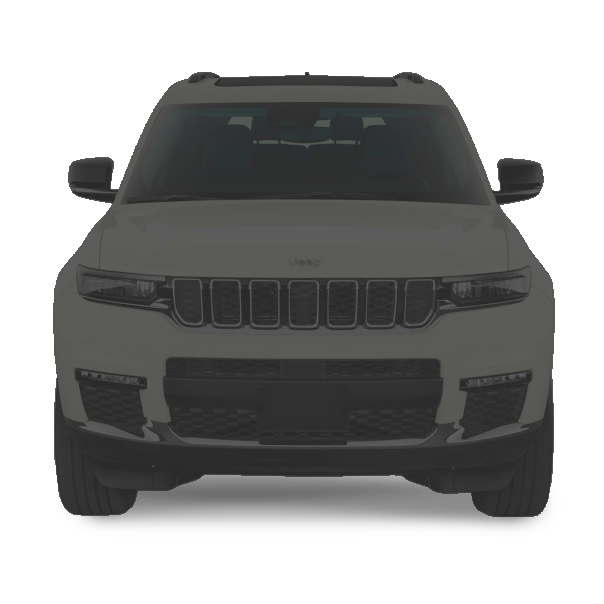
During Stellantis’ October 28 third-quarter earnings call, Filosa included the Wrangler, Gladiator and Grand Cherokee in a Jeep product offensive scheduled for the second half of 2027.
”Those three Jeeps, they are Jeep 100 percent,” he said during the call with reporters. “They are beautiful design. They have a very wide offering of powertrains, and they also cost less than the current ones.”
A price drop alongside a major refresh would be a nice break for potential buyers, but it is unclear if all trim levels would be affected, or just the entry-level Sport.
This most likely will not be a 2027 model year addition, either. When the brand unleashed the JL Wrangler, the Jeep first crawled into view during the 2017 Los Angeles Auto Show and didn’t find showroom space until later in 2018.
This was pretty much the case for Gladiator as well, with Jeep rolling it out during the 2018 LA Auto Show but not releasing it for sale until the 2020 model year.
Even though this version wouldn't be a generational change or an entirely new vehicle, the automaker could still follow this pattern, which would mean a first look toward the end of November 2027, and then perhaps a spring ’28 launch.
The Scrambler and Anvil 715 Offer Some Clues
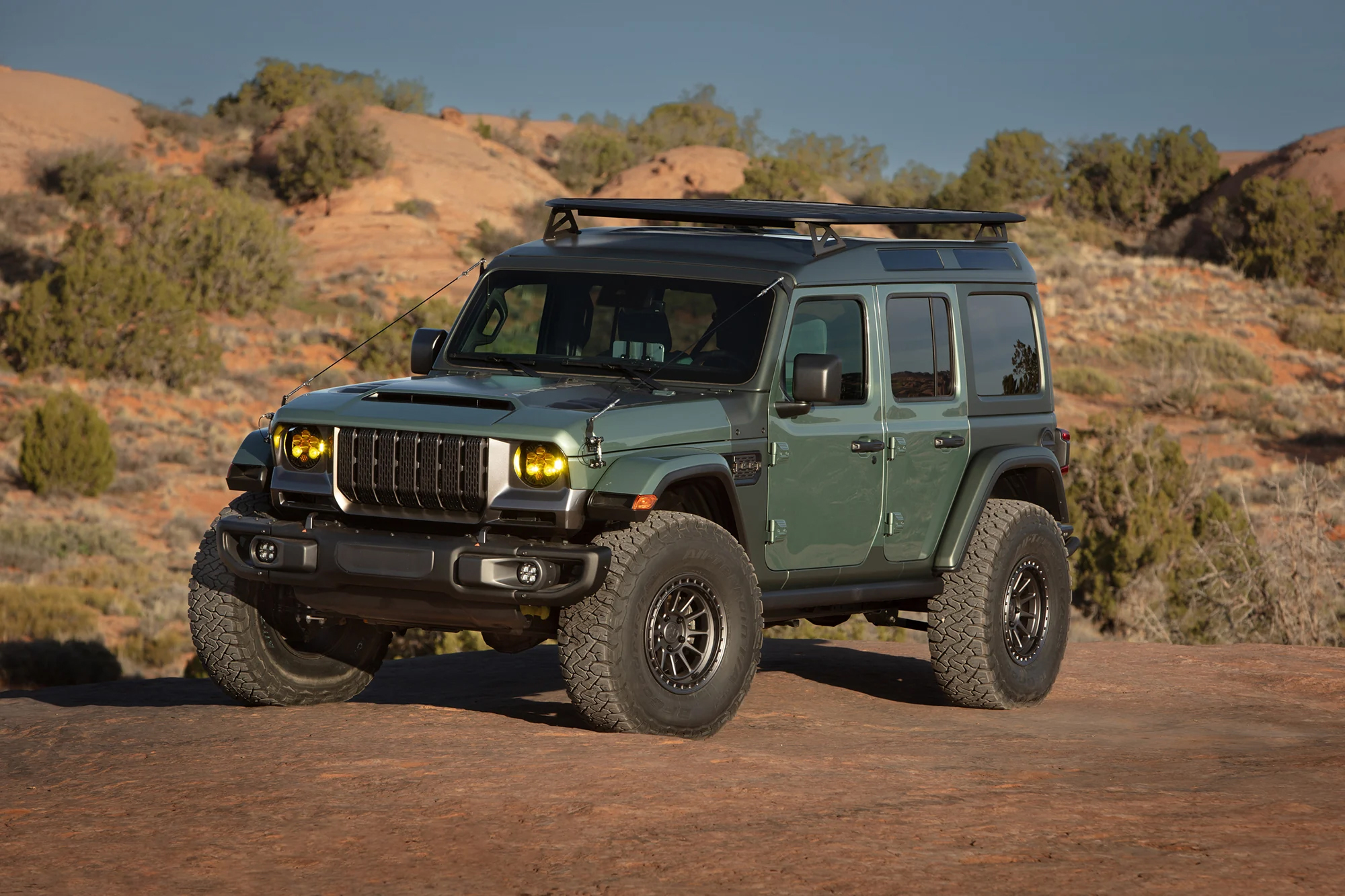
For a possible preview of the next Wrangler, start with those two vehicles Jeep has already put in front of enthusiasts: the Scrambler SRT and Anvil 715 concepts. Each explores a different use for the Wrangler, but their front-end designs suggest some common thinking about its future appearance.
The Scrambler drew plenty of eyeballs at SEMA with its V8 power, pickup utility, and pronounced “Sharknose” front end. Underneath, a custom, high-travel independent front suspension developed with well-known off-road racer Casey Currie added another reason to take a closer look. Jeep says the arrangement improves steering precision, wheel control, and stability during high-speed off-road driving.
Overall, this change probably gives the Scrambler a bit more significance beyond the return of a familiar name. It demonstrates how Jeep could expand the Wrangler’s performance into faster desert driving, while giving designers room to rethink the bodywork surrounding that hardware.
The Anvil 715 approaches Wrangler from an overlanding perspective. Introduced earlier this year for Easter Jeep Safari in Moab, Utah, it combines 392 HEMI V8 power with a restyled nose inspired by the SJ-series Jeeps of the 1960s. Its prominent front end gives the familiar Wrangler body a distinctly different profile, drawing on the brand’s truck heritage.
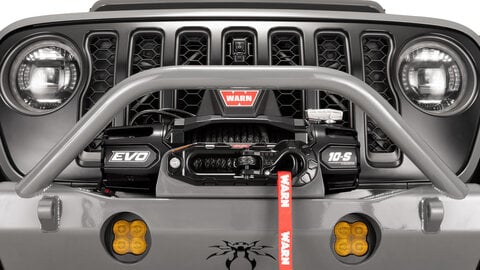
Elsewhere, the Anvil’s equipment reflects its focus on extended travel. A custom, non-removable roof incorporates skylights and an integrated rack, while an onboard air system with quick-disconnect fittings simplifies tire-pressure adjustments. Heavy-duty steel bumpers provide protection at both ends.
For most, though, the strongest connection from both concepts to a Wrangler future is up front. Seeing similar styling ideas on an overland-focused Wrangler and a desert-performance Scrambler suggests Jeep is exploring how that design language could work across different models. It also makes that front face, and under the face, worth watching in the coming months.
Especially if the question becomes “will Jeep move IFS from the Scrambler concept into a Wrangler production run?”
Why IFS Divides Jeep Owners
For some Wrangler buyers, IFS could be a welcome addition. For others, the solid front axle is a major reason they bought a Jeep in the first place.
With IFS, each front wheel can move up and down independently, rather than being connected by a rigid axle housing. A well-designed system can deliver a more settled ride over uneven pavement and better wheel control at speed over rough terrain. Owners who use their Jeeps for commuting, longer road trips, and occasional trail weekends could find those benefits appealing.
Solid-axle fans have good reasons for their preference, too. The design lends itself to substantial articulation for crawling over uneven obstacles and more difficult landscapes, and Wrangler owners have a long-established selection of axle, steering, and suspension upgrades. Lifting an IFS vehicle introduces different considerations, particularly around control-arm geometry, alignment, and CV-joint operating angles.
Neither layout guarantees capability or durability by itself. Suspension travel, ground clearance, component strength, tire size, and traction all influence what a vehicle can do. Independent suspension can be very capable off-road, while a properly set-up solid axle can serve comfortably as a daily driver.
Could Buyers Get a Choice of Front Suspensions?
That Scrambler front suspension certainly dominated conversation during SEMA, but don’t expect it to dominate a new Jeep lineup. Quadratec spoke with several industry leaders during the event, and no one believes Jeep will entirely move away from solid front axles.
In fact, Stellantis’ U.S. Chief Commercial Officer, Tim Kuniskis, during the Scrambler unveiling, asked enthusiasts to provide the automaker with plenty of feedback about potential changes, so they are certainly listening to their audience.
Multiple sources told Quadratec during SEMA that Jeep is expected to offer IFS on select Wrangler trims, with Sport, Sport S and Sahara identified as likely candidates. Willys and Rubicon models would retain solid front axles, while the Gladiator Mojave is also expected to adopt IFS, following the direction showcased by the Scrambler concept. Jeep has not officially confirmed any trim-by-trim suspension plans for the upcoming major Wrangler and Gladiator refresh.
A Hurricane 4 Turbo Could Join the Lineup
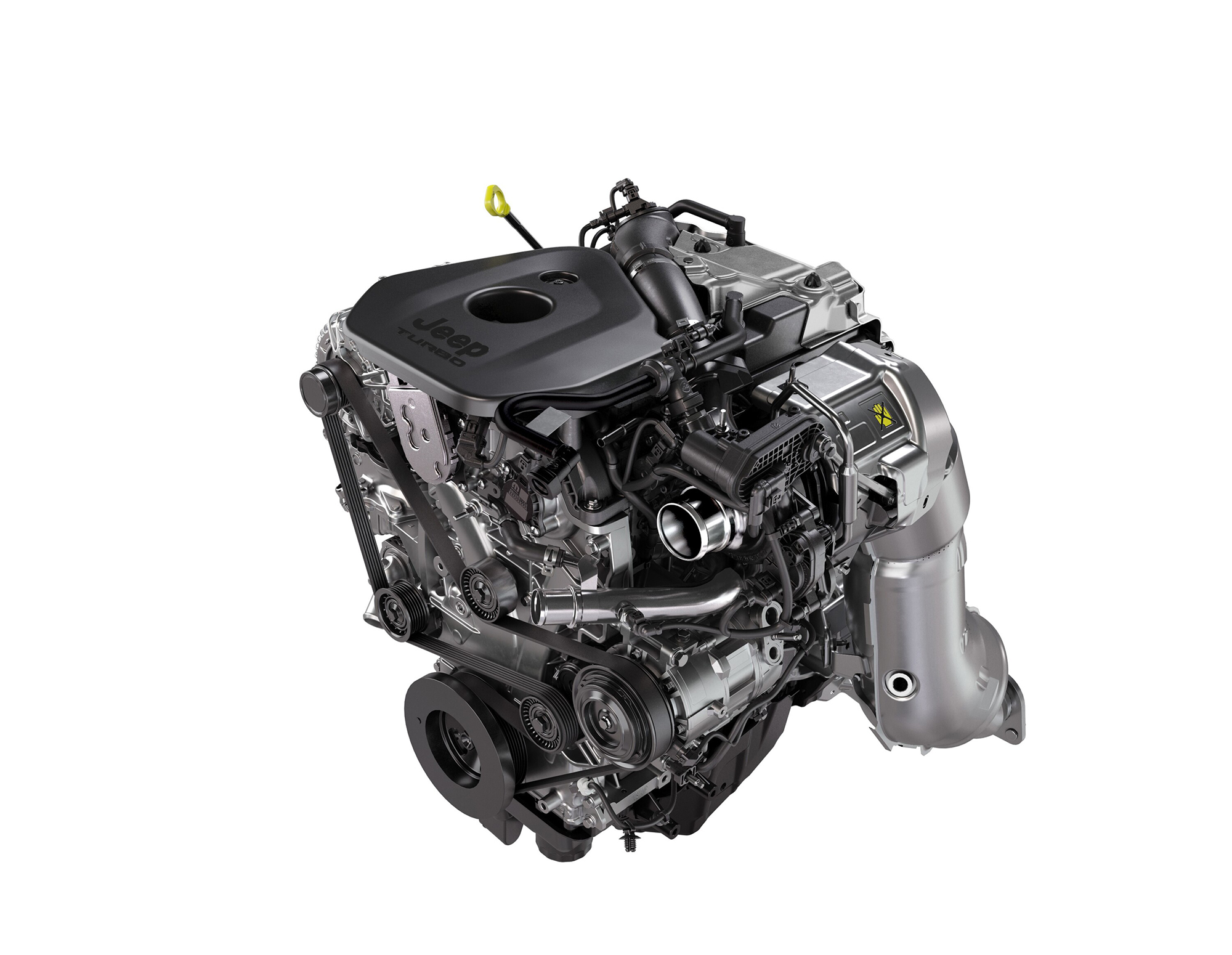
The next Wrangler update could also bring a substantial change under the hood. The newer 2.0-liter Hurricane 4 Turbo is reportedly expected to replace existing turbocharged four-cylinder powerplants, with the Gladiator also identified as a potential recipient.
While the displacement sounds familiar, the output represents a meaningful step up. In the 2026 Grand Cherokee, the Hurricane 4 Turbo produces 324 horsepower and 332 lb-ft of torque. That is 54 more horsepower and 37 additional lb-ft than the Wrangler’s current 2.0-liter turbo—gains of 20 percent and roughly 13 percent, respectively.
Those are Grand Cherokee specifications, however. Jeep has not announced output figures for either updated vehicle.
If similar numbers carry over, the additional power could appeal to owners who want stronger highway acceleration, particularly when carrying passengers and gear. How that translates into fuel economy, towing capability and trail performance will depend on the complete vehicle, including its gearing, weight and powertrain calibration.
Other engines expected to carry over to the new Wrangler/Gladiator are the longstanding 3.6-liter Pentastar V6 and powerful 6.4-liter 392 V8. That would preserve three distinct choices for Wrangler buyers, although Jeep has yet to confirm availability by model and trim.
What Owners Should Watch Next
The next useful announcements may be in the lead-up to EJS, around mid to late March, as Jeep releases information on concept vehicles for the event, as well as during second-quarter financial results in late July.
Additionally, as these major refreshed vehicles are spotted during on- or off-road testing, more details could be released, even though test models are usually heavily camouflaged.
However, again, if those previous Wrangler JL and Gladiator JT rollouts offer any kind of roadmap, official information will be scarce until the actual vehicle rollout late in 2027. Probably at the Los Angeles Auto Show.