




by Scott Ammerman
Torque Correspondent
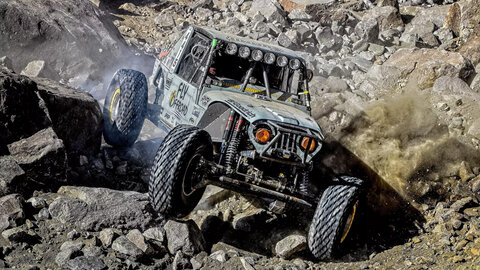
Even though most Jeep models are true four wheel drive, not all four tires have traction at the same time in most circumstances. In fact, the same device that allows the wheel on an inside of a curve to spin less can actually inhibit your ability to get power to the ground when on loose terrain.
While Jeep CJs, Wranglers and many other models are referred to as ‘solid axle vehicles’, the individual wheels have axle shafts that are connected in the center by the differential, which is driven by the pinion shaft. These shafts point towards the vehicle center, and connect via driveshafts to the transfer case. In two-wheel-drive, the rear wheels operate, but the fronts go live when the transfer case is shifted into either four-wheel-drive low or high.
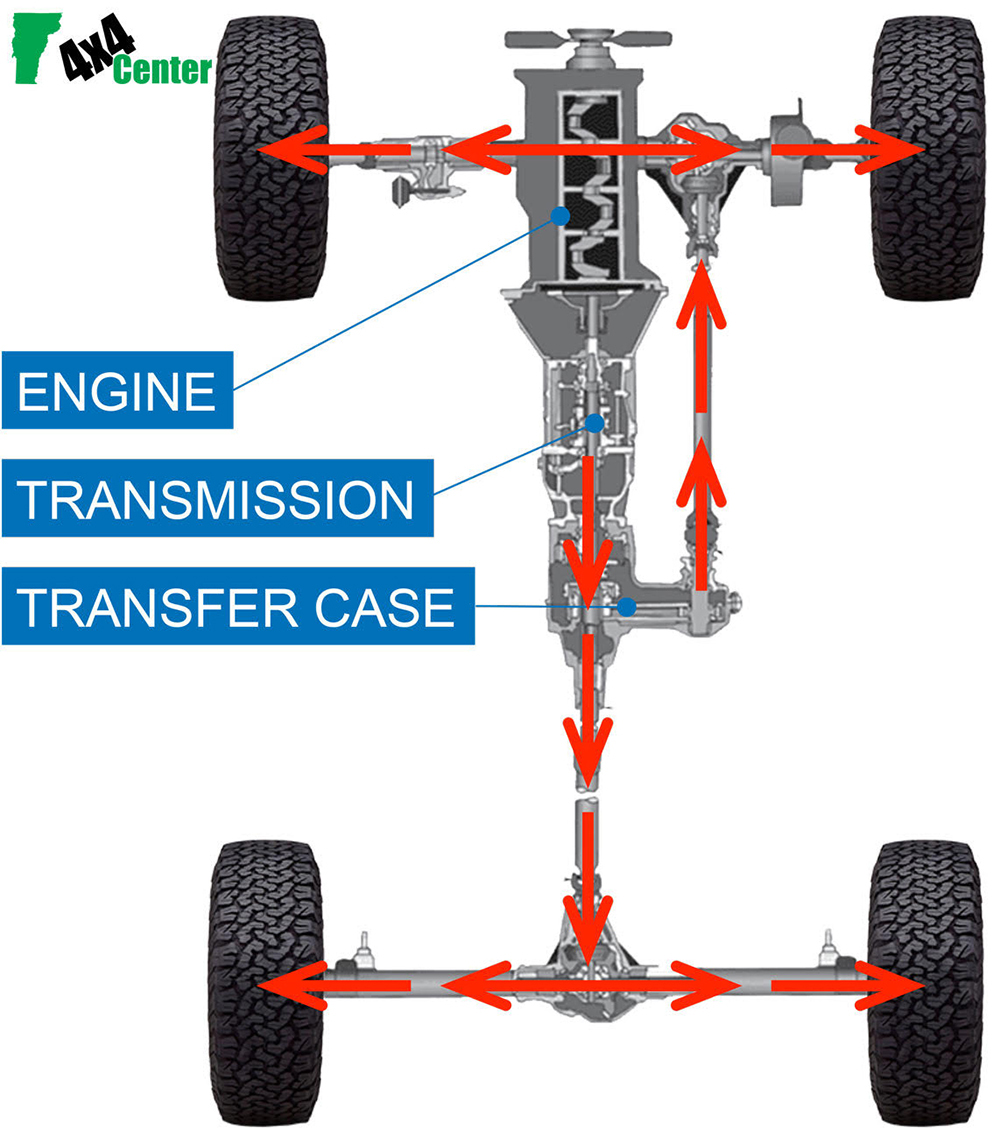
Photo Credit: The 4X4 Center, used with permission.
The differential (also called a ‘diff’ for short) lives where you would expect it to — inside the differential housing. This is very often referred to as a ‘pumpkin’ because it is roughly the size of one on our vehicles. Of course, instead of being filled with seeds and orange stringy goo, it houses your ring and pinion as well as the differential itself. Carving a jack o’ lantern out of one is not as easy as you would think.
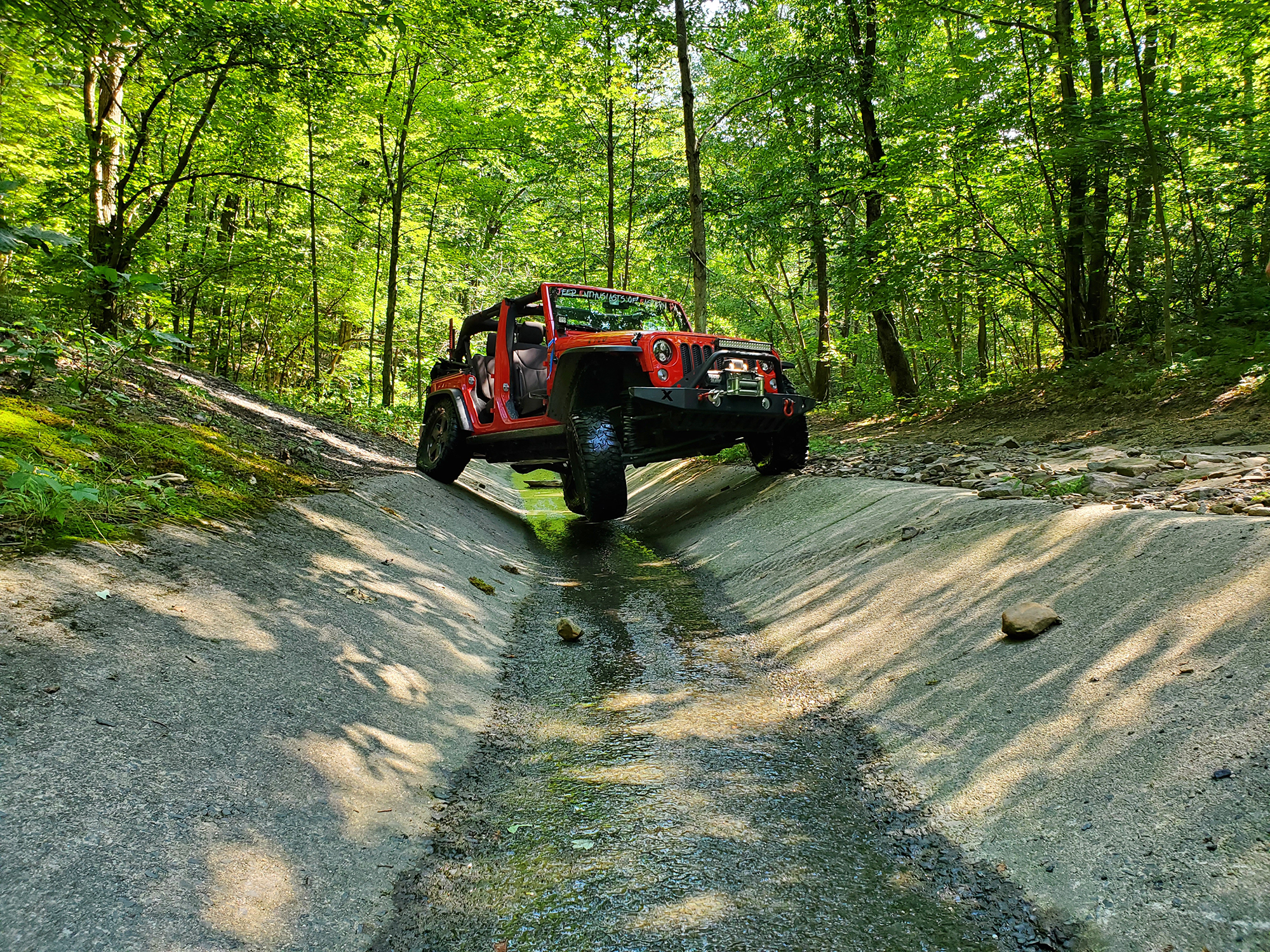
Photo credit: Jason Machler
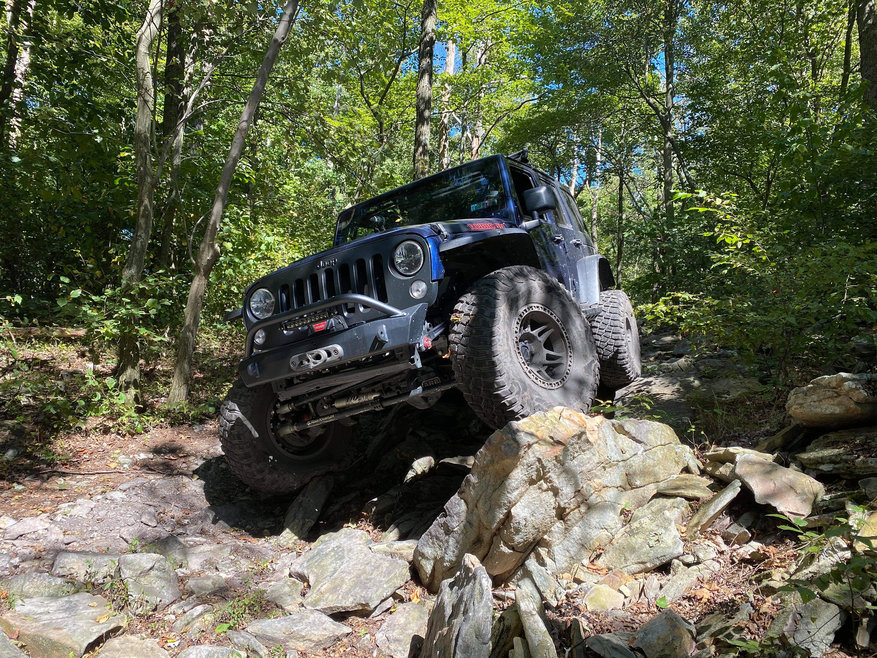
In this situation, as well as any other where a wheel loses traction, the tire with the least resistance gets the most power. If you have a wheel hanging in the air while driving in rocks, this is the worst-case scenario. Nearly all of the torque the engine produces goes to that corner.
Now, if you happen to have two tires on different axles without traction on a four-wheel drive vehicle, all the power in the world won't get you out of this situation without some outside influence. Sure, using a self-recovery winch, traction boards, or pull from another vehicle with a kinetic recovery rope can get you out of a jam like this. Using one of these systems requires set up, which would also involve you exiting the vehicle or requiring someone else's aid.
In a simple four-wheel-drive system without traction control, this is where locking differentials come into play. They have the ability to bind both wheels together to spin at the same rate, regardless of how much traction or resistance they have.
Locking differentials come in several flavors, but the two main types are selectable or automatic.
Why not have a locked differential full time? Well, a fully fused differential is not practical all the time on a street-driven vehicle. Chirping around corners will occur with a fully locked rear diff, and a fully locked front diff will make it much harder to steer, and is dangerous in corners at speed. Many Jeeps that are only driven exclusively on trails will make use of a fully locked or even welded rear differential, but driving on pavement will increase tire wear dramatically. Most of these Jeeps spend little or no time on pavement as a result. A welded rear differential is not immune to failure either — if the welds break, the entire differential could be catastrophically destroyed with continued use.
Automatic lockers have increased in popularity recently due to the increase in technology and durability — these will automatically engage when loss of traction is experienced but will disengage when conditions return to normal, or when driving around turns. Many users of this type of differential have reported favorable results, and are fans due to the average lower cost of the aftermarket units. Some detractors, however, have expressed frustration with the unpredictable aspects of their functionality.
Selectable lockers give you the choice of open or locked differentials. The ability to choose the way the differential behaves gives you a lot of flexibility off road, with none of the drawbacks mentioned above.
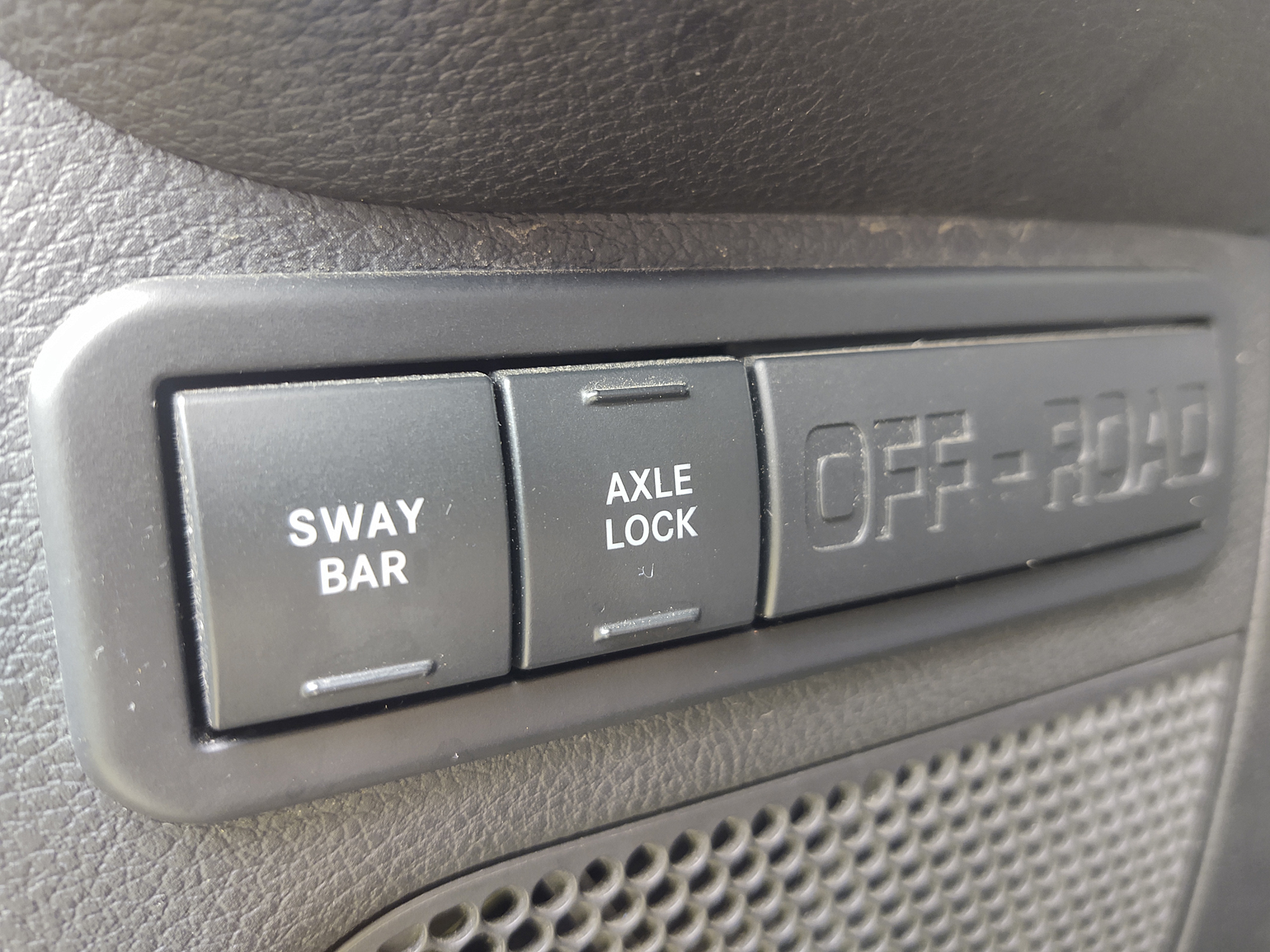
Common types of selectable differentials include air, cable, and electronic actuation.
The Rubicon models of the Jeep Wrangler TJ, JK and JL come equipped with selectable locking differentials on both the front and rear axles, as does the Gladiator JT Rubicon.
This is a factory e-locker in a JK Rubicon:
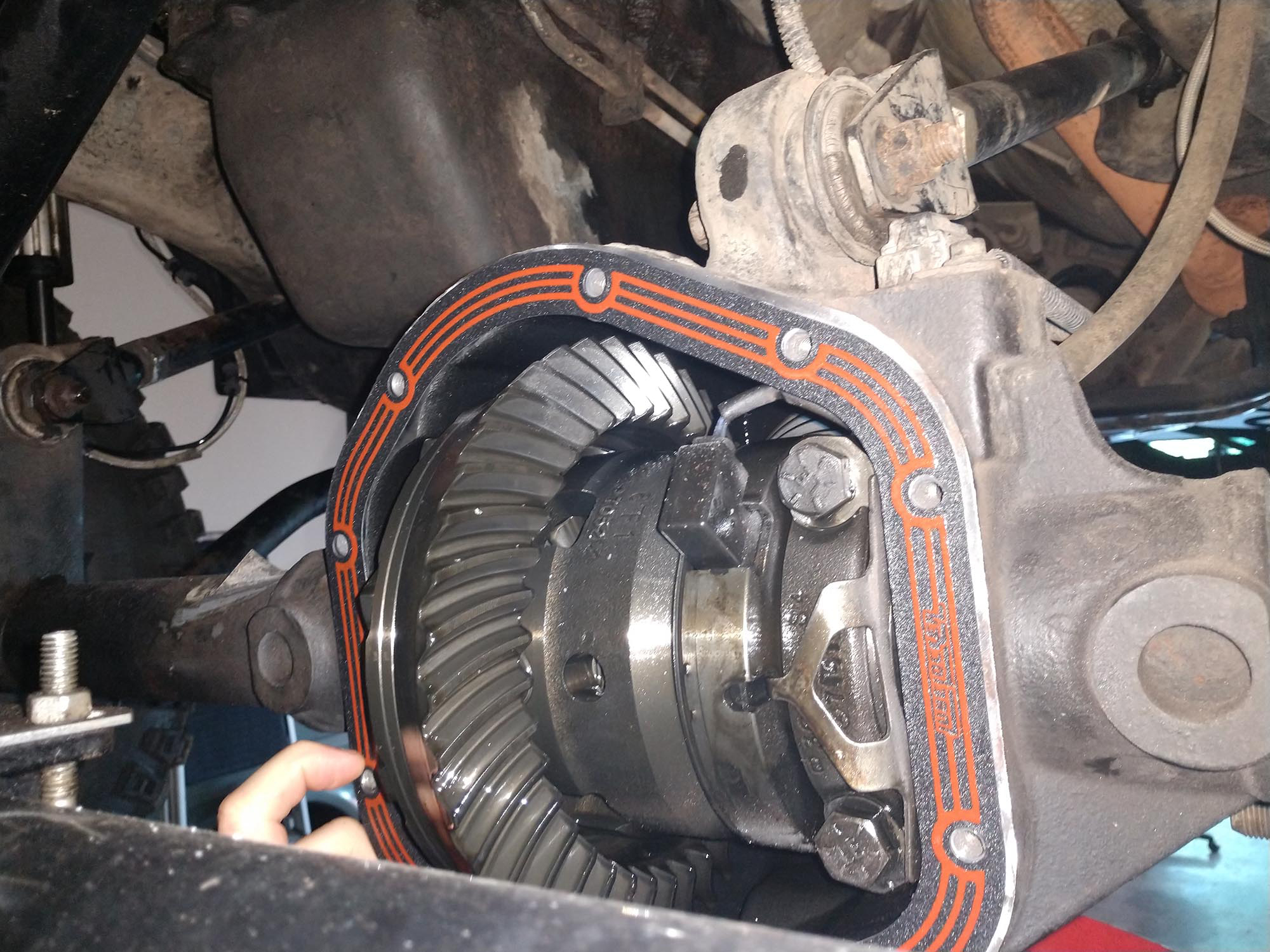
In the case of the TJ, these are operated with compressed air, and were not known to be the most reliable as the years and mileage on these models progressed. The JK models started in 2007 and used a far more durable electronic locker. Unlike the TJ edition, these had a comparatively low rate of failure — aside from corrosion in the connectors or housing itself which could happen with deep water crossings or mud intrusion — and would typically last the life of the vehicle. The JL and JT models continued this trend.
Aftermarket add-on lockers are increasingly popular, and Quadratec carries many options for every popular axle type.
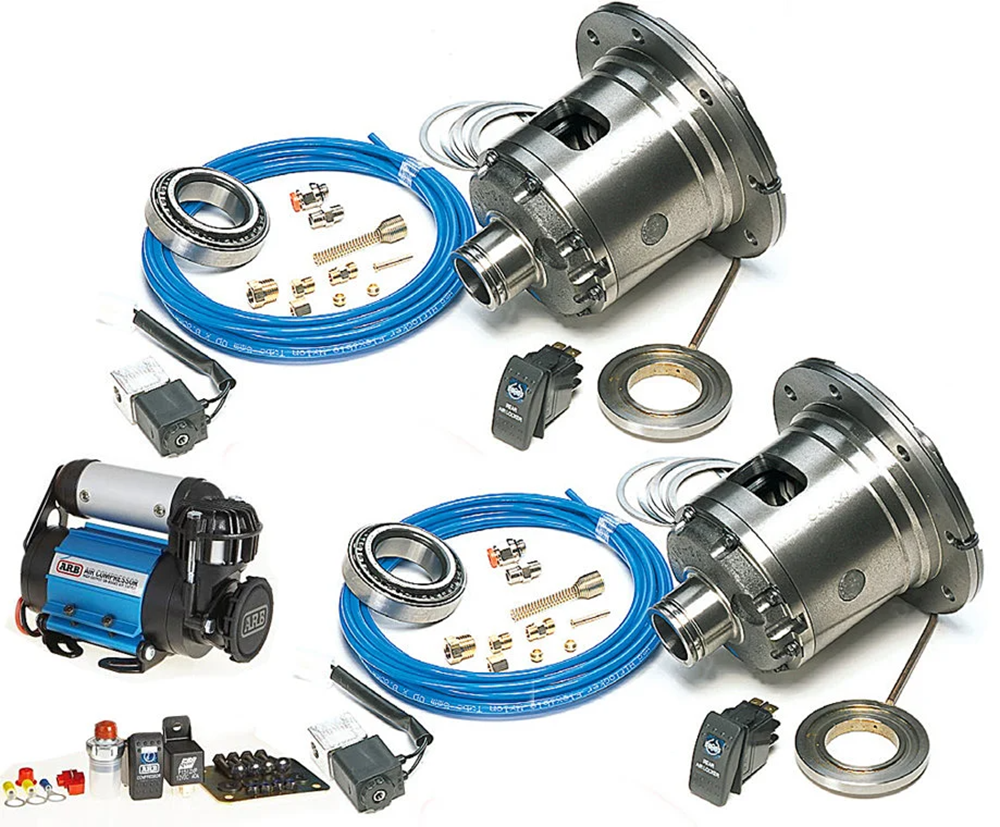
One of the most reliable in the long term is the ARB Air Locker, which relies on a on-board air supply set up in the form of a compressor or even a Power Tank CO2 system. These stout units work very well in adverse conditions, but can cease to work if there is a leak in the system.
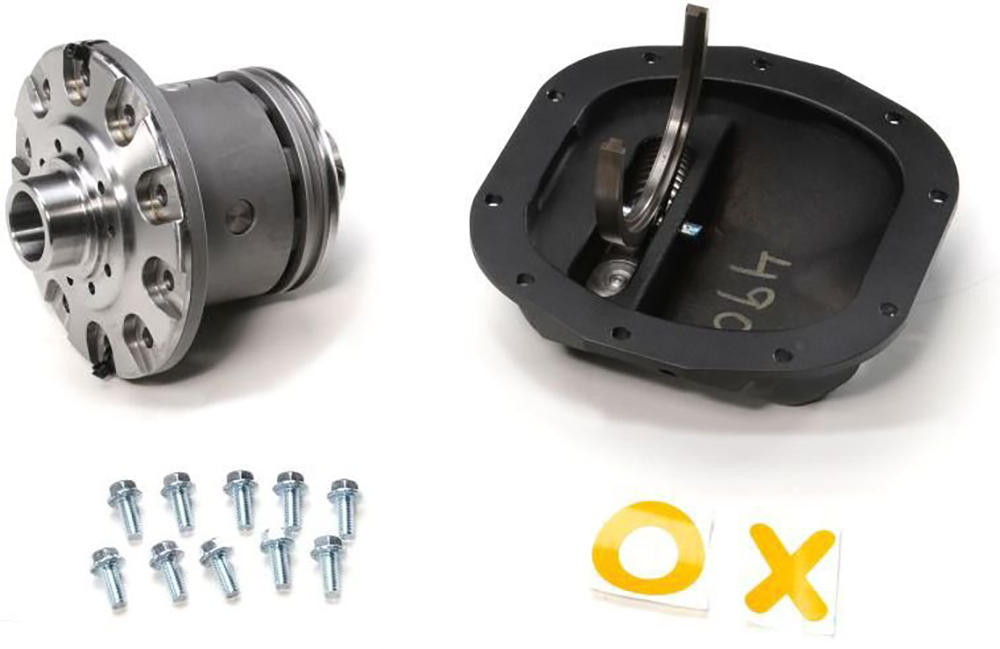
Ox brand lockers come with their own specially designed differential cover and can be air actuated, electronically engaged, as well as manually cable operated for a notable increase in flexibility and reliability.
There are many other styles in this category, and these are but a few examples. Whatever your locking differential needs, Quadratec has you covered with all types of upgrades.
If you are considering re-gearing your axles, adding a locker at the same time is a wise choice, as there is a lot of overlapping labor.