











by Matt Konkle
Managing Editor
“Well, the road didn’t cut through land like that Interstate, it moved with the land, you know? It rose, it fell, it curved. Cars didn’t drive on it to make great time, they drove on it to have a great time.” — Sally Carrera, Cars
The song said they kicked on it years ago. Movies, books and television shows all featured it through one publication or another and in the process turned the thing into a symbol of both hope and loss.
Many nicknamed it the ‘Main Street of America.’ Mother Road. And its occupants, cars and people, grew up and enjoyed themselves over the years along vast stretches of land that at once could be as urban as skyscrapers and gridlock traffic, and then suddenly turn as rural as a West Texas cow pasture.
Route 66.
You’ve most likely heard about it somewhere. A stretch of two- and sometimes four-lane road that, in its prime, loosely covered about 2,448 miles from Chicago to Santa Monica, California.
The official highway designation may be gone these days, slashed away from its bones by law in 1985, but many segments of this long-standing road are still breathing just fine today thank you — with historical designations and plenty of tourist travelers seeking to make a pilgrimage down its path like so many countless relatives and friends did years and years ago.
Today, it is estimated that more than 200,000 tourists specifically target Route 66 annually for travel. This is on top of the normal daily traffic that rolls along the remaining 85% of this historic pathway that is still drivable. Additionally, those tourists spend an estimated $132 million per year in Route 66 towns and cities.
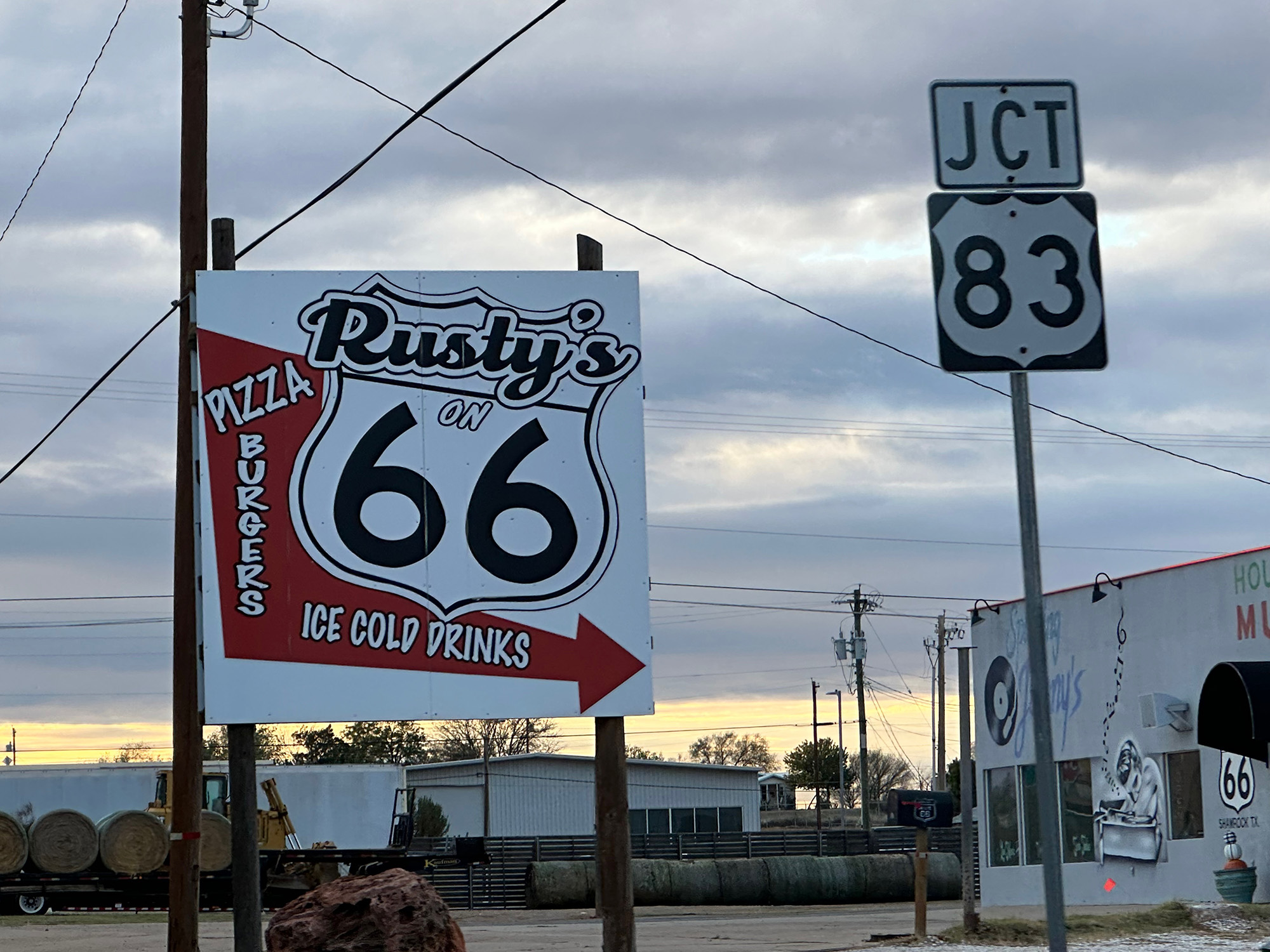
On our third day traveling from West Chester, Pennsylvania to Las Vegas, we found ourselves leaving Interstate 40 and driving a stretch of Route 66 just inside the Texas border with Oklahoma. We shortly passed more modern buildings like the Sixty-Six Shop and Towing, and Motel 6. Bute then comes the Shamrock Country Inn, a fading Route 66 Auto Repair that doesn’t look like it repairs much of anything these days, and a bright white Route 66 highway sign with Rusty’s emblazoned on it; advertising pizza, burgers and ice-cold drinks.
A little further down the road, we hit the destination we were waiting to see.
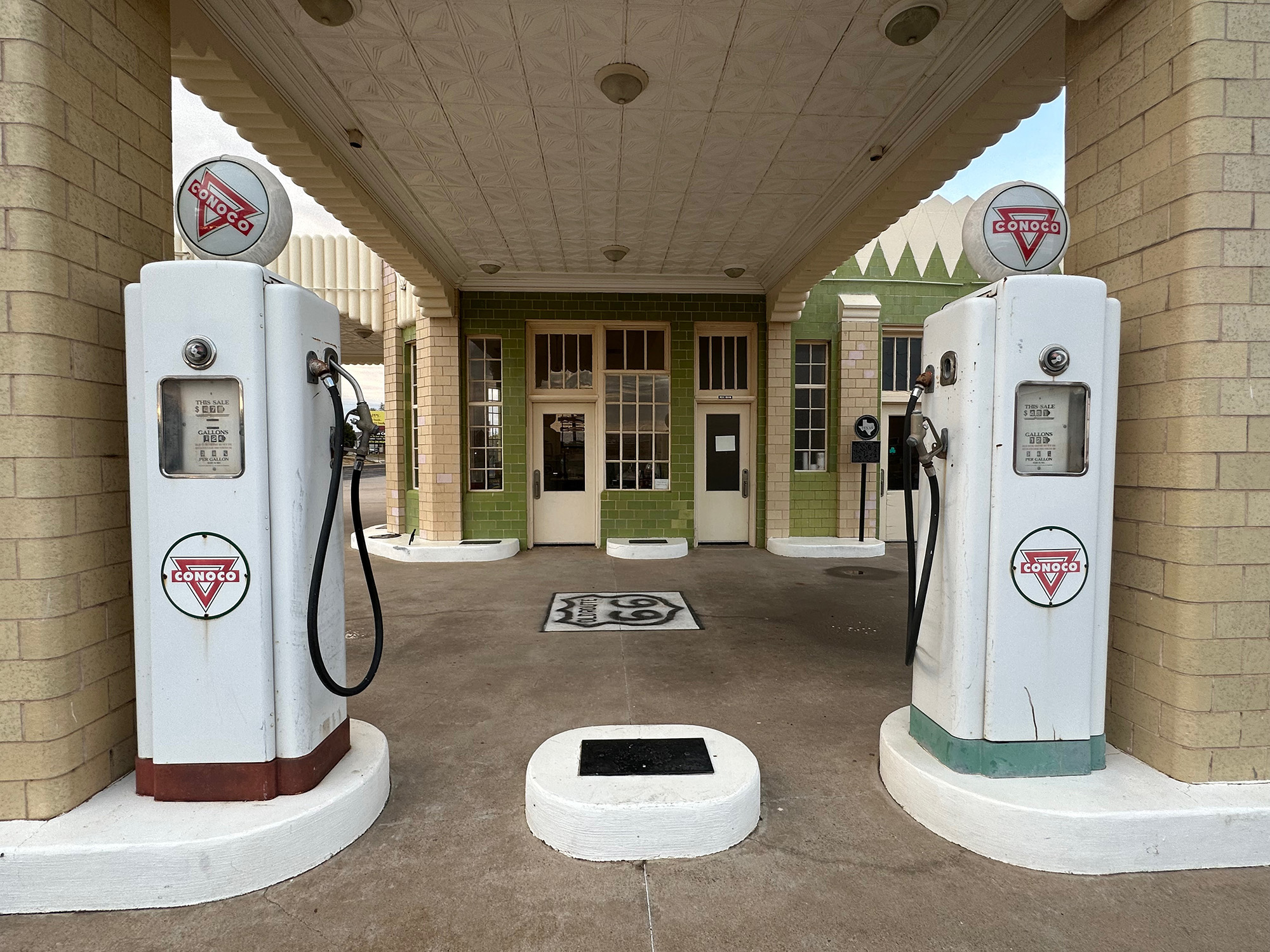
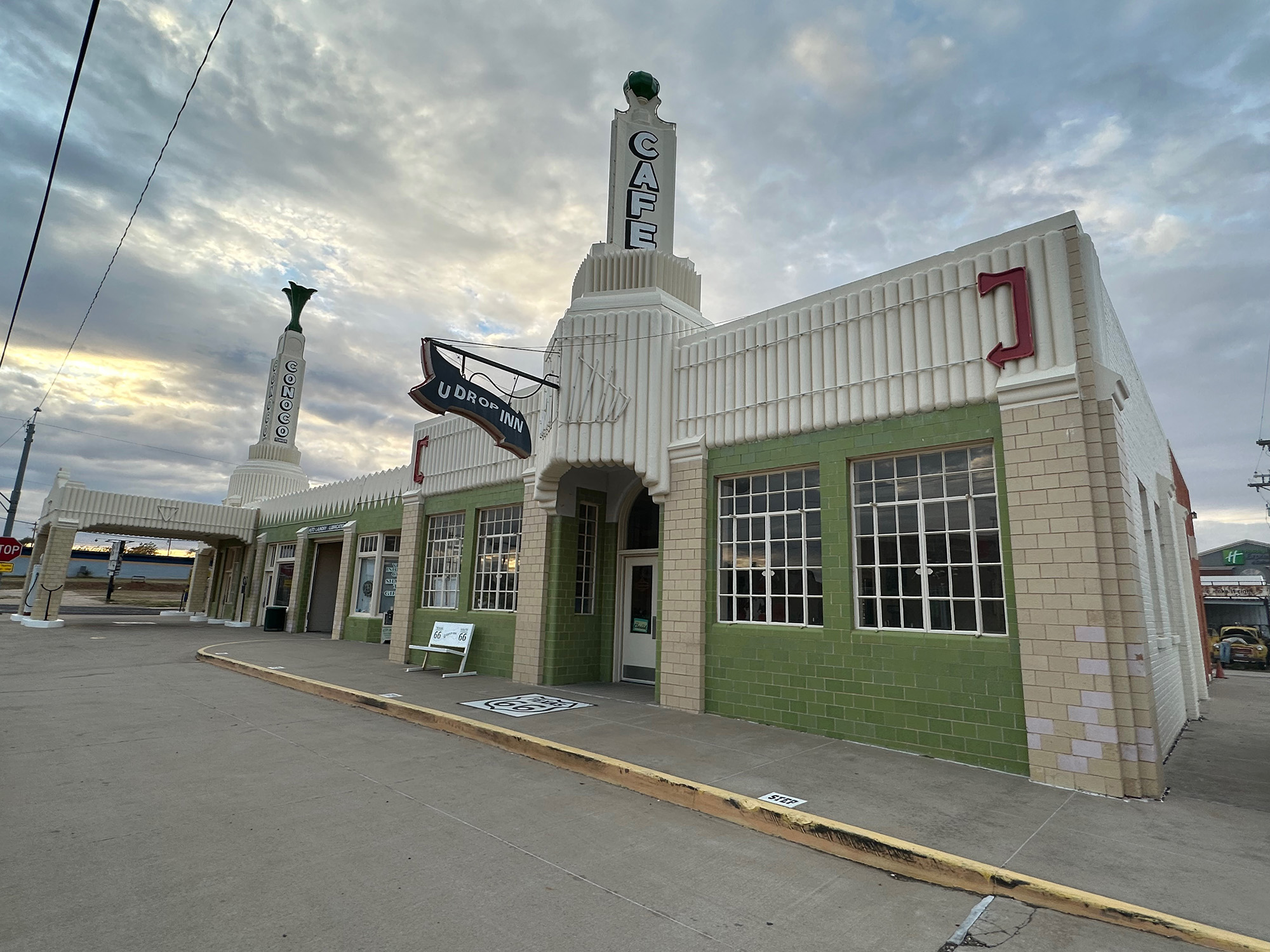
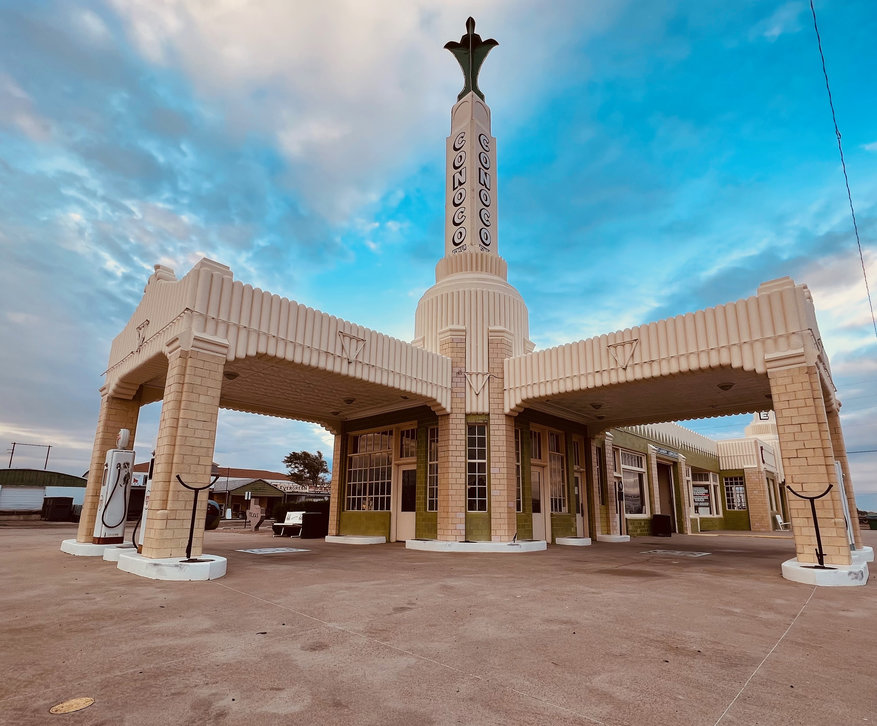
The Conoco Tower Station and U-Drop Inn.
This fully-restored landmark is a 1930s-era gas station and art deco café/diner, and one of many that were constructed along Route 66 during the early 1900s to service a growing horde of automobiles crawling across the road.
It is also the inspiration behind Ramone’s House of Body Art from Pixar’s 2006 Cars movie.
The U-Drop, at the time it opened, was the only café within 100 miles of Shamrock and soon became an entirely successful business despite the country still struggling to come out of the Depression. The place was also considered by many as a beautiful and impressive example of Route 66 architecture in Texas.
The Texas Historical Commission added it to the National Register of Historic Places in 1997, even though the building had fallen into disrepair. However, one of the city’s banks purchased the Inn and shortly received a $1.7 million federal grant to renovate it back to its original condition. The grant also provided an opportunity to build a visitor’s center, museum, gift shop and house Shamrock’s Chamber of Commerce.
The same thing seems to be happening more and more on the road now as people re-discover, and restore, buildings that are a reminder of our automotive past and offer diverse stories on our history as a mobile nation.
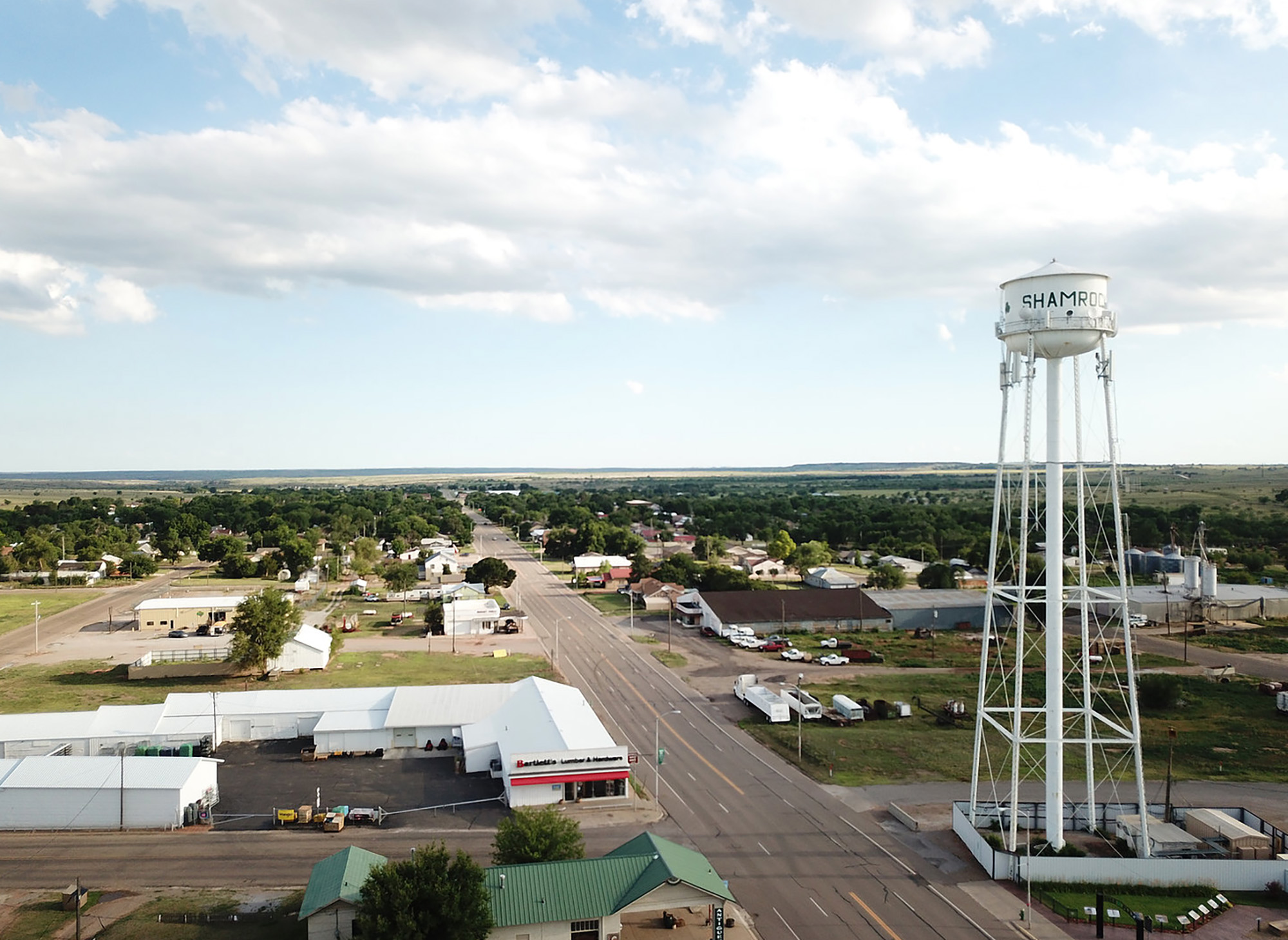
For Shamrock, like many towns along Route 66, its businesses and overall health of the town depended on that road. Even in the depression when other companies failed at a very high percentage, those ‘Mom and Pop’ places that set up shop on the side of 66 tended to stay afloat just because of the number of people traveling east to west looking to escape the dust bowl and work in California.
You could almost consider that route the internet of the early to mid-1900s.
Sadly, the Interstate Highway System’s rise to prominence proved quite a mixed blessing. Sure, it improved travel for millions across the country in the 1950s and 60s, but many towns that looked for Route 66 and its travelers to survive simply fell into the abyss without all that traffic. Plus, the 1965 Highway Beautification Act prevented a lot of merchants from placing advertising signage on the new freeways — another major factor in the closure of many established businesses.
We spent almost an hour poking around the station and inn, learning about this piece of history, and soon back on our way west. Following the path, sometimes on Route 66, that many others beat for us so many years ago.