








by Quadratec
Towing with your Jeep may seem like a daunting task, but it doesn’t need to be if you have the correct equipment and your trailer is properly configured. So let's break this topic down into three categories: Jeep, trailer and driver.
First, let’s review the factory tow ratings as a reminder for anyone out there just starting out. Jeep gives its current JL Wrangler (2018+) a 2000-lb maximum towing capacity for 2-door models, and a 3500-lb capacity for 4-door Unlimited models, regardless of trim, engine or transmission options.
Older generations were typically rated the same, but depending on the vehicle’s options they may have had a lower tow rating, so please check your owner’s manual for the actual rating for that year. Tow capacity means this is the maximum weight of the trailer you can pull. True, other vehicles with the same size engine may have a higher rating, but they also do not have the off pavement suspension that Jeeps possess.
The payload rating is also something to be aware of, as this is the maximum weight you can carry in/on your Jeep. This number can vary depending on Jeep trim level, for example my 2012 Rubicon Wrangler is listed at 700 lbs, so check your door or B-pillar for a rating sticker.
This payload rating includes anything extra added on the vehicle—fuel, driver, passengers, skid plates, winch, etc—since it left the factory. If your Jeep is over that number with all its extra goodies, then you should not tow. Add up the weight you’re carrying and subtract it from your payload rating. You need approximately 10% of your trailer weight available as payload.
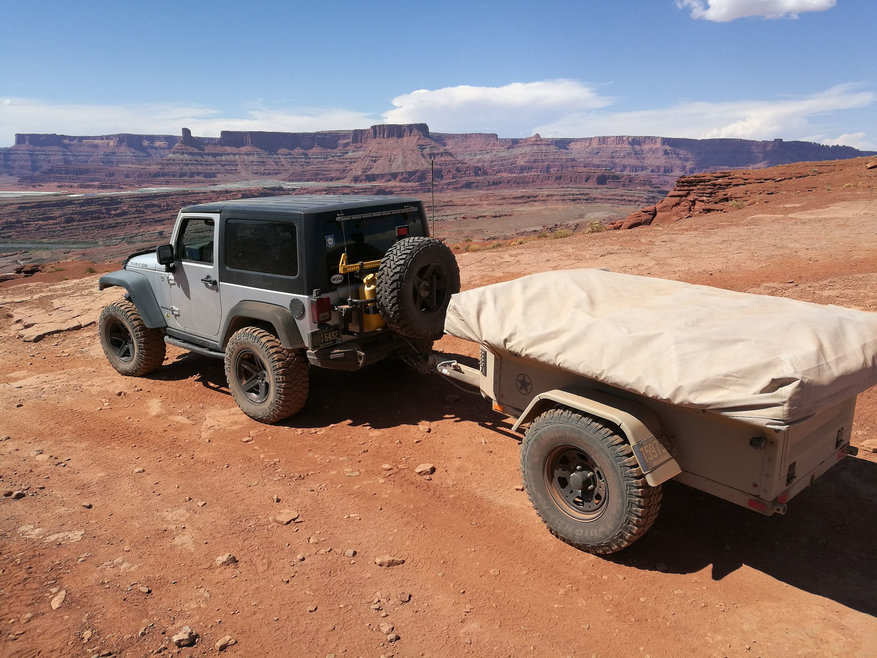
My off-road camping trailer weighs approximately 1500 lbs when loaded for a trip, so that translates to around 150 lbs of payload I need to factor. My 4x8’ utility trailer weighs around 350-lbs empty, but can get much heavier depending on what I’m getting from the home store this weekend. So you always need to add in that weight when you make additions.
After you have the weights figured out, you next need to decide if your Jeep has the necessary equipment. At minimum, you’ll need a receiver hitch and a trailer wiring plug. These are available as factory options, but also can be added as a simple afternoon modification project.
One important thing; make sure your hitch receiver is also rated for towing. That’s because many aftermarket bumpers have a hitch receiver only intended to hold something like a cargo rack. On these, look for a 'Class II' or 'Class III' designation in their product information.
Most lightweight trailers use a standard 4-pin flat plug for wiring that works with the factory wiring. You’ll also need a hitch ball, and mount with hitch pin that match your trailer. Some generation Wranglers may have cooling issues so you may want to consider upgrading your cooling systems. Other good upgrades are brake rotors and pads.
Assuming your Jeep is properly equipped for towing and has payload available, you should now inspect the trailer. Look for any damage or rust, and then ensure that the lights function properly and tires are in good condition.
Once that is accomplished, take a few practice drives with the trailer attached and get a feel for the extra length. Take plenty of turns and get accustomed to how you will have to attack corners. You may accidentally bump over a curb or worse, but, hey, that is what practice is for, right?
Also, spend some time backing up and learning how the trailer will react. You may want to employ the use of a friend or co-worker to help spot you when reversing. A good rule of thumb is you should steer in the opposite direction that you want the trailer to turn. Another is any little change in direction up front can mean a big change at the back.
If everything seems to be in working order, and you feel more comfortable driving with the trailer, then hook it up to your Jeep and load your cargo. One thing to remember, please do not forget safety chains. They should cross under the tongue to catch it should the hitch fail.
When loading cargo, make sure to distribute the weight so that approximately 10% will be on the hitch ball. If the weight is off significantly, it can dramatically affect the vehicle’s performance at highway speeds—including uncontrollable left/right movements. But also keep in mind the Jeep’s overall payload while loading the trailer. If you only have 50 lbs of unused payload, that would limit your trailer weight to around 500 lbs.
Lastly, take a look in the mirror. Remember that you now have a much heavier vehicle and a longer one, too. Take it easy on the road and give yourself plenty of extra time and enjoy the scenery.