








by Matthew Konkle
Executive Editor
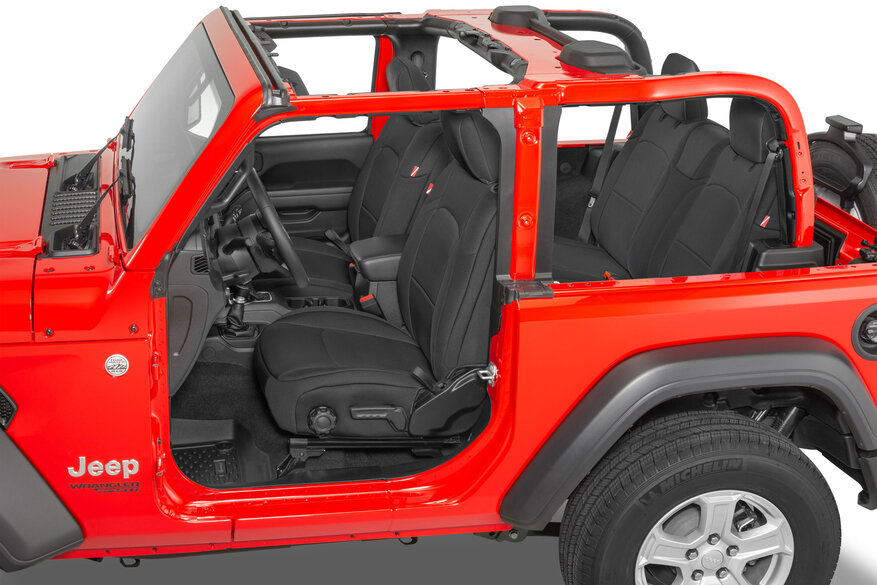
There is a particular kind of disappointment in watching the summer slip away, then climbing behind the wheel and realizing those once-black Jeep seat covers now look more like washed-out charcoal.
Maybe the driver-side shoulder has turned a washed-out gray. Perhaps the upper edge of the passenger seat looks lighter than everything below the beltline. Or the rear bench, which rarely carries passengers, has faded faster than the front.
That last detail usually gives away the culprit.
Sunlight is the leading cause of seat-cover fading, and an open-air vehicle that loves nice weather days gives it plenty of opportunity to work. Still, the sun is not always acting alone. Heat, improper cleaning products, salt, sweat, dirt, and plain old friction can change a cover’s appearance as well.
And while all that can be a pain, there are certain steps you can take to delay, and even prevent, premature fading.
The Sun Does Not Need The Top Off
Direct sunlight contains both visible light and ultraviolet radiation. Over time, that energy produces photochemical damage in textile dyes and fibers. In simpler terms, it begins breaking down the material and the chemistry responsible for its color.
That damage adds up. A Jeep parked outside for a few hours each day can accumulate tremendous exposure over a summer, even if the top and doors remain installed. Factory glass blocks some ultraviolet radiation, but it does not make the cabin a dark room. Sunlight streaming through the windshield and side glass can still bleach the surfaces it hits most often.
Remove the doors, fold the soft top or take off the hardtop, and the exposure becomes much more direct. The tops of the seatbacks and headrests usually take the worst of it because those surfaces face the sky. Covers beneath a bikini top can also fade unevenly as the sun angle changes throughout the day.
Heat adds another layer of stress. A closed vehicle can become an oven in the sun, and elevated temperatures accelerate chemical aging in many materials. That doesn't mean one hot afternoon will ruin a set of covers. It means thousands of hot, bright hours can leave evidence.
Not Every Light Spot Is Sun Fade
Before blaming ultraviolet rays for a failing seat cover, clean it according to the manufacturer’s directions.
Trail dust can settle deep into woven material and make a black cover look brown or gray, while road salt and dried perspiration can leave pale deposits. Sunscreen, skin oils, and cleaning residue can also alter the sheen, making one area appear lighter when viewed from an angle.
Friction produces another convincing imitation. The outside bolster on the driver’s seat gets rubbed every time someone climbs in or out. If the cover fits loosely, that movement can abrade the fabric's surface and raise its fibers. The worn section reflects light differently, which may look like color loss even when the dye has not changed much.
Location helps with the diagnosis. A light patch on top of the seatback points toward sun exposure, but a mark concentrated on the entry bolster suggests abrasion. Chalky streaks after a beach trip may be salt. An irregular spot that appeared after cleaning deserves a closer look at the product and method used.
True fading generally will not wash away. Once light has changed the dye itself, cleaning cannot put that color back.
Material Matters
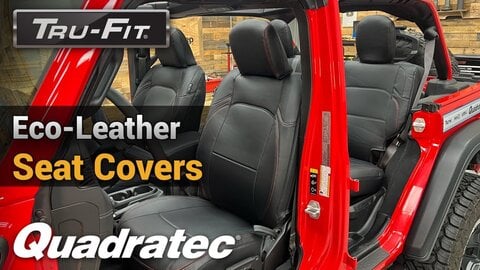
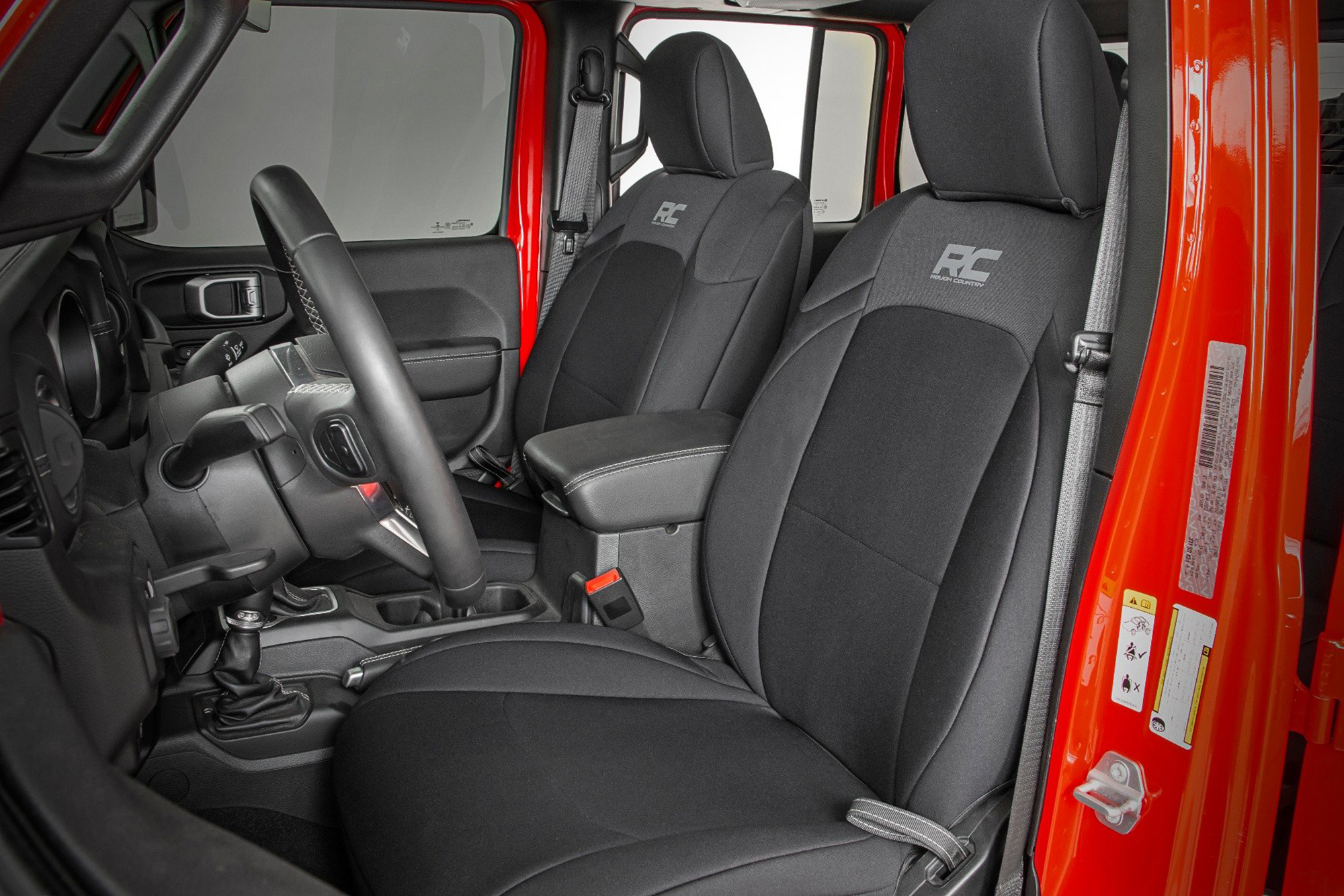
“Seat cover” describes the job, not the material. Neoprene, polyester, ballistic fabric, vinyl-like leatherette, and genuine leather all respond differently to sunlight and cleaning.
Neoprene-style covers are popular in Jeeps because they are comfortable and handle moisture well. However, many have a colored textile face laminated over a foam or rubber layer. The visible fabric can fade even when the cover remains perfectly serviceable. Salt and organic residue can also contribute to deterioration, which is why manufacturers of genuine neoprene covers often recommend a protective spray like Diver Down's UV Protectant, specialty shampoo, or simply hand washing and air drying.
Woven polyester or heavy-duty ballistic covers generally tolerate hard use, but “durable” and “fade-proof” are not synonyms. The fiber, dye method, coating, and color all influence lightfastness. Solution-dyed material, in which pigment is incorporated as the fiber is made, typically holds color better than fabric colored after the fact. Even then, long-term sun exposure can leave its mark.
Leatherette and vinyl-like covers do not behave exactly like woven cloth. Their pigments and surface coatings can lose color or gloss, while heat and ultraviolet exposure can eventually encourage stiffness, chalking, or cracking. These covers usually call for a cleaner intended for vinyl or synthetic leather rather than laundry detergent.
Genuine leather needs its own care routine as well. Sun and heat can fade the finish and pull moisture from the material. A leather-specific cleaner and conditioner can help maintain it, but a product intended for fabric or neoprene is not a substitute.
That is why the care label matters more than a bottle’s broad promise to “protect interiors.” The safest product is one the seat-cover manufacturer approves for that exact material.
Cleaning Can Help, Or Make Things Worse
Mud splattered across a Jeep’s interior is hardly a crisis. Reaching for the strongest cleaner in the garage can turn it into one.
Bleach is an obvious problem because it can remove color and damage fibers. Strong degreasers, solvents, and highly alkaline household cleaners can also attack dyes, coatings, adhesives, or foam. A stiff brush may roughen the fabric face, while a machine dryer or direct high heat can distort laminated materials.
More soap is not necessarily better, either. Leftover cleaner can attract dirt or dry into a pale film, so rinse thoroughly when the manufacturer permits it.
A safe general approach starts with vacuuming up loose grit so it doesn't get scrubbed into the fabric. Spot-test any approved cleaner in a hidden area. Use a soft cloth or sponge, work gently, and follow the dilution instructions. Air-dry the covers completely when you are finished, preferably away from harsh midday sun.
Keep in mind, these are all general guardrails, not universal washing instructions. Some covers can be removed and hand-washed. Others are meant to be cleaned on the seat. Certain fabrics may allow machine washing, while genuine neoprene manufacturers often prohibit it. The tag or maker’s instructions should settle any questions.
How To Slow Seat-Cover Fading
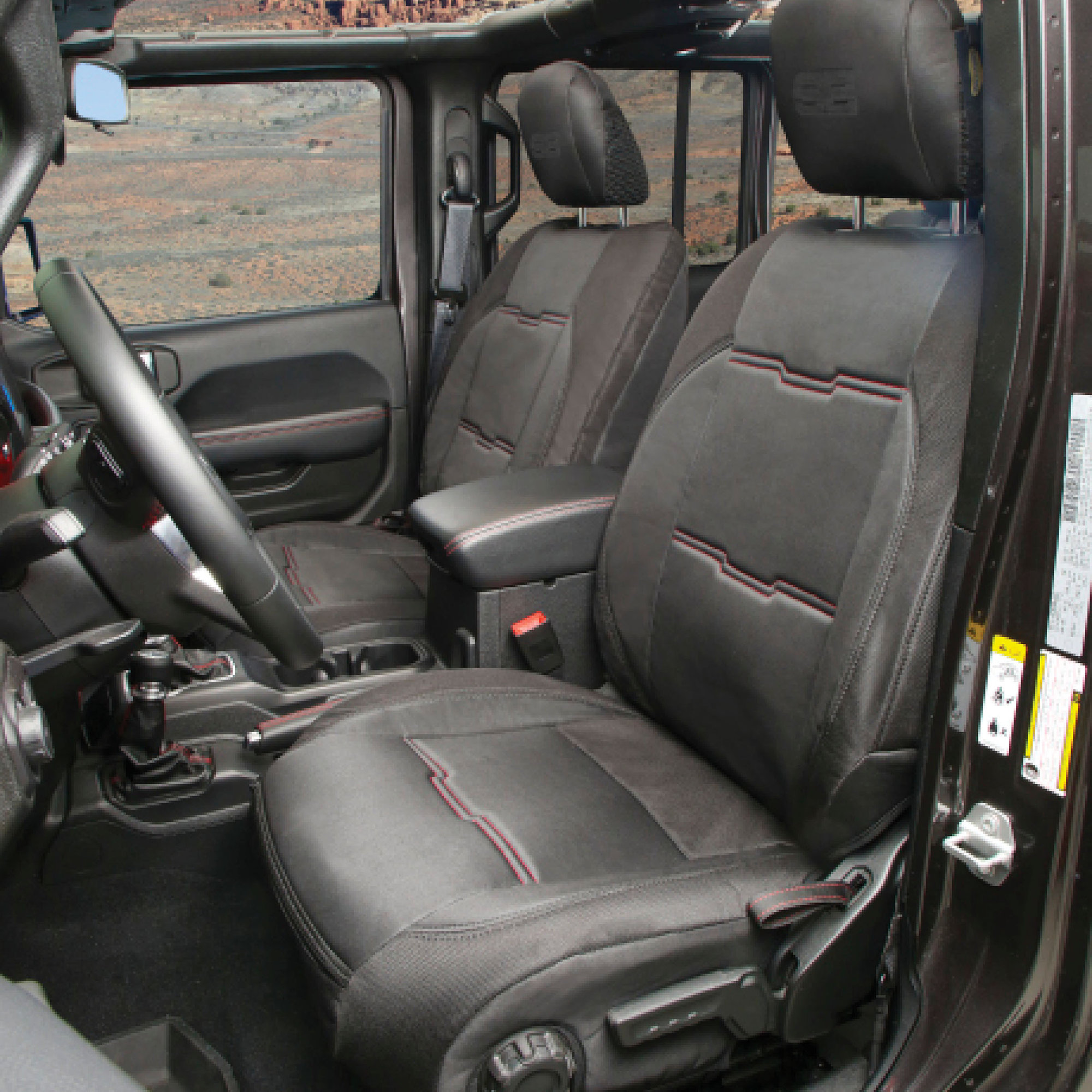
No product can make a seat cover immune to sunlight, but several habits can reduce the total exposure and extend its useful life.
First, create shade whenever practical. Put the top up when the Jeep will sit outside for hours. Use a full vehicle cover, cab cover, or properly secured interior cover when conditions allow. A windshield sunshade helps protect the front seats and reduces the heat load on the dash and steering wheel. Parking in a garage, under a carport, or on the shaded side of a building accomplishes even more.
Second, use a protectant only if it is approved for the cover material. Neoprene-cover manufacturers may offer their own ultraviolet protectant, while vinyl and leatherette require products formulated for those surfaces. Fabric protectants and vinyl dressings are not interchangeable. Test the product first, apply it as directed, and avoid leaving a slick coating on any seating surface.
Third, remove contaminants promptly. Rinse or clean away saltwater, sweat, mud, and sunscreen before they remain in the material for weeks. Salt deposits and organic residue do not help neoprene age gracefully, and ground-in grit acts like an abrasive every time someone sits down.
Fourth, keep the covers fitted correctly. Retighten straps and hooks after the material settles. A snug cover moves less against the occupant and factory upholstery, reducing rubbing at the bolsters and seams. Inspect the attachment points at the same time; a loose buckle under the seat can eventually create its own wear problem.
Finally, shop for fade-resistant products based on how you actually use the Jeep. Owners who run topless for much of the year should place ultraviolet resistance near the top of the feature list. Ask how the fabric is dyed, whether it has a UV treatment, and what the warranty says about colorfastness. Water resistance is valuable, but it does not automatically mean strong fade resistance.
Can Faded Seat Covers Be Restored?
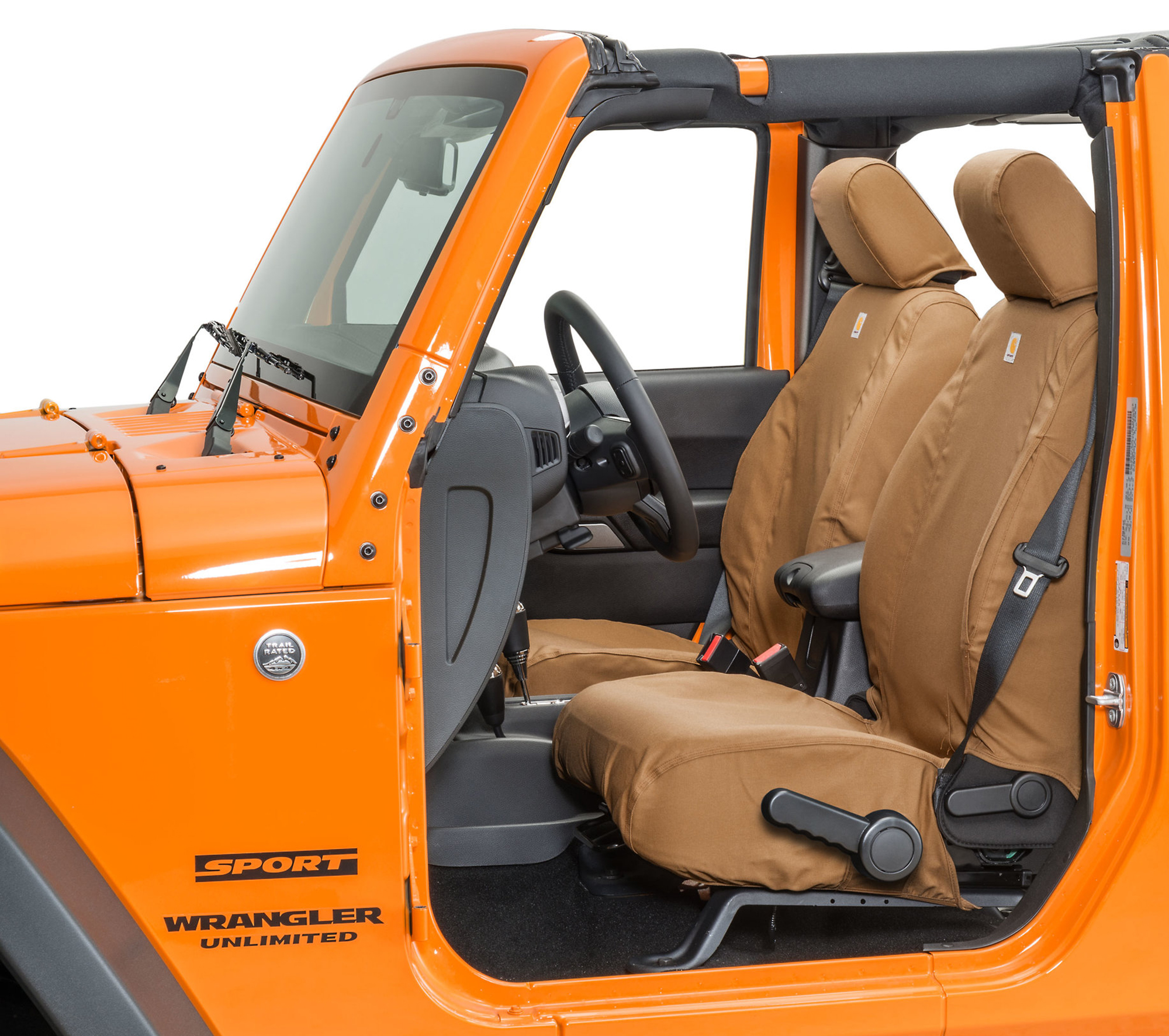
Sometimes a proper cleaning brings back more color than expected because the problem was residue or dust. True sun fading is different.
Light damage is cumulative and irreversible. Fabric dye or vinyl refinishing products may recolor certain covers, but the result depends heavily on the material and can create stiffness, uneven color, or transfer onto clothing. If you try to recolor a cover, start with the manufacturer, especially if the product is still under warranty.
Replacement may be the better answer when the material has also become thin, brittle, cracked, or loose. Seat covers are supposed to protect the factory upholstery beneath them. Once a cover begins tearing or no longer stays in position, appearance is no longer the only concern.
Fading by itself does not necessarily mean a cover has failed. In many cases, it is simply the visible record of a Jeep spending its life outdoors with the roof open, which is not the worst story an accessory can tell.
But a little shade, the correct cleaner, and a material-specific protectant can keep that story from showing up quite so quickly.
Related Jeep Guides, Tips & Trail Advice:
What Are The Differences In Jeep Seat Cover Materials