








by Matthew Konkle
Managing Editor
An aftermarket Jeep bumper is not the flashiest of modifications. It doesn’t really light up by itself. It doesn’t provide entertainment. Or add horsepower. Or even provide better off-road traction.
It just sits there. Day after day. Doing its job, protecting the vehicle. And, in the end, isn’t that really the mark of a good Jeep product upgrade?
Yup, a new front or rear (or both) bumper is something nearly every Jeep owner should acquire — right up there in importance as wheels and tires.
And that’s because aftermarket Jeep bumpers are way more than just an aesthetic enhancement over plain plastic factory versions. They are crucial for protecting your vehicle during off-road adventures and everyday driving, and their strength can certainly help out in the unfortunate case of an accident, while also keeping trail debris and obstacles from harming your Jeep.
Additionally, they can provide areas to mount a winch, auxiliary lighting, and recovery points — all crucial things when taking the Jeep off-pavement.
However, with so many different bumper choices available, questions can arise on just what style to choose. And why.
So we’ve compiled a list of many top questions people ask when upgrading to a new aftermarket protective bumper.
What are the main types of Jeep bumpers?
Jeep bumpers come in various styles, each designed for specific needs and aesthetic preferences.
The standard full-width bumpers offer maximum protection and are great for off-roading as well as daily driving. These have full flare-to-flare coverage, and most feature a winch mounting location, spots for recovery products and openings for fog lights.
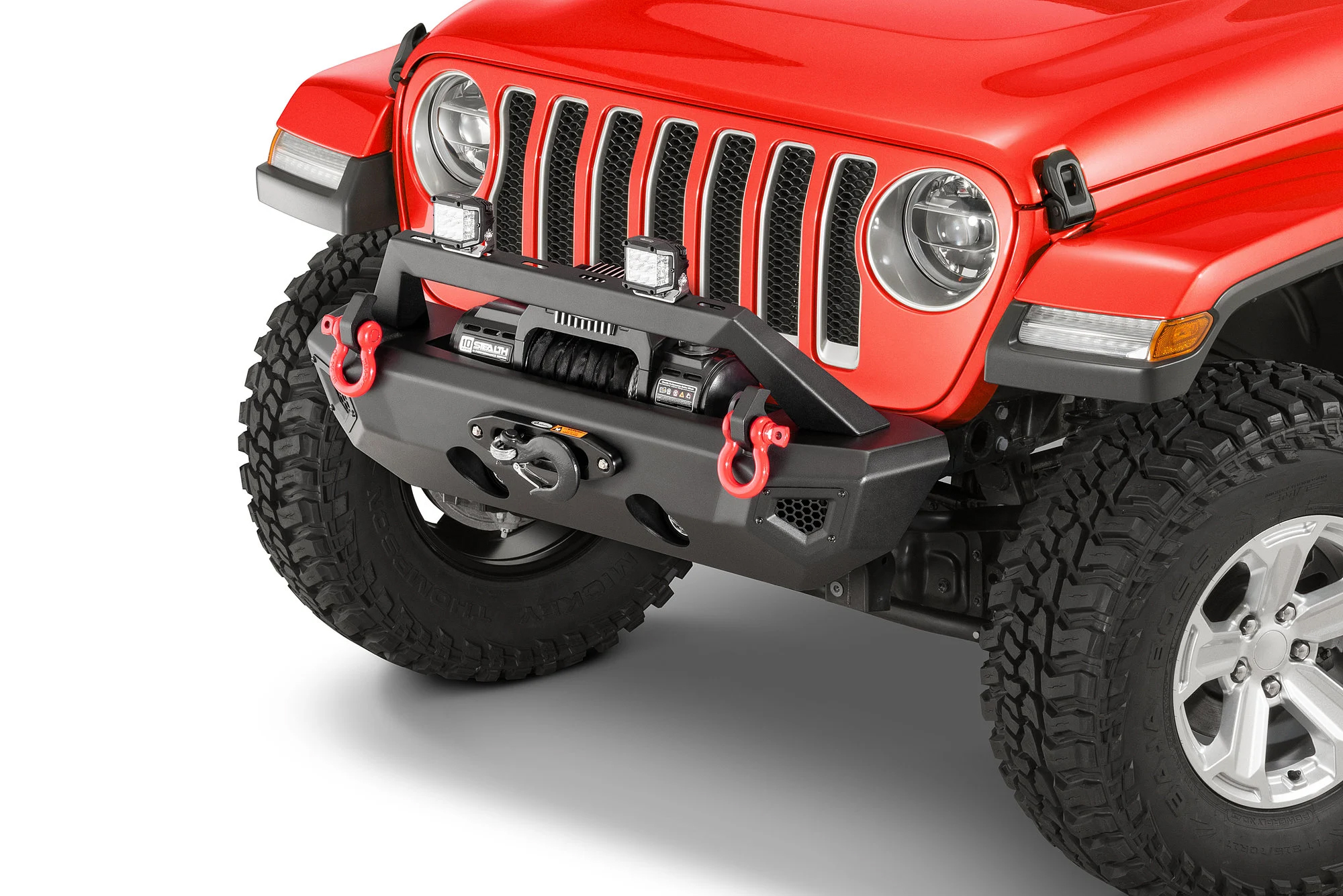
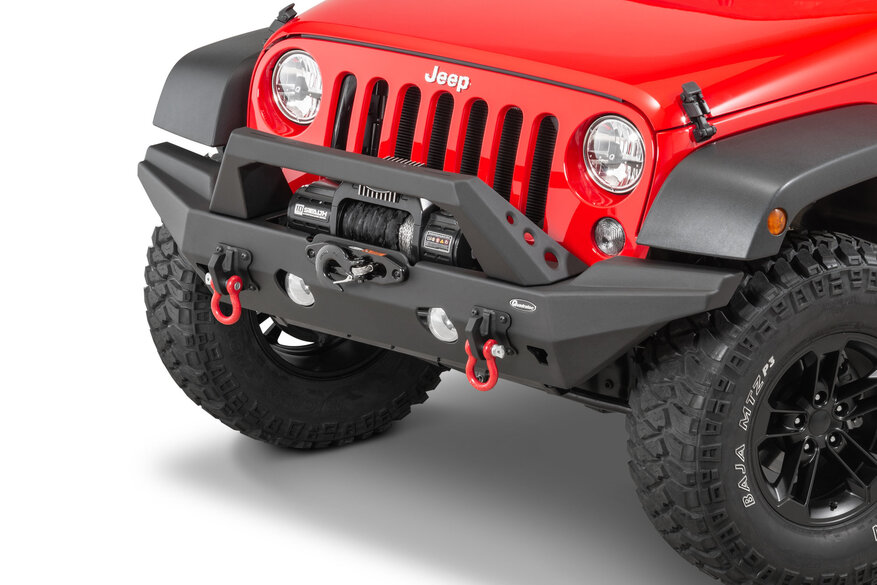
Stubby bumpers still offer decent front grille protection, but stop short of the tires. This is perfect for those who do more aggressive off-roading with larger tires, and need that open freedom for tire articulation. These smaller bumpers also provide more front-end visibility when traversing trail obstacles, making it easier to pick (and keep) a line. Like full-width versions, most of these should have space for a winch, as well as recovery points and spots for auxiliary lighting.
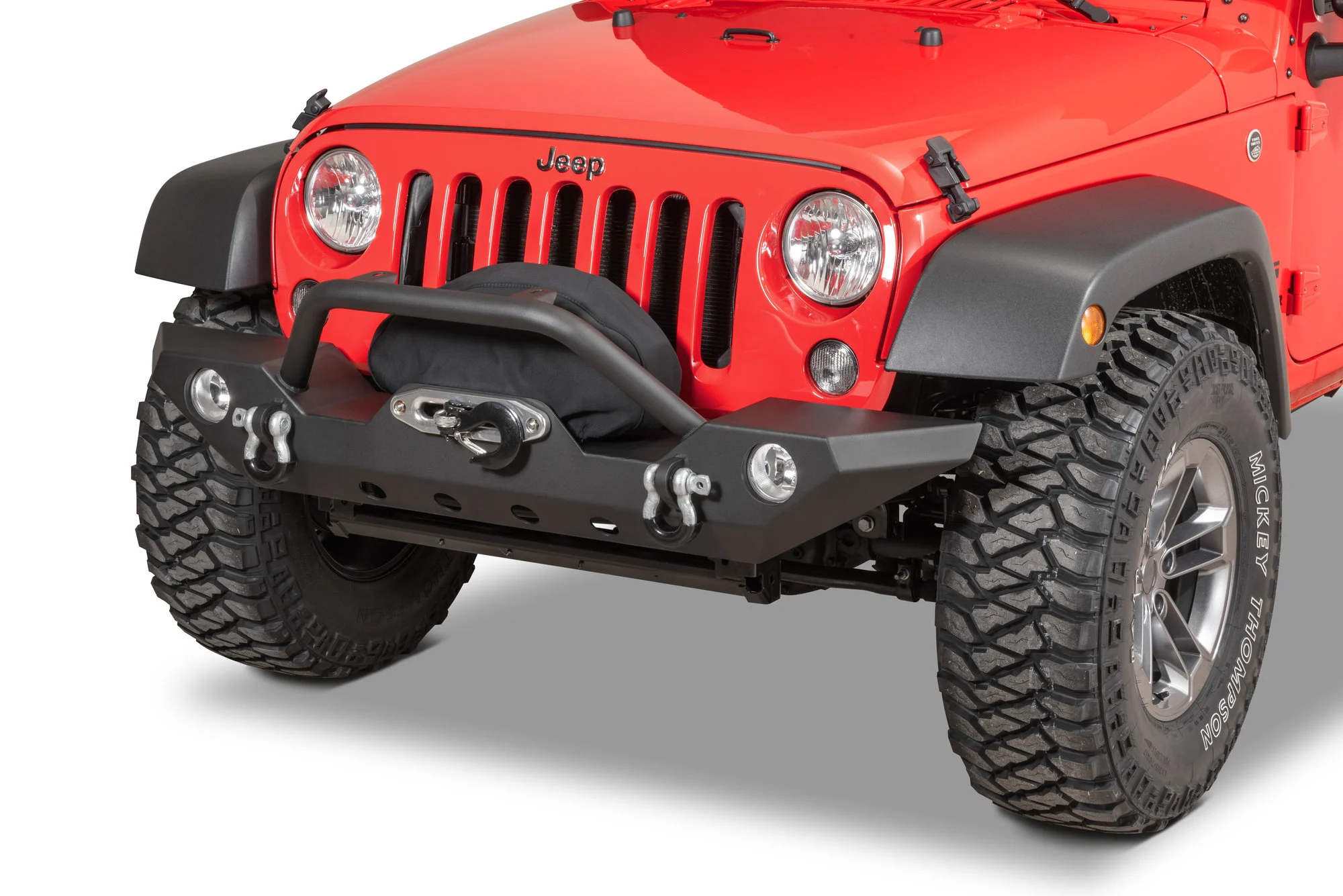
Mid-width bumpers are a good compromise for those who want premium front-end coverage but don’t want a full-width bumper. These extend out more than stubby versions, while still allowing some open space at the tires. They’ll also give you winch and light mounting options on most styles as well.
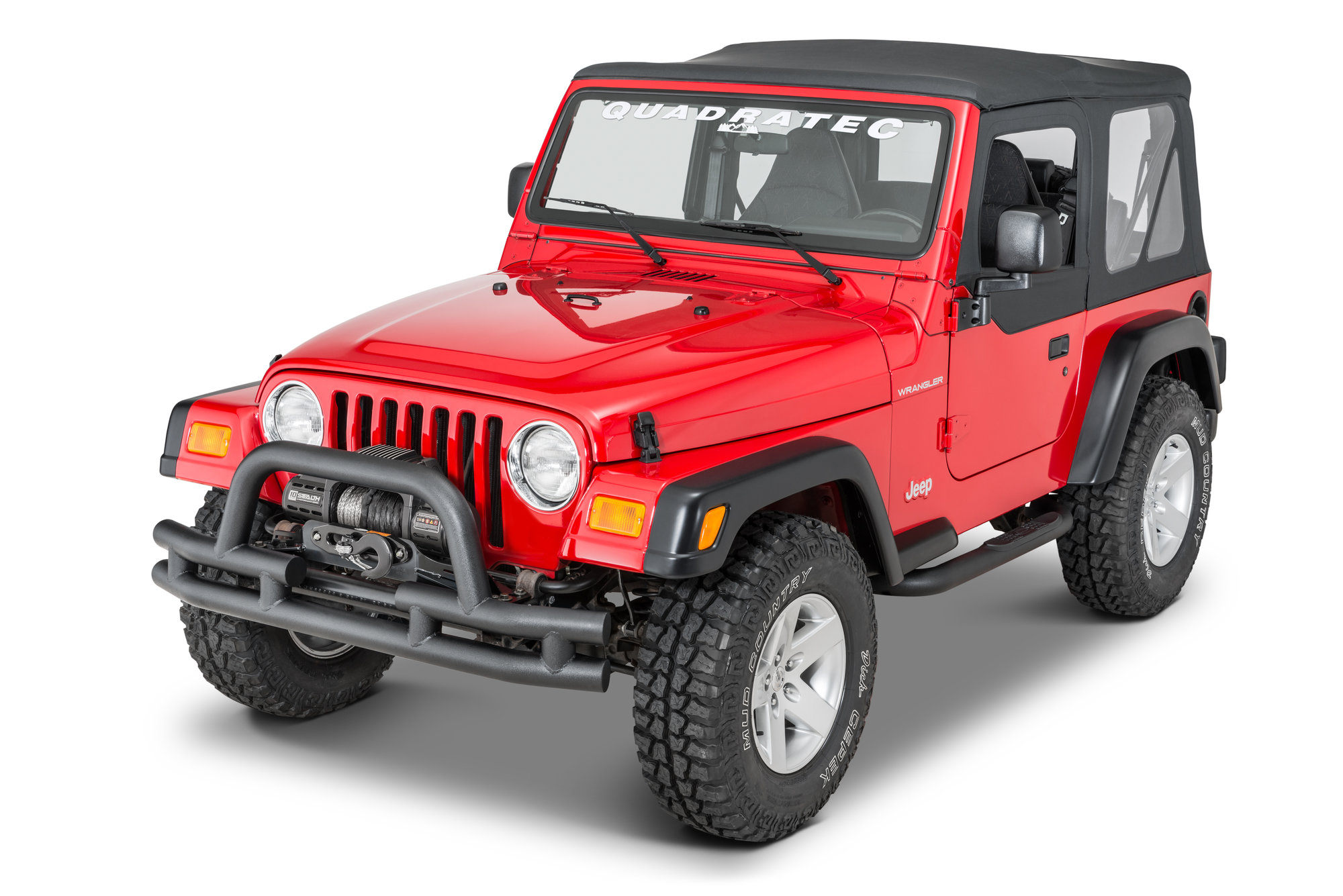
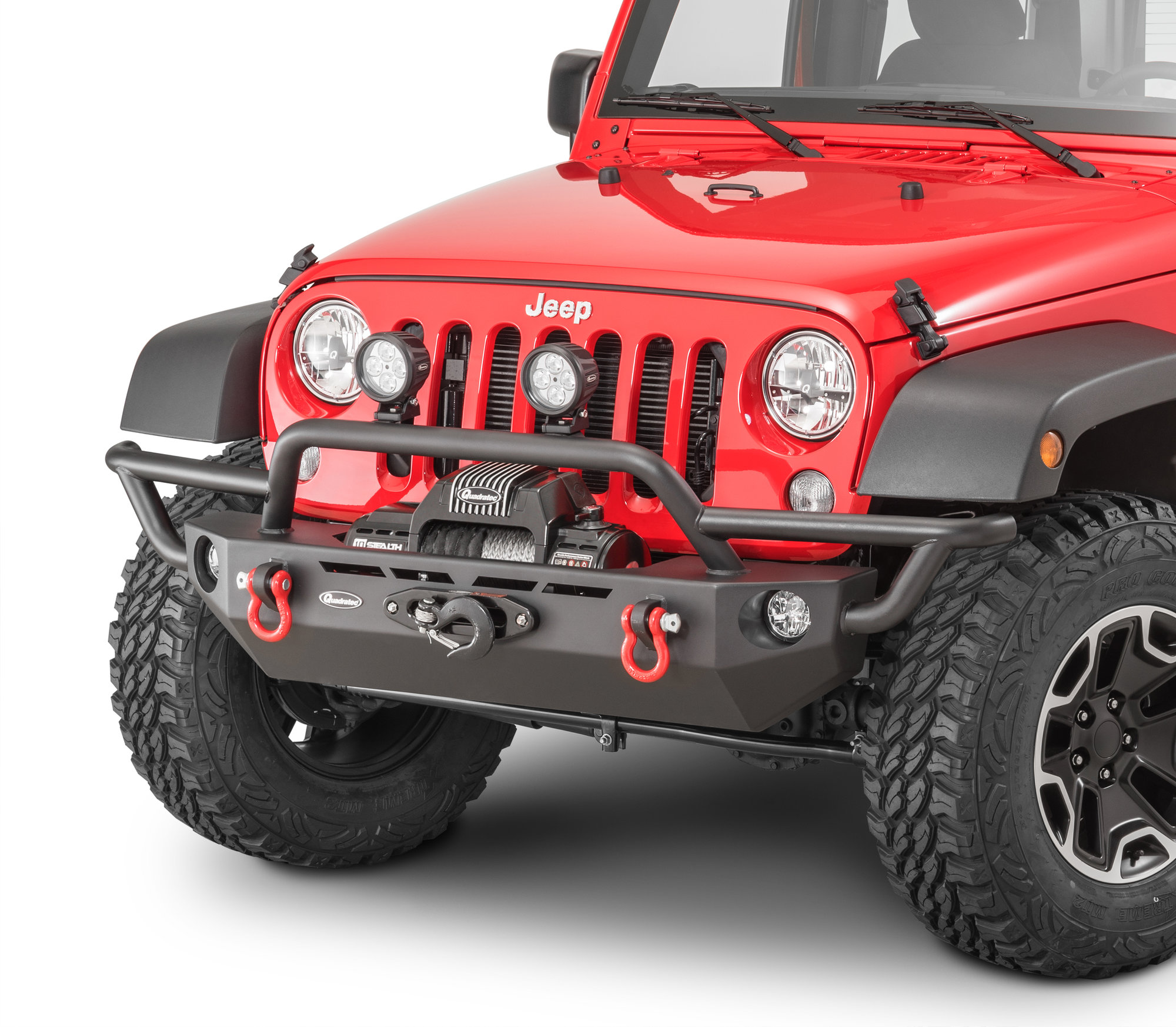
Tubular bumpers are usually lighter than the previous three styles and offer a classic-style appearance. These are also often best for daily driving protection and easier off-roading adventures. Because of that weight issue, some tube bumpers do not provide a winch mount location, but usually will have light mount tabs to relocate factory fog lights. So, if your plans do include some off-roading, and you like the tube style, then finding one with a winch mount option is a must.
How do I choose the right bumper for my Jeep?
Selecting the right bumper involves considering several factors, such as how you drive, where you drive and what kind of look you really want.
Are you a daily driver just wishing for something different than the plain factory bumper? Or does your driving terrain involve off-pavement activity with trees, rocks, and other potential threats to your vehicle? Also, do you want a bumper that fits your Jeep’s color scheme, and do you plan to add other recovery equipment like a winch, D-rings or shackles, as well as auxiliary lighting at some point?
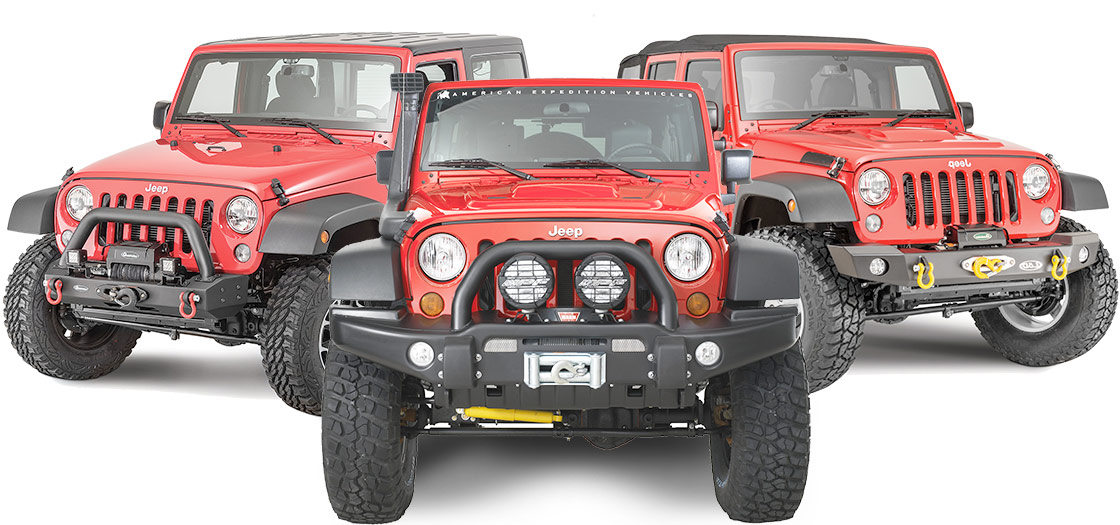
Are aftermarket bumpers really better than stock bumpers?
Aftermarket bumpers offer enhanced durability and customization options compared to stock bumpers. They provide better clearance and protection, are more robust, and come with additional options like winch mounts and auxiliary lighting possibilities.
What materials are in Jeep bumpers?
The most common materials for aftermarket Jeep bumpers are steel and aluminum. Both are durable and ideal for daily driving or a trip down the trail. Aluminum is a bit more resistant to corrosion, and is lighter than steel so it can be better when adding other heavier accessories, but treated steel bumpers can stand up to the elements as well, and their weight offers rugged off-road performance against trail debris.
Plastic is the other Jeep bumper material, but most of these are factory-style versions that offer minimal protection and are just of cosmetic value.
How do bumper upgrades impact the performance of a Jeep?
Upgrading your bumper can affect your Jeep's performance, and that can vary depending on the weight and design of an individual bumper. Most aftermarket bumpers are heavier than factory versions and will protect the vehicle better, but depending on your bumper choice and other accessories, you may need to address additional suspension products like shocks and springs. Also, heavier bumpers can affect the vehicle’s handling and usually will increase braking distance, while reducing fuel efficiency and acceleration. If that is a concern, then trading off from steel to a solid aluminum bumper does make sense.
Are there legal considerations with bumper modifications?
Bumper modifications can be subject to local vehicle regulations. Some areas do have restrictions on bumper height and the types of accessories that can be included — especially with regard to lighting. So, always check local laws to ensure your Jeep remains road-legal after modification.
How do I maintain my Jeep’s bumper?
Maintaining your Jeep’s bumper ensures its longevity and performance. Regular cleaning, checking for rust, and applying protective coatings can extend the life of a bumper. For steel bumpers, periodically check for rust — especially if you frequently drive in wet or snowy conditions.
If you do take your Jeep off-roading, give those bumpers (and the Jeep) a good wash afterward and use appropriate cleaners to remove dirt and grime from the bumpers.
Additionally, periodically check your Jeep’s bumpers to ensure all bolts are tight and not corroded. If so, rotate out that hardware to prevent further damage. Use touch-up paint if/when you discover any rust, scratches or chips.
Can I install a Jeep bumper myself?
The short answer — sure. However, you are the best judge of your own skill level. Most bumpers do not require any drilling for installation and are not complex products, so they can be put on the Jeep with simple shop tools. But they can also be pretty heavy. So, having someone else around will make that installation much easier.
Also, before starting any installation, ensure you have all the necessary hardware as some bumper designs may require you to re-use some original mounting brackets or wiring to fog light positions.
If you don’t trust yourself, then see if any Jeep clubs or social media groups in your area recommend a shop or individual who performs Jeep product installations.