











by Matthew Konkle
Managing Editor
It could be sometime this winter season, crawling along a snowy trail. A downhill slope is ahead. Just as you head into the descent, though, you see a group of vehicles at the bottom of the hill. And since you weren’t really paying attention to anything else except the hill, you didn’t see the other vehicles until you were headed downhill.
What would have been smarter?
Or, perhaps it is during the summer and a trail ride following heavy rain. You encounter thick mud or a water area across the trail with an unknown depth. Your buddies want to go off-trail and around the problem
Is that really the right move?
Quick Summary: Top Trail Rules
- Yield to Uphill Traffic: The driver climbing has the right of way.
- Stay on the Trail: Never "braid" trails or create new bypasses.
- Tread Lightly: Pack out every piece of trash you pack in.
- Never Ride Solo: Always have at least one other vehicle and a recovery kit.
- Communicate: Use GMRS radios to signal group size and hazards.
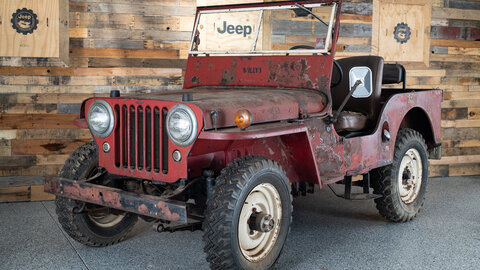
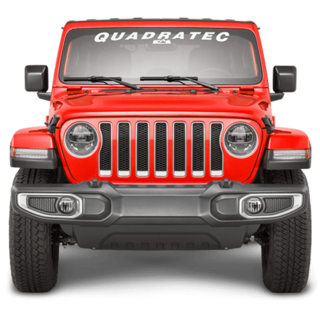
Off-roading is more than a hobby or time spent on a trail; it is a pact between drivers, the land and the community. Whether you are piloting a brand-new Jeep Wrangler JL or a wilderness-tested CJ-7, understanding the ‘Rules of the Road’ is what separates those who love venturing into the backcountry.
Who Has the Right of Way? (The Uphill Rule)
One of the most frequent questions in off-roading is: Does the vehicle going uphill or downhill have the right of way?
And the answer: Uphill traffic always has priority.
Climbing a steep grade requires momentum and a clear line of sight. If an ascending vehicle is forced to stop, they risk losing traction, sliding backward, or stalling. If you are traveling downhill and see an oncoming rig, find a wide spot or a pull-off and wait until oncoming traffic has cleared the obstacle.
Yielding to Non-Motorized Trail Users
Another important rule to understand is that Jeeps are the ‘bigger fish’ in the off-road pond. So, when you encounter hikers, mountain bikers, or equestrians, the rule is simple.
Yield to everyone.
When crossing paths with hikers or bikers, slow to a crawl or stop to let them pass.
For those who bump up against horses, pull over and shut off your engine. Horses can be easily spooked by engine noise or exhaust hissing. Wait for the rider to signal that it is safe to proceed.
We’ve unfortunately seen the consequences when the opposite happens, coming down Top of the World trail in Moab, Utah. Someone in the trail group didn’t stop as asked, and the vehicle noise startled the horse, which bucked and ran erratically—throwing the rider.
The ‘Stay on Trail’ Mandate
Environmental impact is the top reason trails get closed permanently to motorized recreation.
And it is sad to see because the solution is very simple and straightforward.
Don't ‘Braid’ Trails. If a puddle looks too deep or rock obstacles are too difficult, don't drive around and widen the path. If there is an established bypass, use it. If not, stick to the main line to prevent erosion and environmental/habitat destruction. Should you discover you can’t go through or over something, turn around and find another trail.
How to Manage Off-Road Groups
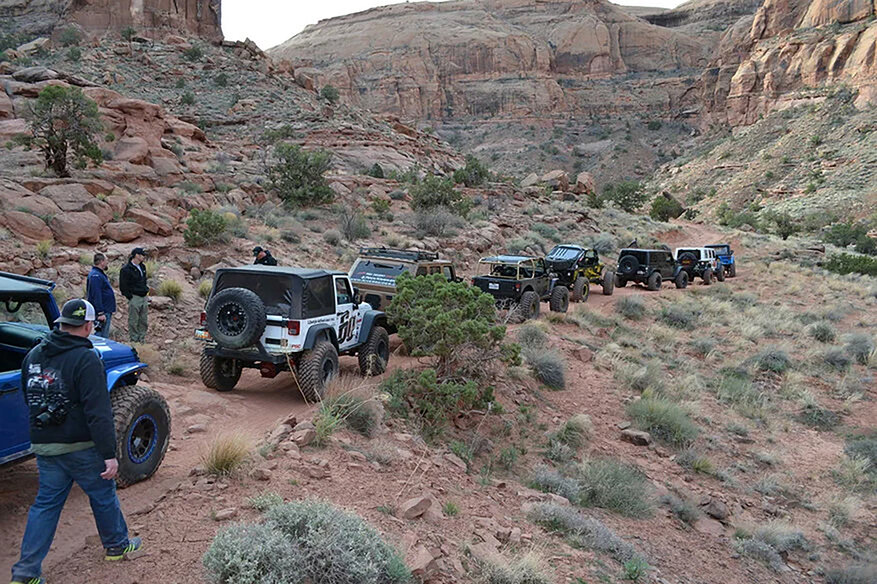
Proper communication during any trail ride (easy, medium, or hard) prevents accidental issues where someone in the group gets lost. Some trails are straightforward rides from start to finish, but many have several spurs or forks that lead in different directions.
Depending on the group size, it is usually helpful to have more experienced riders serve as mid and rear gunners to help keep everyone together. However, all drivers should ensure the vehicle behind them is in sight at all times. When you reach a split in the trail, wait and make sure that the vehicle behind you knows which way the group is going.
When passing another group, the lead driver should hold up fingers indicating how many vehicles are behind them. A closed fist signifies you are the last person in your group.
Additionally, as smartphones do not always have service when off-roading, each vehicle should have a GMRS or CB radio for groupwide communication. The message could be as simple as “stopping for a break”, calling out oncoming obstacles, or "All clear" once the entire group is through that obstacle.
Dust and Following Distance
During drier months, dirt or sand kicked up when off-roading creates dust, which can quickly limit visibility. And while it may seem fun ‘dusting’ those friends behind you, it’s actually quite dangerous.
A better solution for those dry trails is to slow up a bit so not as much dust floats into the air. For trailing vehicles, create enough of a gap where that dust isn’t a visibility issue. Tailgating reduces reaction time if the lead driver hits a sudden bump or is surprised by oncoming traffic.
Waste Management: Pack It In, Pack It Out
This rule may seem like common sense, but raise your hand if you’ve seen trash and other stuff strewn across sections of a trail. Seriously, the wilderness is not a trash can. This includes stuff like candy wrappers, bottle caps, plastic food carriers, empty condiment wrappers or bottles, aluminum foil, etc.
Also, while organic waste such as orange or banana peels, as well as other fruit and vegetable remains, are biodegradable, they also can harm wildlife and affect animal habitats. So toss those things into a trash bag as well.
And then there are broken parts. Spend enough time off-road, and something is bound to break or snap off. It could be a mirror following a tree strike, a fender flare, or something larger like a driveshaft. If you do break something, don't leave the shrapnel on the trail. Use a Spare Tire Trash Bag to haul it home, or toss it into the backseat if it is something larger.
Being a ‘Trail Hero’ (Recovery Etiquette)
If your group comes across someone stranded, the unwritten Jeep community rule is to offer help. However, when doing so, always prioritize everyone's safety.
It is always a good idea for all trail vehicles to carry recovery essentials like tow straps, D-rings, soft shackles and gloves. These are things that can all be found in a good recovery kit.
If the assisting vehicle has a winch, ask before acting. Don't just hook up a winch line to a vehicle in distress. Craft and discuss the recovery plan with the stuck driver to avoid vehicle damage or injury. And make sure everything is properly connected, that all spectators are at a safe distance, and the winch line has a damper attached.
Final Thought: Preserve the Access
Most trail systems, especially west of the Mississippi River, are on public land. And these days, some of those areas are under pressure to eliminate motorized recreation.
So remember, we are always guests on those lands. By following these rules, we all help increase safety for everyone on the trail and ensure that the Bureau of Land Management (BLM) and the National Forest Service keep these trails open for the next generation of Jeepers.
Related Jeep Guides, Tips & Trail Advice:
How to Prepare Your Jeep for Winter Recovery: 2026 Gear & Safety Guide
What Are The Differences In Off-Roading A Wrangler TJ, JK and JL