








by Matt Konkle
Managing Editor
The whole thing seems simple. You head out in the morning and notice your passenger front tire looks low. So you make a mental note to stop by the gas station on the way home and add some air back into that rubber.
Problem solved, right?
Maybe.
Here is the catch. Visually that tire may appear low, but is it though? It could just look that way and actually have plenty of pressure — especially on larger aftermarket tires. Then you’ve just wasted time on something that did not need to be addressed.
Then again, if a tire seems low, it could be significantly low on air pressure. And that is not the best thing as an underinflated tire is a primary cause of premature wear — not to mention more frequent trips to the gas station and degraded ride quality. Yup, low tire pressure is not just an isolated thing. It can severely affect important (and expensive) components on your Jeep.
So how do you really know when your daily driver Jeep tires are low on pressure, what is the proper inflation amount and when is the best time to check?
Well, today’s more refined Jeep vehicles make it pretty easy. That’s because each wheel has a monitoring system attached to the valve stem that continually ‘talks’ to the vehicle’s computer; letting it know when tire pressure drops below an acceptable level.
Should that happen, you’ll see a yellow-bracketed exclamation point pop up on your dash. Then, you can cycle through the information display until a tire pressure screen appears. This will show you the current pressure of each tire.
While this is a helpful system, it is not foolproof as the warning normally does not kick in until a tire is somewhere around 25% or so below manufacturer specs. Plus, you may have an older Jeep that does not have this system equipped.
Overall, the best way to keep track of your tire pressure is the good, old-fashioned, check-it-yourself method. And that involves using some type of measuring device. On average, tires will lose about 1 psi (pounds per square inch) each month and can also lose 1 psi per 10 degrees of temperature change. So taking a look at your tire's pressure at least once a month, or whenever there is a decent temperature variation, is certainly recommended.
As far as the perfect pressure rating; anyone with stock factory tires can find the manufacturer’s recommended cold inflated psi pressure number on a placard label somewhere in the front driver door sill area. That’s right – cold inflated. This doesn’t mean find the coldest area and then fill your tires with cold air, but rather taking a tire pressure reading after the vehicle has been parked for three or more hours.
If you do happen to take a tire pressure measurement when the tires are hot – meaning you’ve driven a bit — the world won’t end. Just remember that reading will be somewhere around 4 psi higher, so make sure you compensate if filling those tires after driving for awhile.
Another thing to remember; your respective tires will have a psi pressure number branded on the tire's sidewall which you may think is the correct number to follow when filling. But that number is simply the maximum recommended inflation pressure for the tire under load, and not the correct pressure to use for regular driving. When checking and adjusting tire inflation pressures, the correct inflation pressure for everyday use is always the one found on the vehicle’s tire information placard label.
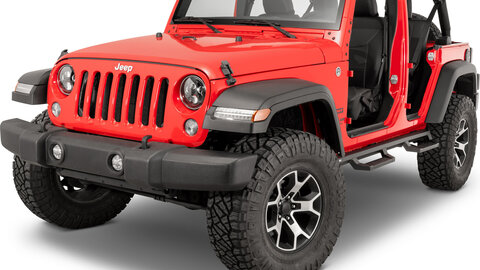
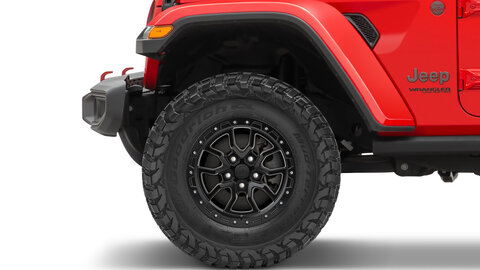
Now, for many, replacing stock tires with something larger is one of the more important modifications after purchasing a Jeep. And those new tires will certainly look great, but can cause issues if you are not careful, as they may not have the same psi requirements as factory.
For example, your stock 255/75/R17 Jeep tires may be rated at 35 psi, however those new Mickey Thompson Baja Boss All Terrain tires could have a lower recommended pressure. Perhaps something like 32 psi. So it is definitely best to either check online or call your tire manufacturer and see what pressure setting they recommend.
You may even want to experiment a bit and see what psi level gives you the best ride. When you find a setup you like, you can check potential tire wear by performing a chalk test. This involves marking a section of your tire with chalk, then seeing how it reacts on the tire after driving a short distance forward and backward — maybe 50 yards or so — on a concrete or asphalt surface.
If the chalk is only worn off on the tire’s center, then drop the tire pressure slightly and redo the test. With small adjustments, you should soon see the chalk wear off evenly and across the tread.
This may be a time-intensive process, but one which should ensure your aftermarket tires are set to a proper pressure for good tire wear. After all, larger aftermarket tires are quite a bit more expensive than factory so protecting that investment from premature wear is important.
Those of you with later model Jeeps that have TPMS modules can re-use them on larger tires, but always verify the units have been reset to correct pressure. Your installer or dealership should be able to calibrate new TPMS settings during tire installation, but you may want to purchase a tuning kit — especially if you are adding a suspension lift or other new components that require things like a speedometer or shift point adjustment.