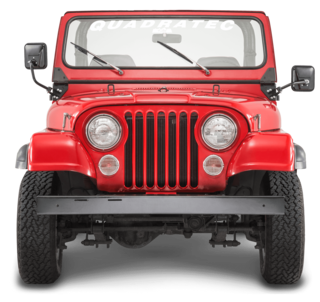












by Matt Konkle
Managing Editor
Winch
/win(t)SH/
noun
noun: Winch; plural noun: Winches
A hauling or lifting device consisting of a rope, cable, or chain winding around a horizontal rotating drum, turned by a crank or by motor or other power source.
Some refer to it as a lifeline. An extension of your Jeep just as important as, say, tires are for connecting to the road. Or bumpers for added protection.
Some even go so far as to require one on your vehicle when heading out on a trail adventure.
It is not going to help you go faster, or stop sooner, but when it comes to safety, there isn’t much else you can get that is better.
Sure, those recovery kits and tow straps are helpful if something should happen to you or someone in your off-road group, but nothing really beats having a piece of equipment on the front of your Jeep that has the sheer power to extricate a vehicle from nearly every recovery situation.
That’s the benefit of a Jeep winch, and it has been helping those hearty souls who love traveling off pavement and into the wilderness for as long as Jeeps have been around.
So what really is a Jeep winch? And why do so many people seem to have one on the front of their vehicle?
If you are new into the Jeep world, or are really starting to expand your comfort level into some off-road driving, the whole thing isn’t that tough to digest.
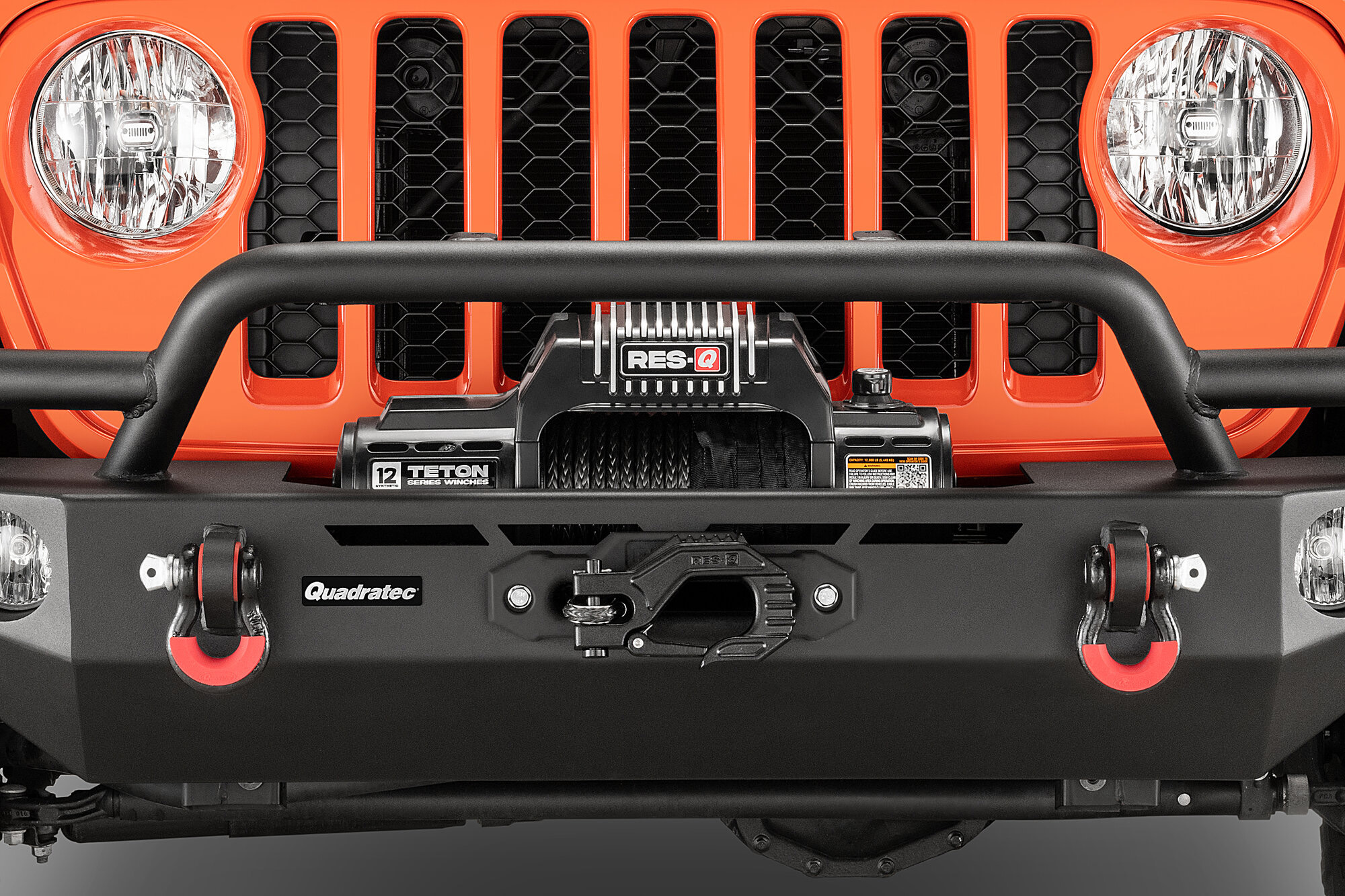
In its simplest terms, a Jeep winch is a pulling device that is usually mounted to the front bumper and allows you to more easily recover should you (or another vehicle) lose traction and become stuck. It has cable wrapped around a rotating drum that can be spooled out and attached to another vehicle (or some other mounting point). This cable can then be retracted using a remote attached to the winch, pulling the incapacitated vehicle to freedom.
Many think that a winch is strictly an off-road luxury item for only a select few, but in reality it can be just as beneficial for a daily driver as for the hardcore off-roader. That’s because weather conditions can sometimes be unpredictable wherever you drive— especially for those who live in true four-season climates. Water, mud, ice, or snow can create problems on any surface.
Now, a Jeep winch consists of several integrated components including a waterproof housing that protects the interior parts from damage, a motor and a system of gears that properly turns a drum that has either steel cable or synthetic rope wrapped around its base. The cable or rope uses a screw to attach to the drum on one end, and has a hook on the other end that can clip to another vehicle’s mounting point, or wrap around another location like rocks or a tree.
The entire unit can be either be powered through the vehicle’s electrical system or by the Jeep’s power steering pump — depending on the style of winch.
An electronic winch is a bit more cost-effective of the two and is wired into the Jeep’s battery, which then powers a motor that drives a system of gears and controls line speed. This type of winch is easy to install, has a higher line speed and can be used for a short time when the engine isn’t running. However, it is a heavy draw on the electrical system and can drain the battery when the engine is off.
Hydraulic winches draw power from the Jeep’s power steering pump instead of the battery and tend to be more expensive than their electric counterparts. The installation is also more involved, but this style winch is able to run constantly without the worry of it overheating and burning out a motor. This style winch is also fully submersible and is generally better for those who expect to use it quite often — such as the hardcore off-roader.
All Jeep winches utilize some type of cable. After all, what good would a winch be without that, right?
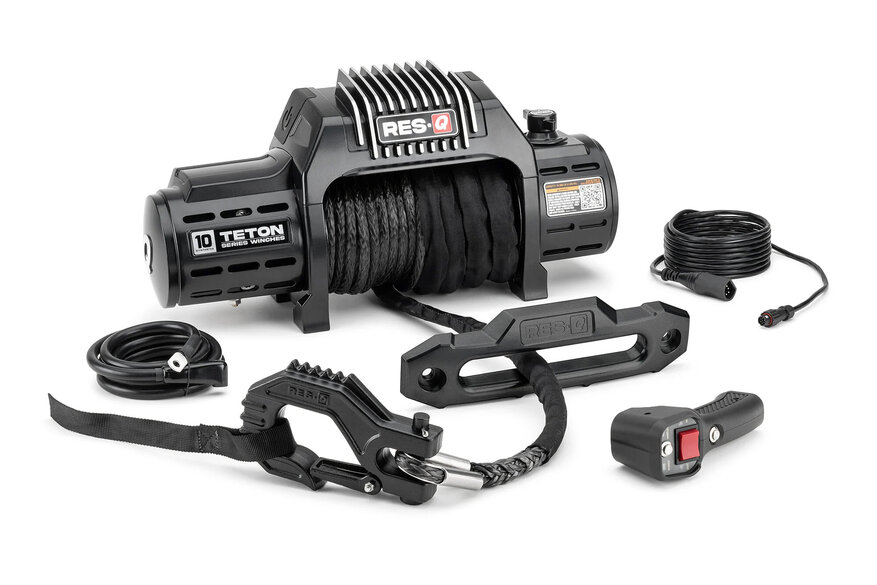
The most popular line inside a winch these days is synthetic, simply because of its weight difference and safety benefits. See, unlike steel cable, a synthetic rope does not store energy so if it does snap during a recovery, it usually falls straight to the ground. Synthetic rope is also easier to clean, floats on water and has a higher break strength than steel. It does, however, require a bit more upkeep as UV can affect the rope and heat can damage it over time. Synthetic rope is also on the higher end of the pricing scale. Yet, for most people, it is an expense well worth the benefits.
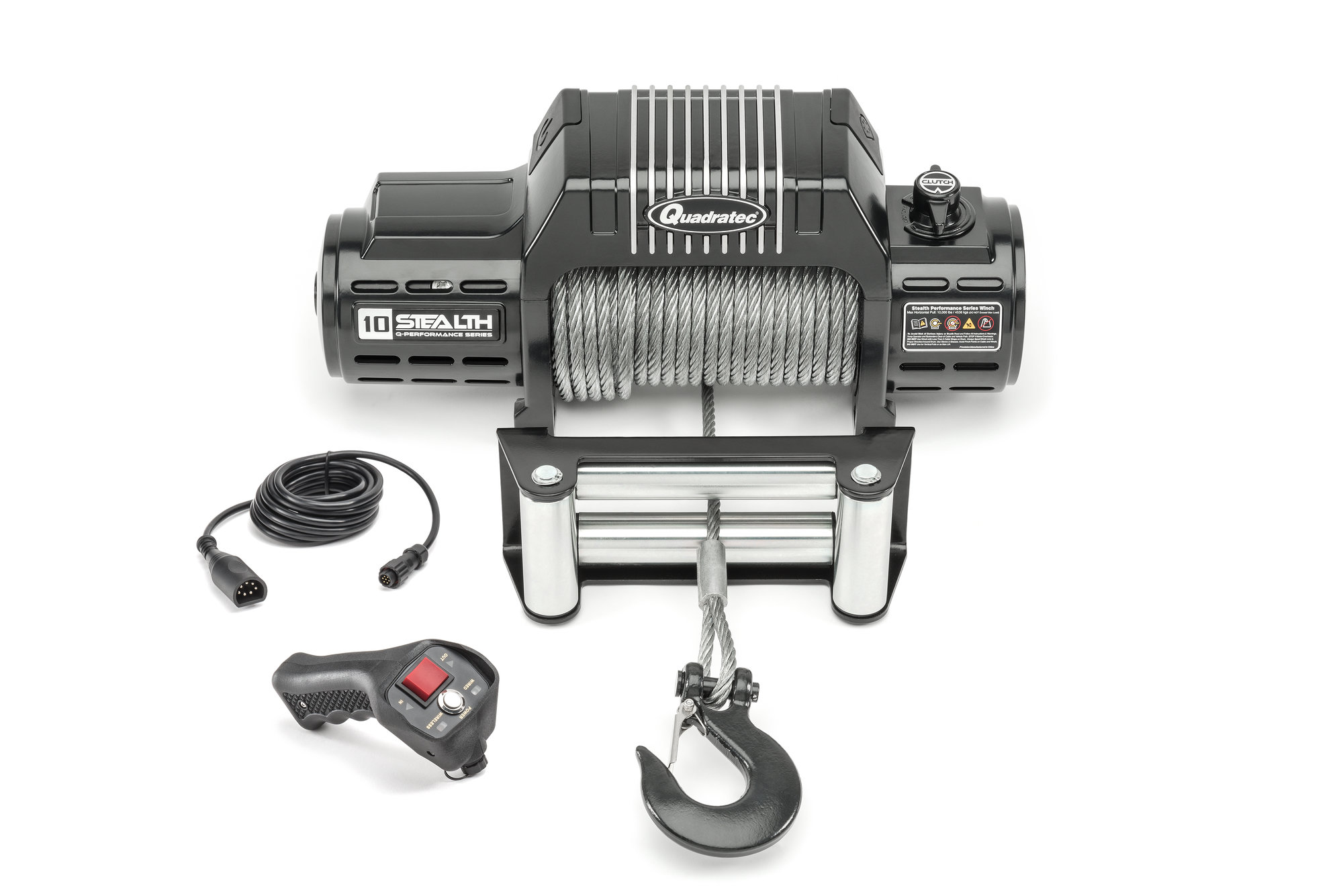
Steel cable has been the primary material inside a Jeep winch for a long time and many still swear by the product — mainly because it is rugged and very strong. This cable is heat and abrasion resistant, and is less likely to fray over time. Nor is it affected by UV light. Steel cable is more difficult to repair though, and is heavier than synthetic so that extra weight needs to be factored in when adding other products like bumpers, cargo racks and larger tires on a vehicle. Those who use steel cable also need to take extra precautions during recovery situations because that cable can cause issues should it break.
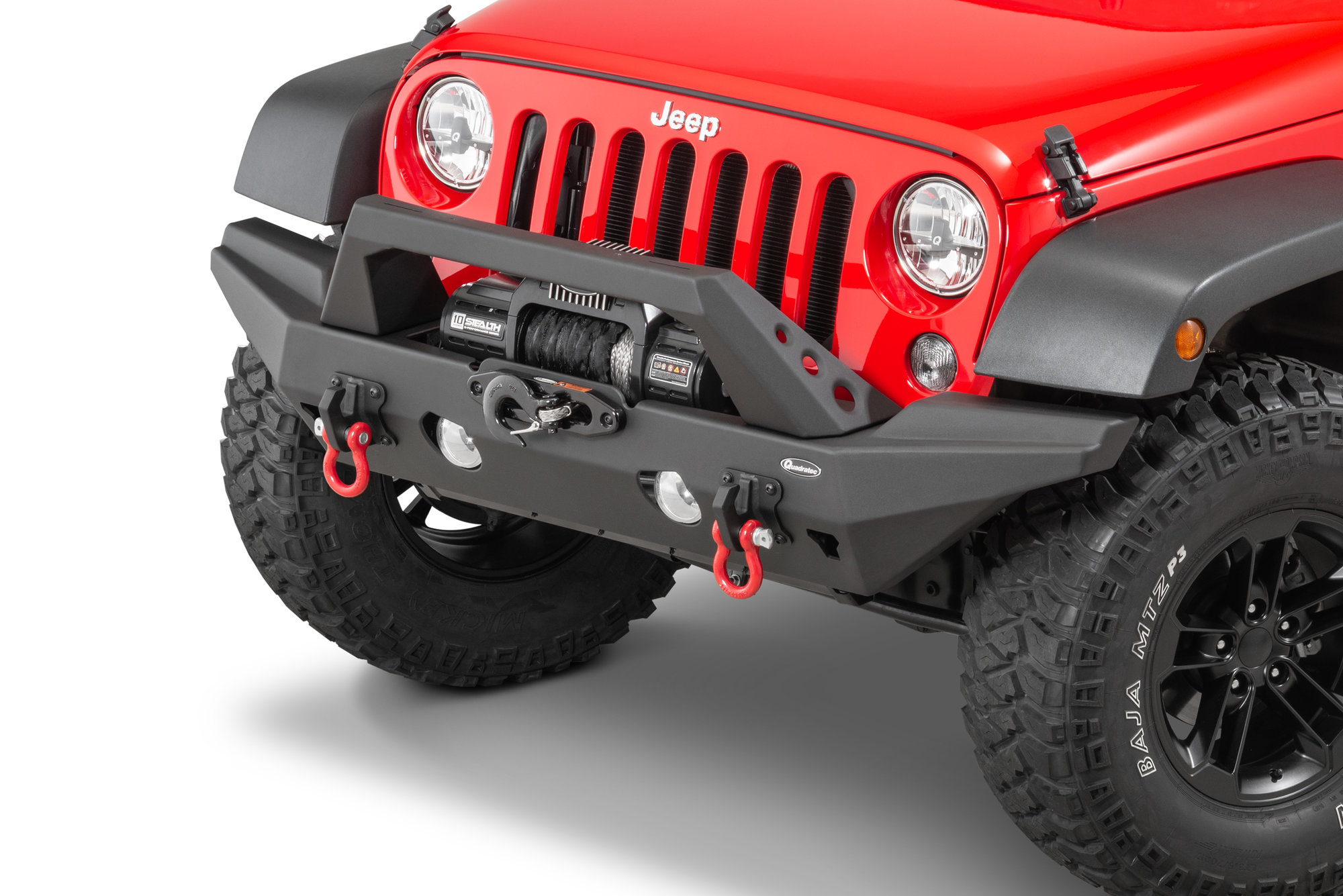
Nearly all Jeep winches are designed to either work with the factory bumper, or fit on a stronger aftermarket bumper. Some require winch plates to mount.
Additionally, Jeep winches are not a one size fits all accessory, as they do come with different pull ratings — generally from 8,000-pound up to 12,000-pound or more. The most common thought process is to take the heaviest rated winch you can afford, but the generally accepted idea is to take the Jeep’s Gross Vehicle Weight Rating and multiply by 1.5. This will give you the minimum pulling power needed for the Jeep.