










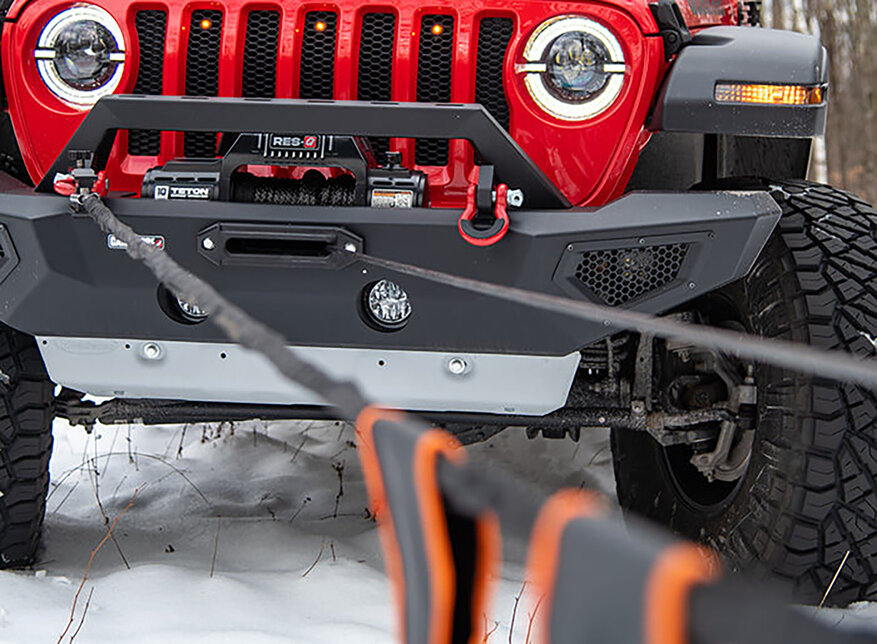
by Quadratec
A winch is one of those Jeep upgrades you may carry around on the front of your vehicle for months, or even years, without touching. Then one difficult trail day turns it into the most important piece of equipment on the vehicle.
The challenge is choosing a model with enough capacity to recover a stuck Jeep without unnecessarily adding weight, cost, or electrical demand. Winches commonly installed on Jeeps range from 8,000 to 12,000 pounds, but the highest number on the box isn't automatically the best choice.
The vehicle’s weight provides the starting point. The terrain you encounter, how frequently you travel off-road, and the way the winch fits your bumper and electrical system should help make the final decision.
So, which winch works for you?
The Quick Answer
A widely accepted starting formula for selecting a vehicle-recovery winch is taking the Gross Vehicle Weight Rating (GVWR) and multiplying by 1.5. That will give you a Minimum Recommended Winch Capacity.
For example, a Jeep with a 5,400-pound GVWR would require a winch rated for at least 8,100 pounds:
5,400 × 1.5 = 8,100
Because winches are sold in established capacity increments, it is widely believed a Jeep owner should move up to the next available rating rather than down. In this example, an 8,500- or 9,000-pound winch would meet the recommendation, while a 10,000-pound model would provide additional reserve capacity.
Find Your Jeep’s GVWR
GVWR is the maximum allowable operating weight established for the vehicle. It includes the Jeep, passengers, cargo, accessories, and tongue weight when towing.
This rating is normally listed on the certification label inside the driver’s door opening; however, depending on the model and year, the label may be attached to the door, door jamb, or B-pillar.
One important distinction: do not confuse GVWR with curb weight.
Curb weight is approximately what the Jeep weighs with its standard equipment and operating fluids but without passengers or cargo. GVWR reflects the maximum weight the Jeep is designed to carry when loaded.
Using curb weight alone can undersize the winch because it leaves out people, recovery equipment, camping gear, and aftermarket components. So, GVWR provides a more conservative and convenient number for calculating minimum winch capacity.
Should You Add Accessory Weight to GVWR?
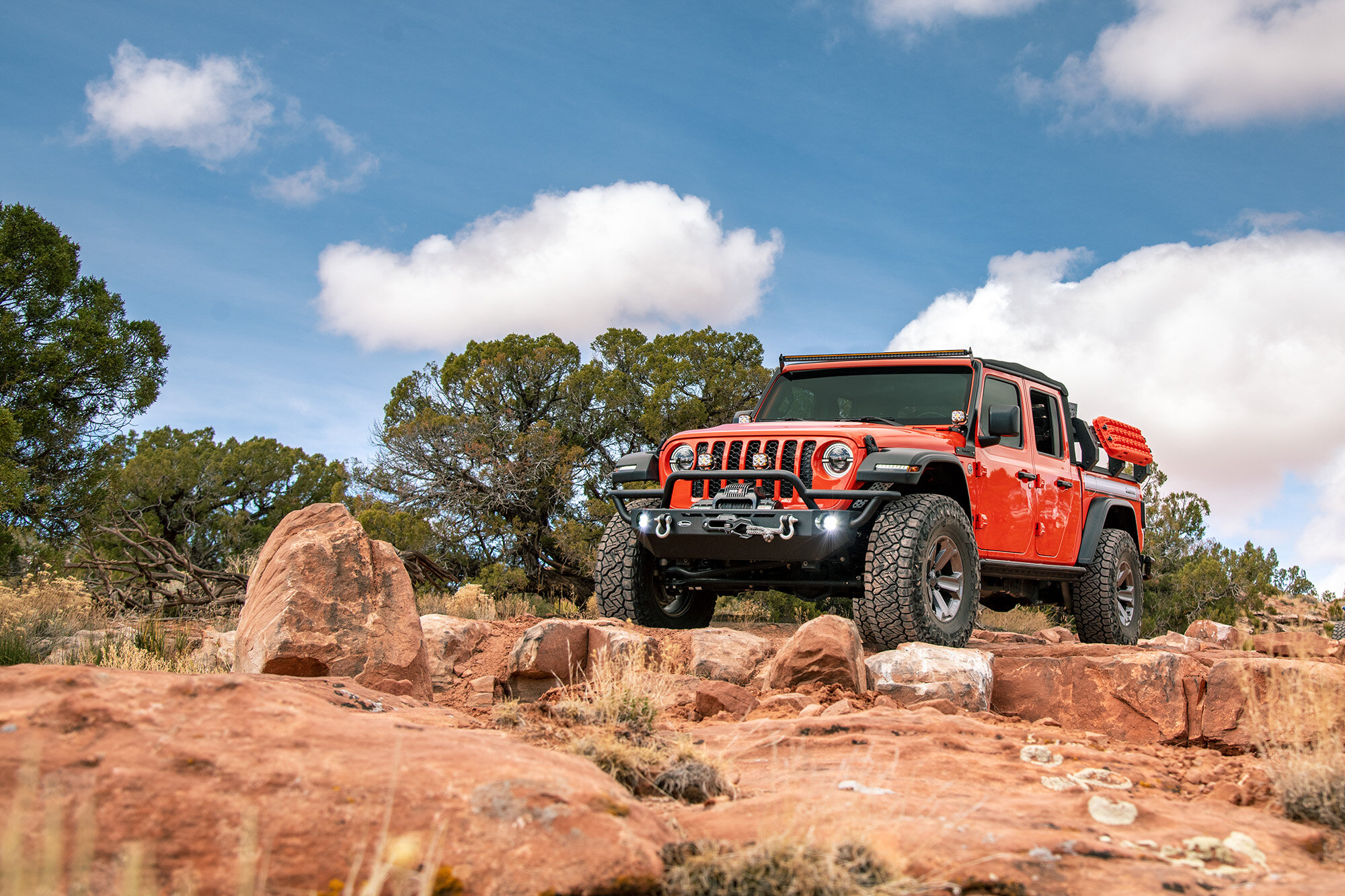
No. Aftermarket bumpers, larger tires, skid plates, racks, and other accessories should not be added to the published GVWR. This number does not increase when you install accessories. Those modifications become part of the vehicle’s operating weight and reduce the payload available for passengers and cargo.
Owners who know their Jeep’s actual trail-ready weight can use that figure instead, provided it includes:
- The driver and passengers
- Fuel and fluids
- Larger tires and wheels
- Bumpers, armor and suspension components
- Tools and recovery equipment
- Camping gear and other cargo
- Trailer tongue weight, when applicable
A vehicle scale provides the most accurate measurement. Multiply that fully loaded weight by 1.5 and compare the result with the GVWR-based calculation. For most owners, using GVWR remains the simpler and more conservative method.
Common Jeep Winch-Capacity Ranges
The following ranges provide general shopping guidance. The Jeep’s certification label, winch-mount rating, and manufacturer instructions should determine the final selection.
| Winch Capacity | Common Jeep Application |
|---|---|
| 8,000 pounds | Lighter CJ, YJ, and TJ models or lightly equipped two-door Wranglers when supported by the GVWR calculation |
| 9,000-9,500 pounds | Many two-door Wranglers and moderately equipped four-door models |
| 10,000 pounds | Many Wrangler Unlimited, Wrangler 4xe and Gladiator applications |
| 12,000 pounds | Heavily equipped Jeeps, frequent recoveries, deep mud or situations where additional reserve capacity is beneficial |
An 8,000-pound winch may be perfectly appropriate for a lightweight Jeep, but it can be marginal on a loaded four-door Wrangler. Conversely, installing a 12,000-pound winch on a lightweight CJ may add more front-end weight and bulk than the vehicle needs.
The calculation should come first. Intended use should determine how far above that minimum you go.
Why Vehicle Weight Is Only the Starting Point
A winch is not simply lifting or rolling the Jeep’s weight across a flat surface. It must overcome whatever is preventing the vehicle from moving.
Recovery resistance can increase significantly when:
- The tires are buried in mud, sand, or snow
- The axles or differentials are grounded
- The Jeep must be pulled uphill
- One or more wheels cannot rotate
- The vehicle is wedged against an obstacle
- The pull is made at an angle
- The recovery surface creates suction or heavy rolling resistance
A Jeep that weighs 5,000 pounds can therefore require substantially more than 5,000 pounds of pulling force.
The 1.5 multiplier provides useful reserve capacity for common recovery conditions, but it cannot account for every situation. Owners who regularly encounter deep mud, steep grades, or heavily loaded overland travel may benefit from stepping up to the next winch class.
That said, none of this replaces proper recovery technique. Severe resistance may require digging around the tires, removing obstacles, or changing the rigging arrangement before safely attempting the pull.
Rated Capacity Is Measured on the First Drum Layer
A winch’s advertised capacity represents its maximum rated line pull with the rope on the first layer around the drum.
As additional layers build up, the effective drum diameter increases. That gives the motor less mechanical advantage and reduces available pulling force. A short recovery made with most of the rope still wrapped around the drum will not provide the winch’s full advertised capacity.
The precise loss varies by winch, so owners should consult the performance chart in the product manual rather than relying on one universal percentage.
When a difficult pull requires maximum capacity, more line should generally be extended so the winch operates closer to its first drum layer. Always leave the minimum number of wraps the manufacturer requires. For example, WARN commonly specifies at least five wraps for wire rope or a full layer for synthetic rope, but the instructions for the exact winch take priority.
How a Double-Line Pull Helps
When the anchor point is close, or the recovery requires more pulling force, a properly rated snatch block or recovery pulley can be used to create a double-line pull.
The line runs from the winch, through the pulley at the anchor, and back to a rated recovery point on the Jeep. This arrangement provides mechanical advantage, reduces winch speed, and allows more rope to come off the drum.
A double-line pull can substantially increase effective pulling force, but it does not give every component unlimited capacity. The winch line, pulley, shackles, anchor connection, and vehicle recovery points must all be properly rated and correctly arranged.
A pulley is an important recovery tool, but it should not be used as the justification for purchasing an undersized winch.
Is a Bigger Winch Always Better?
Moving one capacity level above the calculated minimum can provide worthwhile reserve power. Moving several levels higher may introduce trade-offs.
A larger winch may:
- Cost more
- Add weight to the front suspension and axle
- Occupy more space inside the bumper
- Interfere with the grille or cooling airflow
- Require a higher-rated mounting system
- Place greater demands on the battery and wiring
- Be unnecessary for the Jeep’s realistic recovery needs
The best winch is not necessarily the largest one that can be attached to the bumper. It is the model that safely exceeds the calculated requirement, fits the mounting system, and matches the vehicle’s intended use.
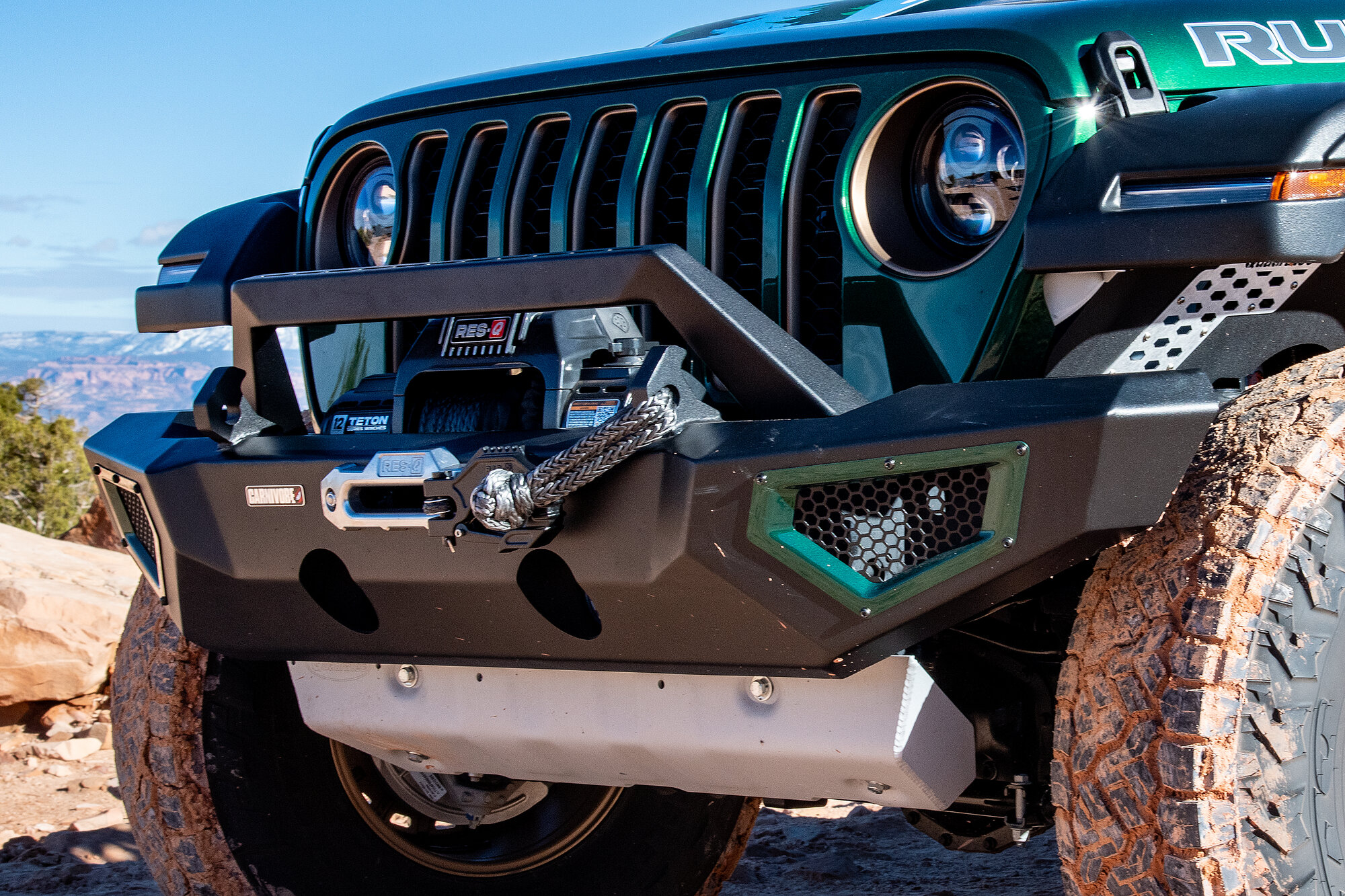
Make Sure the Winch Fits the Bumper and Mount
Capacity is only one part of fitment. Before purchasing a winch, verify:
- Mounting-bolt pattern
- Overall width, height and depth
- Control-pack location
- Clutch-lever clearance
- Fairlead compatibility
- Rope-spooling clearance
- Bumper or mounting-plate capacity
- Access for installation and maintenance
- Compatibility with factory cameras, sensors and cooling openings
A bumper described as “winch capable” may still require a separate mounting plate. It may also limit winch size or require relocating the control pack.
The bumper, mounting plate, and hardware must be designed to withstand the winch’s rated load. Do not install a 12,000-pound winch on a mount approved for only 10,000 pounds.
Do You Need to Upgrade the Battery?
Electric recovery winches can draw several hundred amps under a heavy load. That means a winch may be appropriately sized mechanically but still perform poorly if the battery, connections, or charging system cannot support it.
Before relying on the winch, check that vehicle’s battery condition and age; cold-cranking amperage and reserve capacity; manufacturer battery requirements; cable size and routing; positive and negative terminal connections; ground connections; alternator output; and winch duty-cycle limitations.
Follow the winch manufacturer’s wiring instructions and connect the power cables exactly as directed. Poor terminals, undersized wiring, and weak grounds create voltage loss, heat, and reduced pulling performance.
The engine is generally kept running during an electric-winch recovery so the charging system can help support the battery, provided it is safe, and the vehicle and winch manufacturers permit it. Even then, an alternator cannot necessarily replace electrical energy as quickly as a heavily loaded winch consumes it.
Long pulls should be divided into shorter operating periods as required by the winch’s duty cycle. Stop if the motor, cables, or contactor become excessively hot, and allow the equipment to cool according to the manufacturer’s instructions.
A healthy battery with adequate reserve capacity matters as much as a large capacity number on the winch.
Synthetic Rope or Steel Cable?
Line material does not change the capacity your Jeep requires, but it affects weight, maintenance, and handling.
Synthetic rope is lighter, easier to handle, and does not develop sharp wire splinters. Its lower weight can be especially helpful on a Jeep, where a bumper and winch already add considerable mass ahead of the front axle. However, synthetic rope requires protection from abrasion, heat, chemicals, and prolonged ultraviolet exposure.
Steel cable offers strong abrasion resistance and may be a good fit for utility work or recoveries around sharp surfaces. It is heavier, can kink or develop burrs, and stores more energy when placed under tension.
Whichever material you select, use the compatible fairlead specified by the winch manufacturer and always inspect the line before every recovery. Let’s stress that point again: Always inspect the line before every recovery.
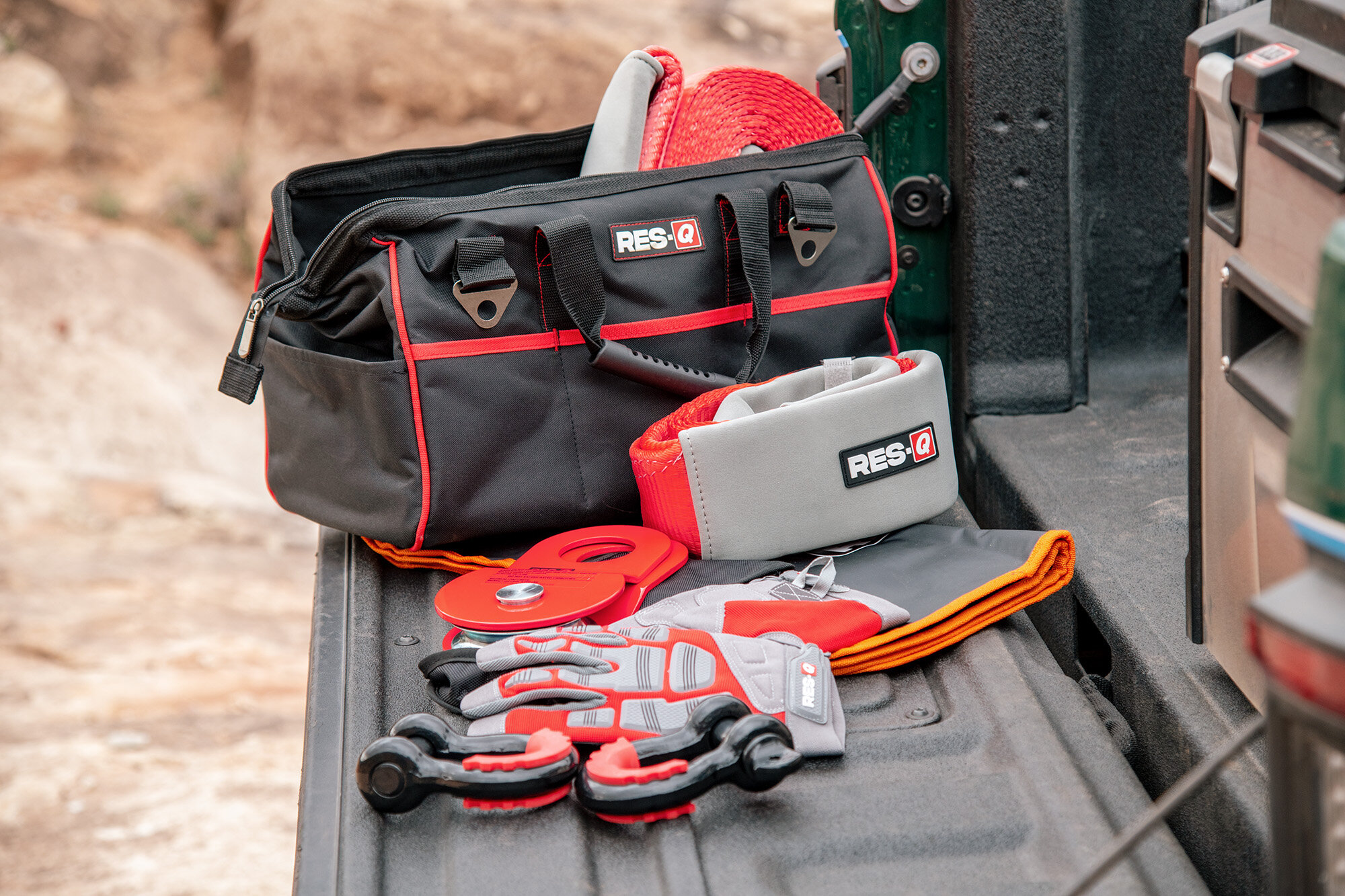
Do Not Forget the Recovery Equipment
A winch without proper rigging equipment is an incomplete recovery system. At minimum, a trail-ready setup should include:
- Rated shackles or approved soft shackles
- Tree-saver strap
- Snatch block or recovery pulley
- Winch-line damper when directed by the manufacturer
- Heavy-duty gloves
- Rated front and rear recovery points
- Basic hand tools
- Manufacturer’s operating instructions
Every component in the system should have a clearly established working-load or minimum-breaking-strength rating appropriate for the recovery. Never substitute unrated hardware or attach the winch line to a suspension component, bumper loop, or other point not designed for vehicle recovery.
Keep bystanders away from the recovery area, avoid standing over or beside a tensioned line, and never step across a loaded winch rope.
Other Articles That May Interest You:
Top Jeep Articles

- September 28, 2026
- 6 min read
- September 25, 2026
- 3 min read
- September 24, 2026
- 3 min read
- September 23, 2026
- 5 min read
- September 17, 2026
- 6 min read
- September 15, 2026
- 5 min read