








by Mike Gardner
Torque Correspondent
Since the dawn of CJ vehicles, Jeeps have arrived from the factory with a steering stabilizer. And while this product is not one of the most important parts around, it can often be one of the more misunderstood. Especially for those who are looking to upgrade their vehicles, or anyone encountering the dreaded ‘death wobble’.
However, this item and its purpose doesn’t need to be a mystery. Truth is, its whole operation is pretty simple. So let’s talk about steering stabilizers.
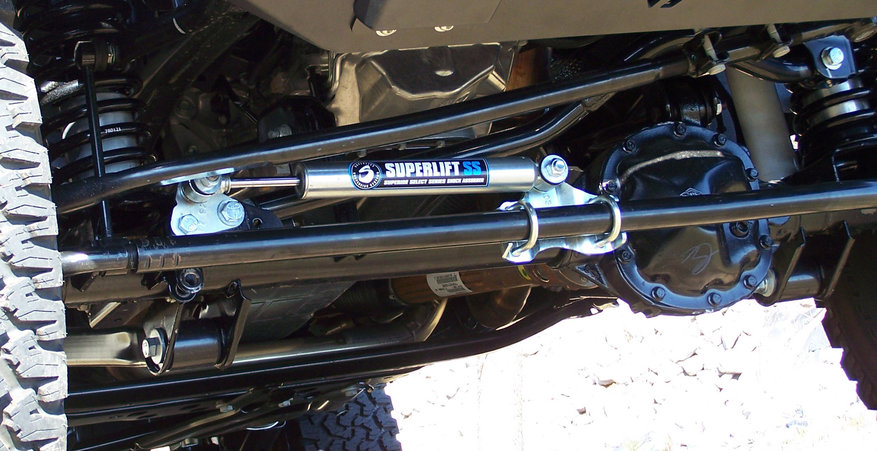
First of all, by design, a steering stabilizer is simply a shock absorber lying on its side with one end attached to the axle housing, and the other to the steering linkage. Nothing more. Nothing less.
Its overall purpose is just as simple—basically to help control the effect that outside influences, such as changing road conditions or terrain, has on the steering wheel. Think of it as a shock absorber for your hands. While the Jeep’s suspension system is designed to absorb impacts from things like potholes or other road hazards in order to provide a smoother ride, a steering stabilizer dampens vibration into the wheel; helping eliminate driver fatigue as well as improving vehicle driveability. A steering stabilizer also provides steering wheel resistance, which keeps a driver from over-steering when making quick maneuvers.
For most people, this factory set up works fine and can handle pretty much any kind of road interference. And honestly, the original stabilizer may never need to be replaced. But if it does, there are plenty of factory-type versions available that are easy, swap-in substitutions.
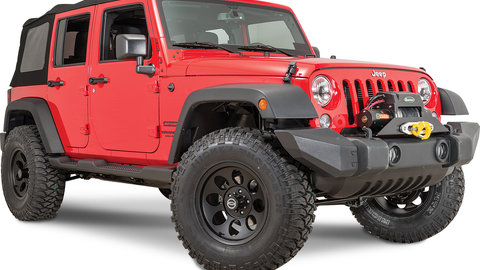
Where the confusion comes in for some, though, is when modifications are made to the Jeep. Things like larger tires, along with a lift kit and, perhaps, new bumpers, winch, or some other type of heavy item. This is where a stronger aftermarket stabilizer may help out because heavier vehicles with larger tires can be tougher to control. So heavy-duty aftermarket versions engineered for these type of set ups can help further dampen steering vibration.
In the end, though, there is no hard or fast rule that says you must buy a certain type of stabilizer—factory or aftermarket. Plenty of people operate with factory stabilizers on their built Jeeps so it should not be a big, stressful decision. Keep it simple and don’t blow the bank on it unless you really feel you need a stronger one.
That being said, it is important to realize replacing a worn steering stabilizer will not fix any existing steering problem. It will only dampen the symptoms.
See, one big misconception about steering stabilizers is that they can be a cure-all to things like severe shimmy or death wobble. However, in reality, the only way to actually fix those problems is to find and replace the suspension component that is causing the issue. In fact, by simply installing a new stabilizer without checking any of the steering parts like ball joints, tie rod ends, or your drag link, can cause those things to prematurely wear out.