






With so many different styles, numbers, and letters marking them up these days, choosing the best tire can be challenging. And if you are not sure what you want or need, then things can get even more confusing pretty quickly.
Are all-terrain tires the best for your Jeep, or perhaps mud-terrain? What about tread patterns and tire size? Will any tire fit your wheels, or are different ones required? Will I need a Jeep body lift or Jeep suspension lift kit?
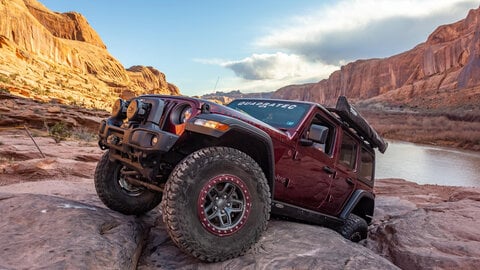
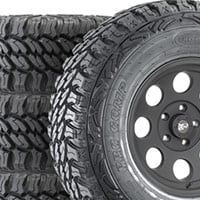
Changing or upgrading tires can be quite a daunting task. You really need to decide how you plan to use your Jeep tires. Is it a daily driver with limited off-road exposure? Or is it mainly an off-pavement adventurer? Perhaps a mix of both? If you are more of a daily driver but also want to do some off-roading, consider all-terrain tires that perform well at high speeds while delivering above-average performance in moderate trail conditions. These tires are typically quiet and perform well around town and on the highway, but still have enough aggressive tread to tackle modest trails. They also have good tread life and typically last 40-60K miles before needing replacement. When they’re not mounted, Jeep tire covers can keep them in peak condition.
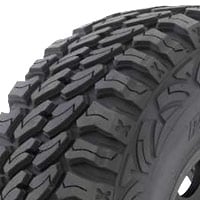
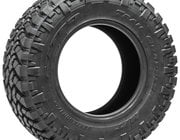
Mud-terrain Jeep tires are primarily designed to help your Jeep navigate mud, rocks, and other off-road obstacles. These tires use a softer rubber compound, allowing the treads to dig into the ground and propel forward more easily than all-terrain versions. Plus, the treads have wider gaps, allowing the tire to 'grab' mud, snow, or other debris and push them out of the way. Mud-terrain tires also have a stronger sidewall than other tires, which helps prevent punctures or tears when the tire is in contact with rocks. While you can use mud-terrain tires on pavement, they are louder than other tires and have a softer construction, which leads to faster wear. They also reduce your vehicle's fuel efficiency.
Once you decide what type of Jeep tire fits your needs, choosing the correct size is just as important, as not all tire sizes will fit - especially if you are upgrading in size. If you are replacing your current tires, the easiest way to verify what you have is to check the tire sidewall. For example, on a 2015 Jeep Wrangler Sport, the tire may be listed as P225/75R16. The 'P' stands for passenger tire, but some tires may also read 'LT' (for light truck). The 225 is that tire's width in millimeters, and the 75 is the Jeep tire aspect ratio—a relationship between the sidewall height and width. Just like Jeep tire covers for your spares, the ‘R’ (for radial) should always be standard on just about every tire; some may list 'B' for bias, meaning the tire's body cords run diagonally across the tire instead of radially. Bias tires are designed for off-road use only and can be dangerous on pavement due to their construction. Finally, the 16 indicates the tire's diameter, so this particular example means it fits a 16" wheel. Also, some tire manufacturers list their tires in inches rather than metric, so here is a handy Jeep tire sizing conversion chart.
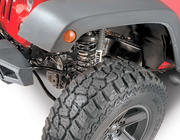
Finally, if you are looking to improve your vehicle's off-road capability or give it a more rugged look, then larger Jeep tires or more aggressive tires are certainly on your list. However, if you do upgrade, you will probably need a suspension or body lift to accommodate the extra size and width. You may also need to modify your Jeep's wheels and rims, as your vehicle's current wheel size may not have the required offset or backspacing for proper fitment. Use our handy tire fitment guide for further information.
Related Articles