





by Scott Ammerman
Torque Correspondent
As anyone who spends a fair amount of time off pavement can attest, whether in the dunes, deep snow or thick mud, the initial moment where you first start to lose traction can be a real nail-biter.
You hear those wheels spinning faster, but forward progress slow down even faster than that wheel spin. Or even stops. You can try more throttle, rocking back and forth, or even lockers and traction control tricks — but when you’re bogged, you’re bogged.
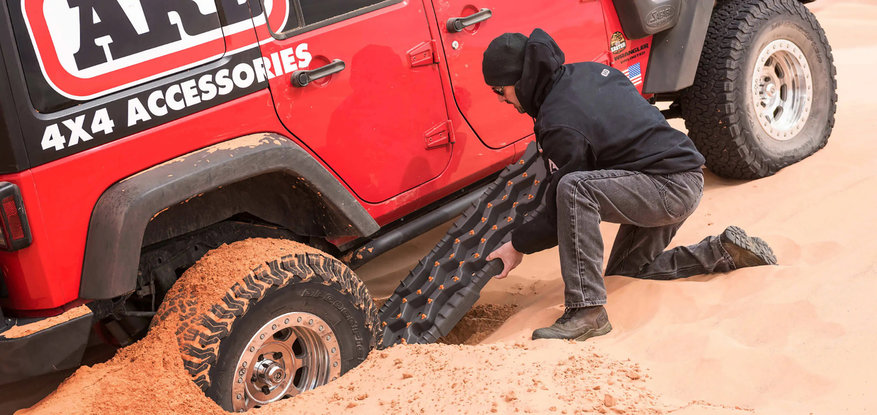
Whatever the specific case, you’ve run out of traction. Maybe not even by a whole lot, but spinning your tires is just going to dig that hole deeper and make it harder to recover.
Sure, you may have a bunch of recovery products in your arsenal, but most require specific circumstances to be in place — like another vehicle to give you pull, or a solid anchor point to use with your winch. Sometimes though, all you need is a few feet of good grip to get you going again.
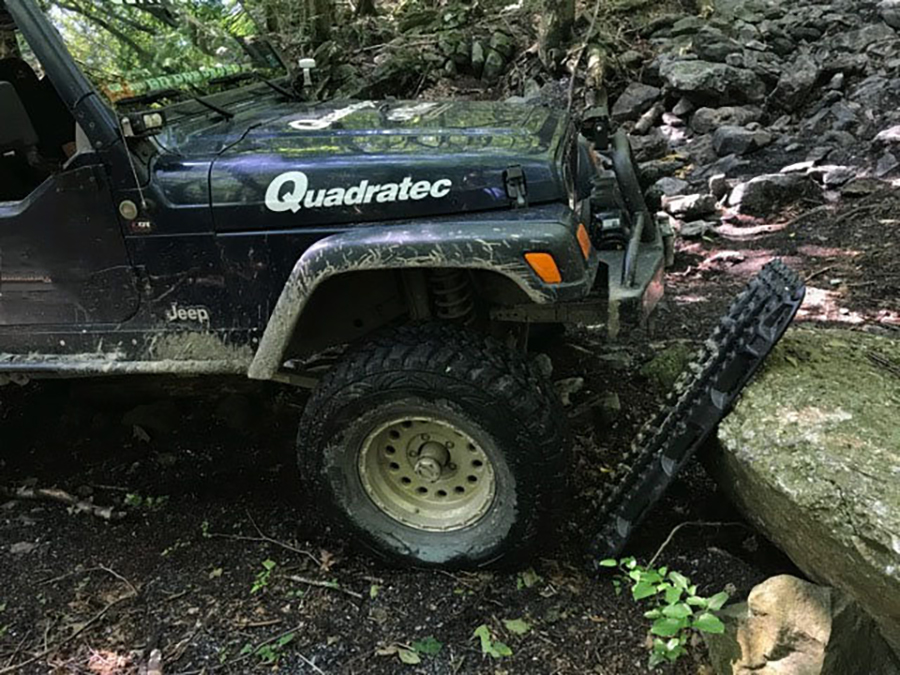
Kyle Buchter, owner of Pennsylvania-based Off Road Consulting, uses an ActionTrax AT-10 to ascend an undercut rock.
That's why traction boards are a great solution for self rescue, and can even keep you from getting stuck in the first place when strategically placed.
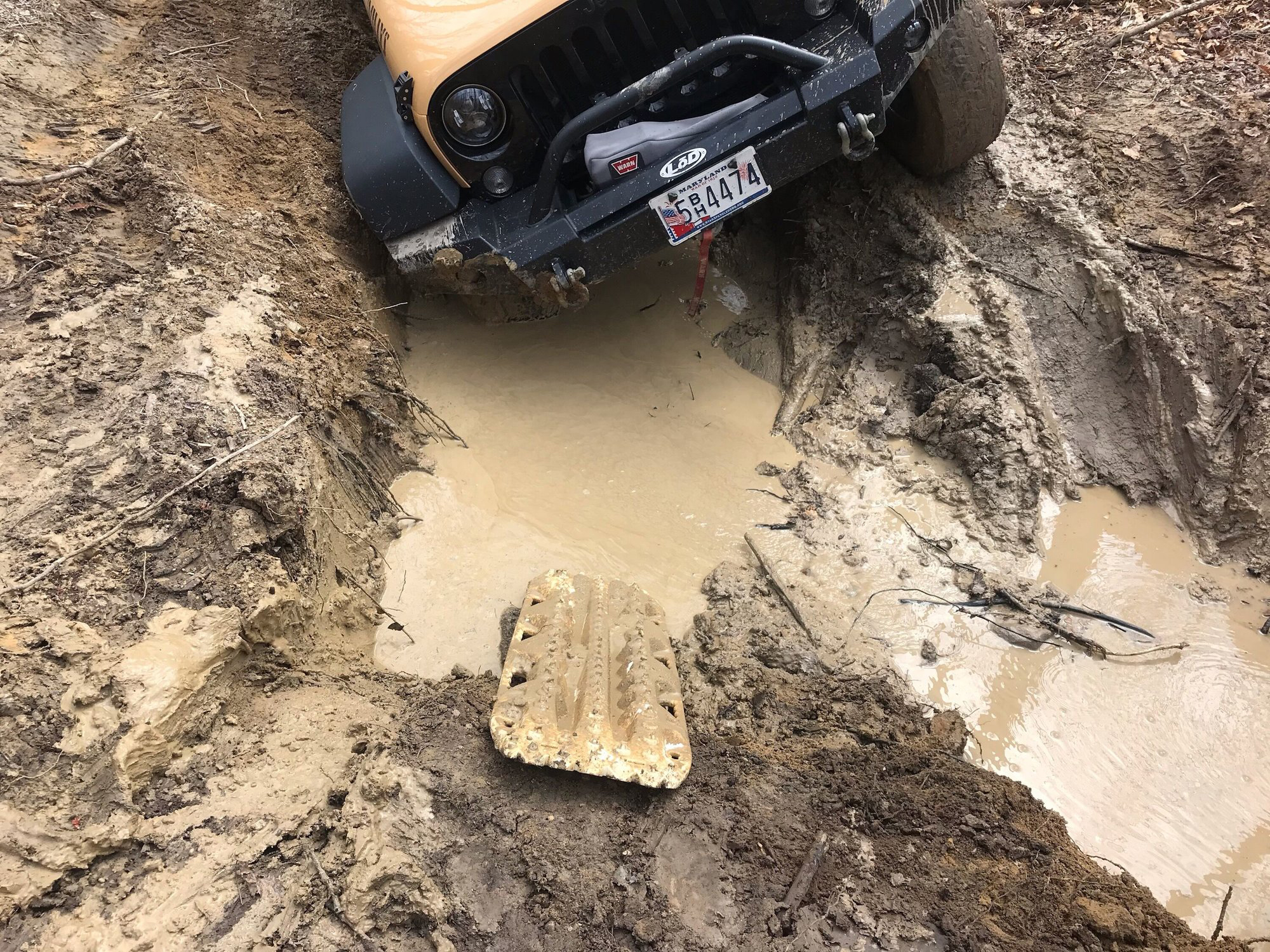
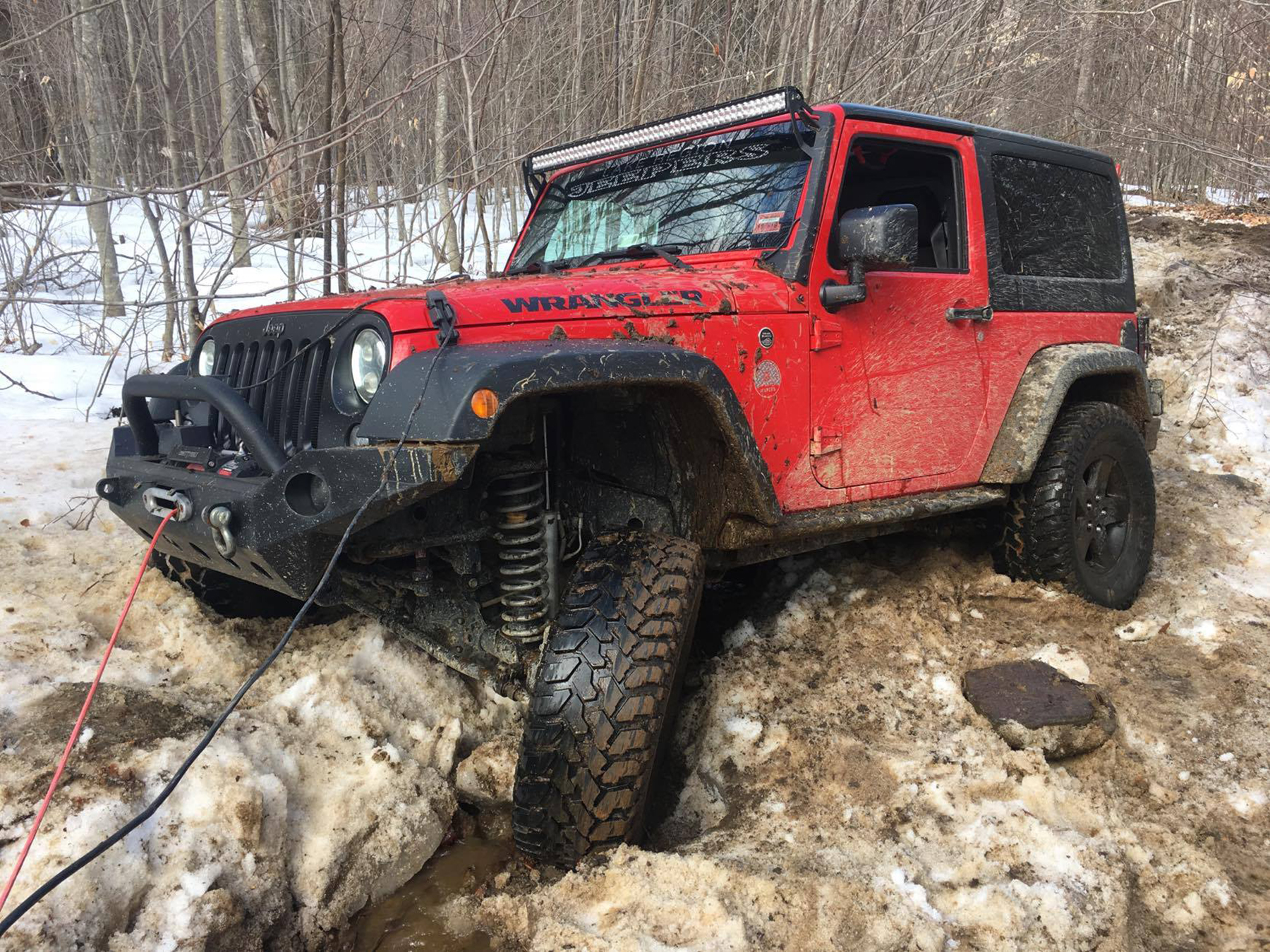
Neil Berger of Maryland got well stuck on the Muddy Shackle trail at Anthracite Outdoor Adventure Area in Shamokin, Pennsylvania.
The concept couldn’t be simpler — you’re throwing a few feet of traction onto a slippery environment at a time. It can be a real time-saver, especially if you are not anywhere close to another vehicle, need to move in a direction a winch can’t easily help, or if you’re not near a sturdy tree. Also, sometimes your tires can get so impacted with mud that they just cannot provide the grip you need at launch.
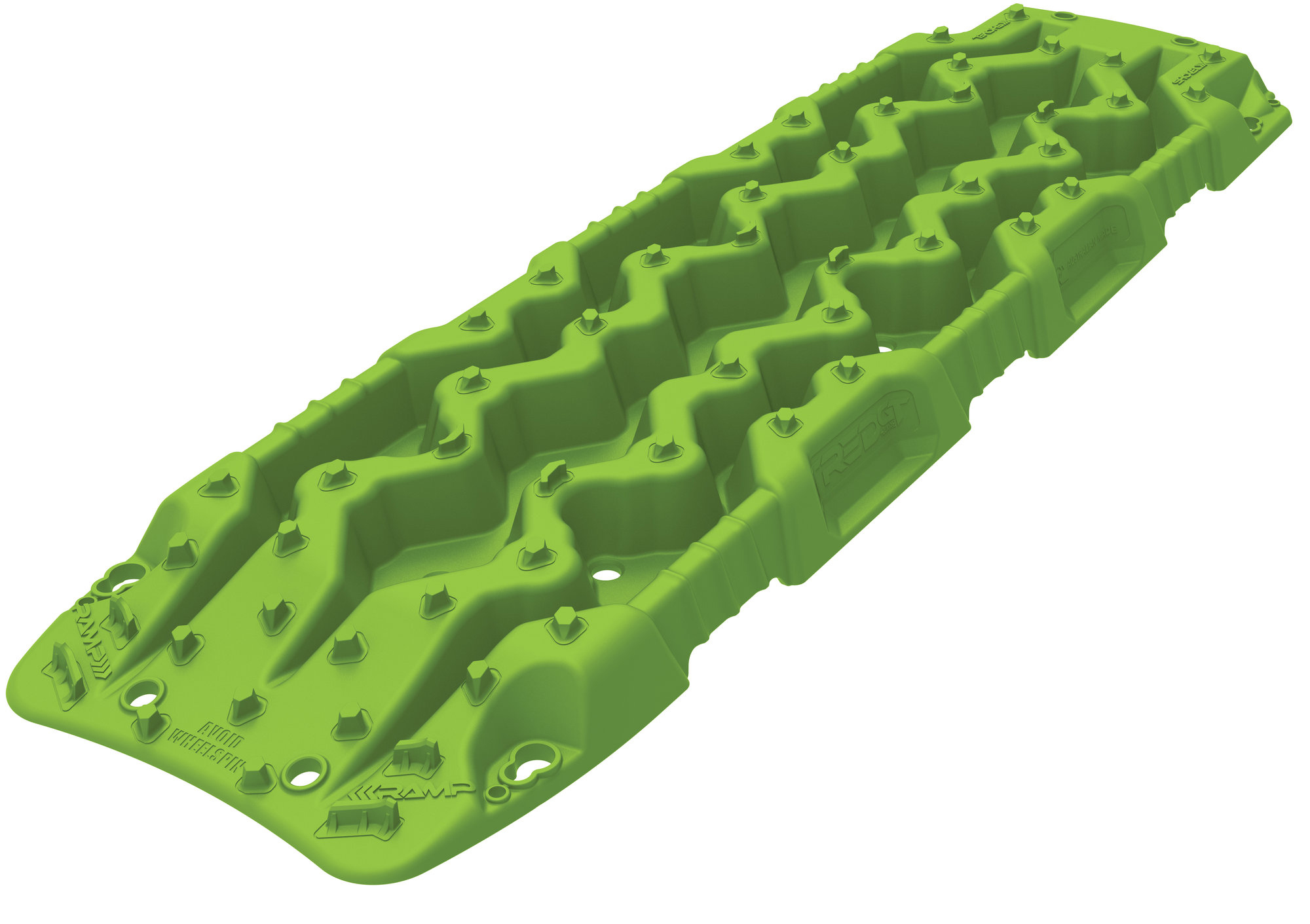
In addition to providing critical supplemental grip, models with handles built in can easily be used as shovels to clear snow, dirt or mud out of the way of your tires as well. This can really save your bacon at the beach, if you have many hands to help but not enough digging tools — especially if the tide is coming.
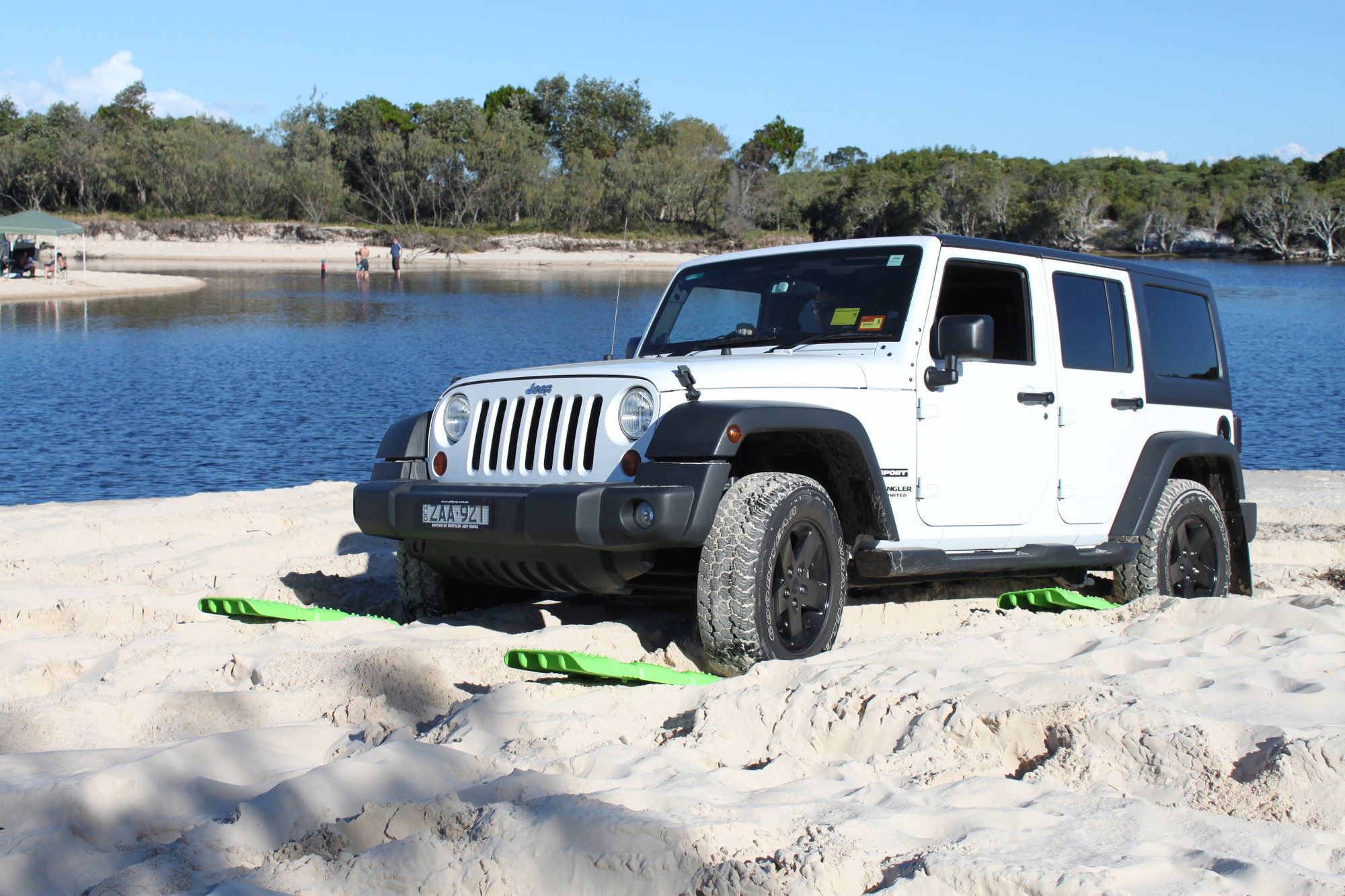
Recovery Tracks can be used individually, or in sets of two or four, depending on how much of a traction gap you need to cover. The ActionTrax models can even be lashed together if needed with a product like the ActionTrx Extreme Zip Tie Links.
While these links are single-use, they can be indispensable if they are able to get you out and back on the trail.
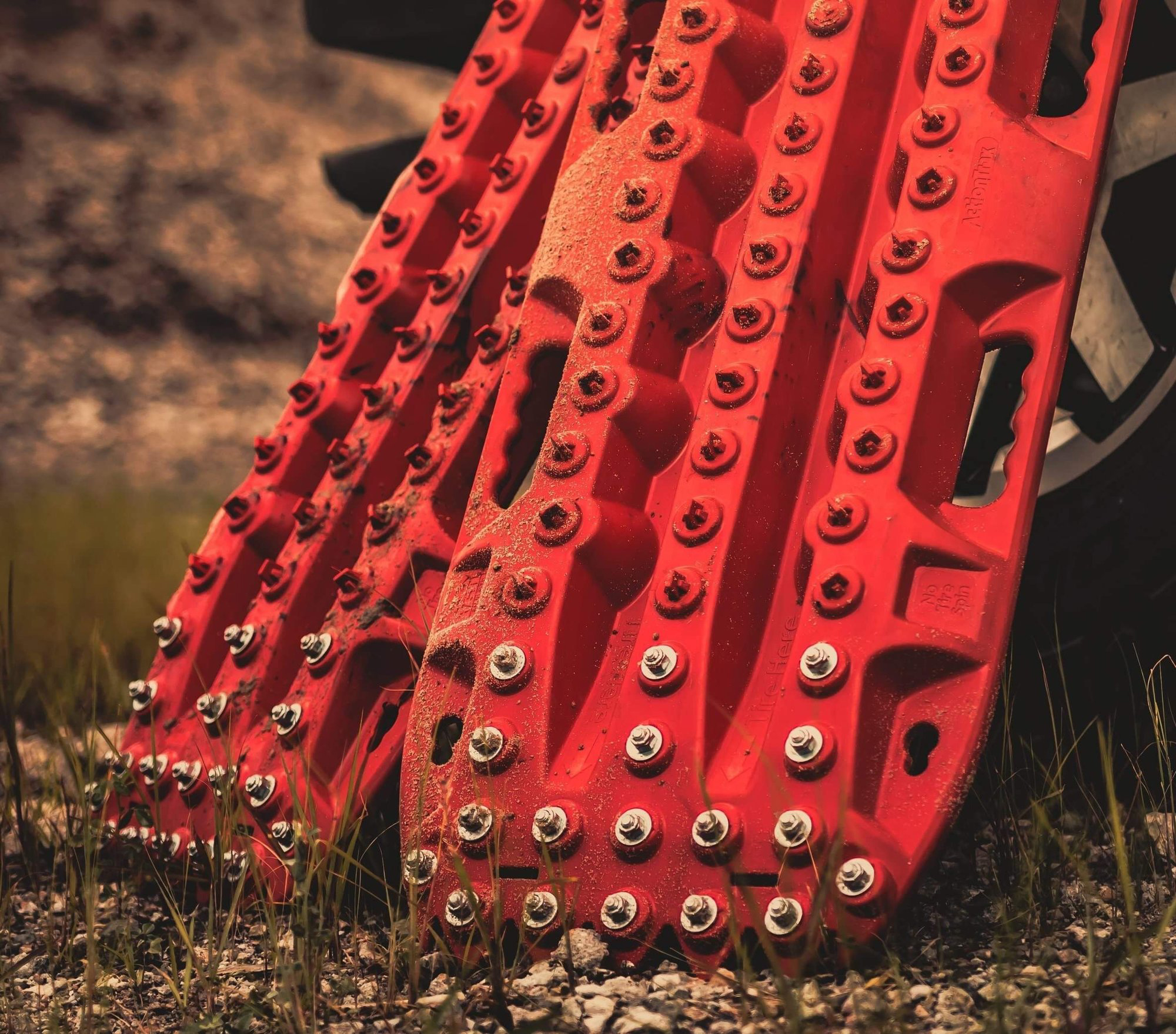
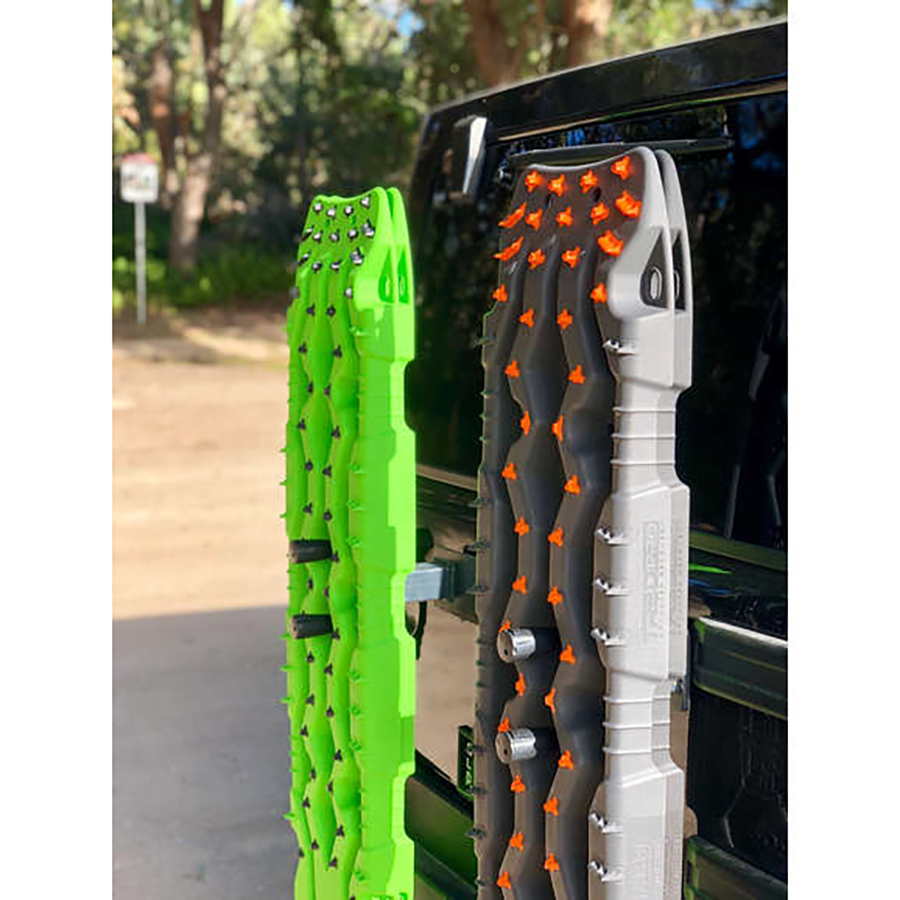
The ActionTrax AT-20 has metal studs to increase grip and reduce damage from tire spin heat.
Depending on your budget (and how much abuse you intend to throw at them), there are several brands and models of recovery tracks made by ActionTrax, ARB, Rugged Ridge, Overland Vehicle Systems and Smittybilt in different lengths, features and colors.
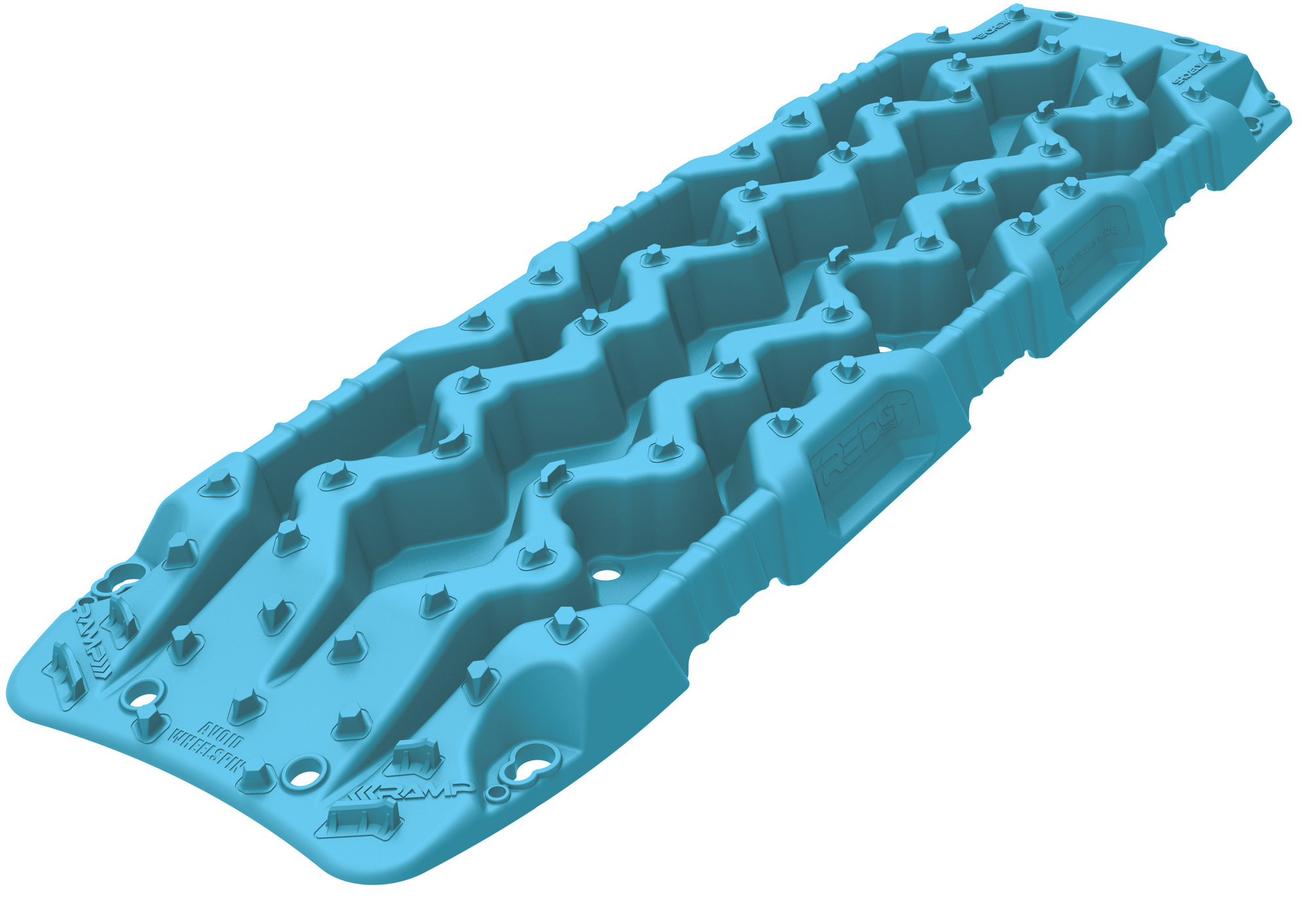
The ARB TRED Pro models feature computer-designed patterns that help evacuate traction inhibitors (slippery things), as well as having strategically placed dual compound spikes to interface with tires, but are able to stand up to friction and heat generated by wheelspin. Each pair comes with a leash to help pull them out quickly if they have to go far under a vehicle.
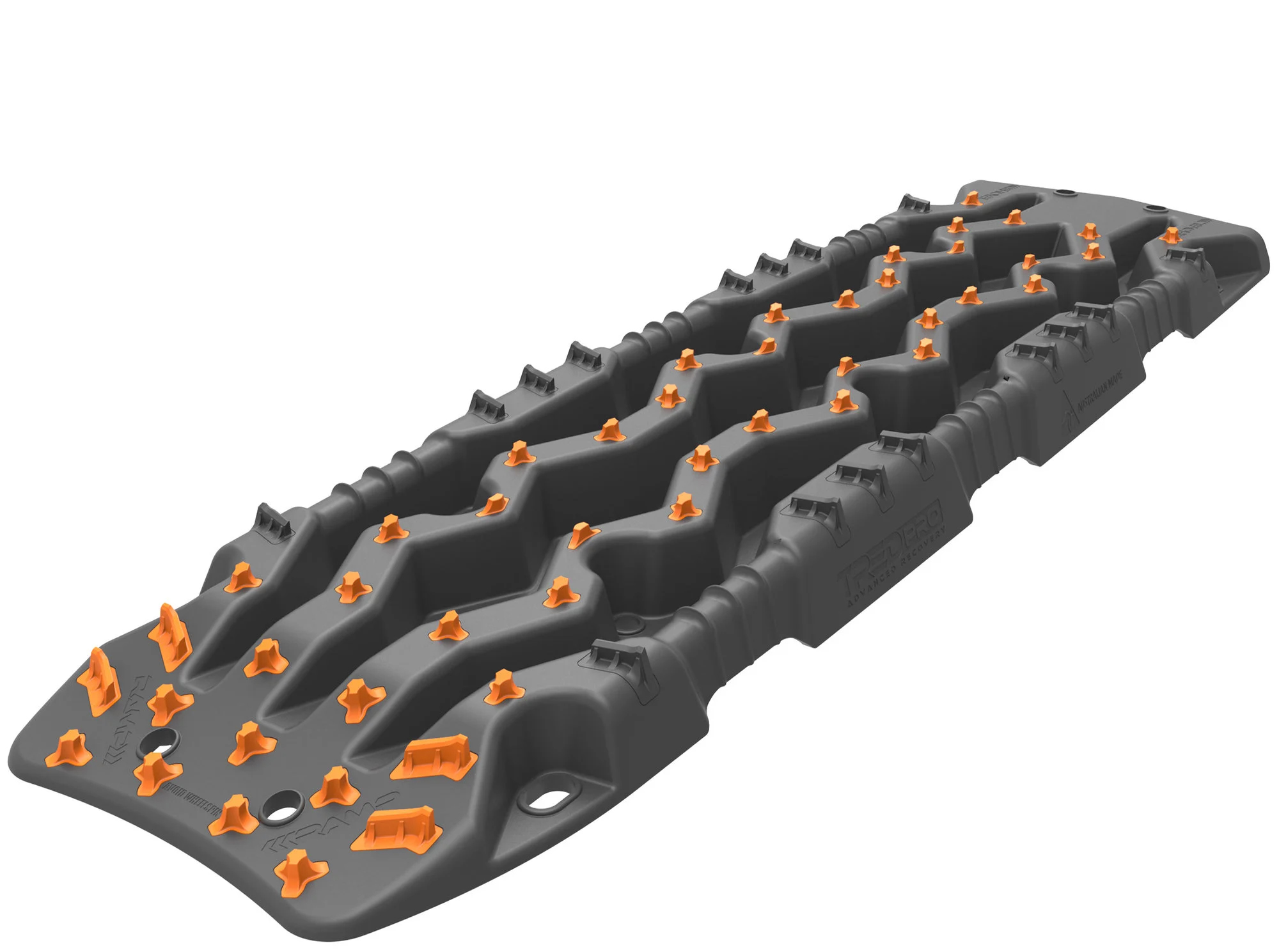
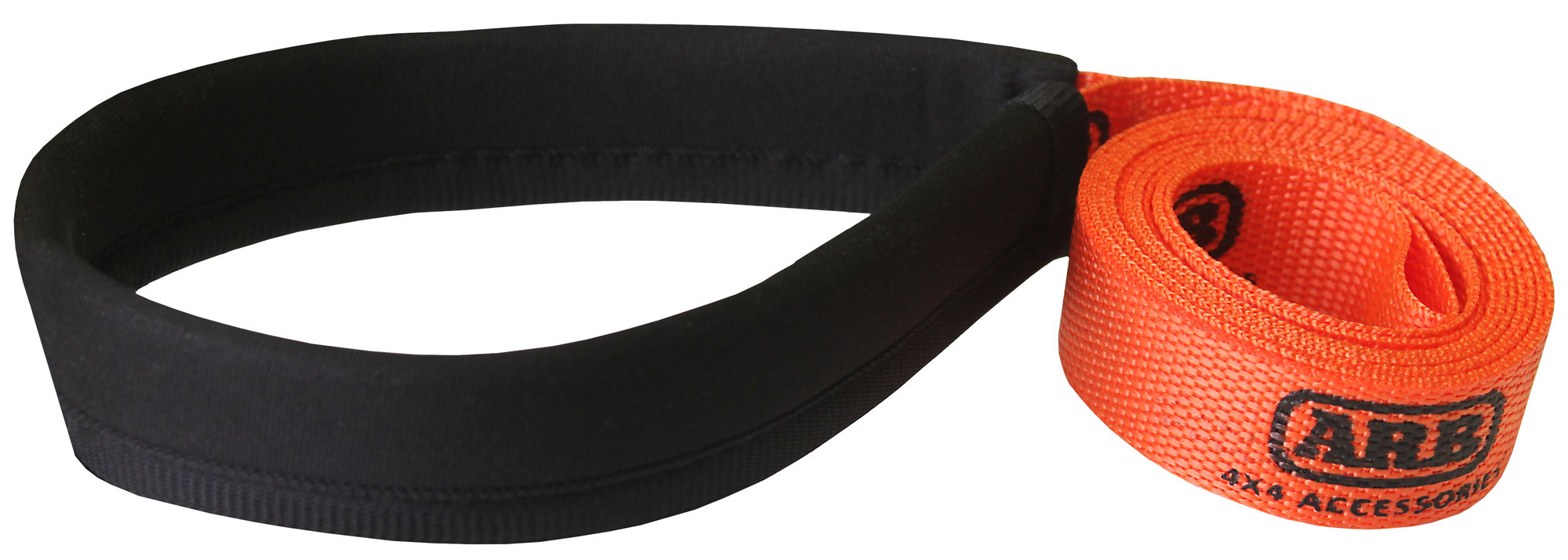
Of course, there are add-ons available for these systems that make them a little more manageable as well.
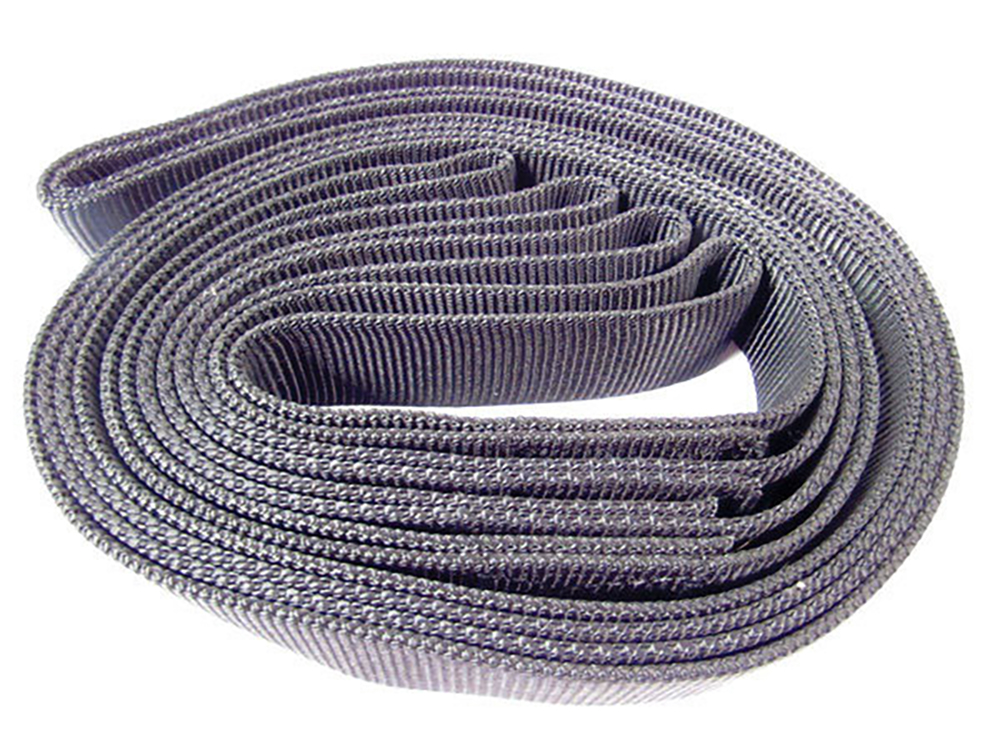
Other accessories exist for many of these recovery boards, including leashes (useful for quickly pulling them back out of the deep stuff), storage bags, or vehicle rack mounts.
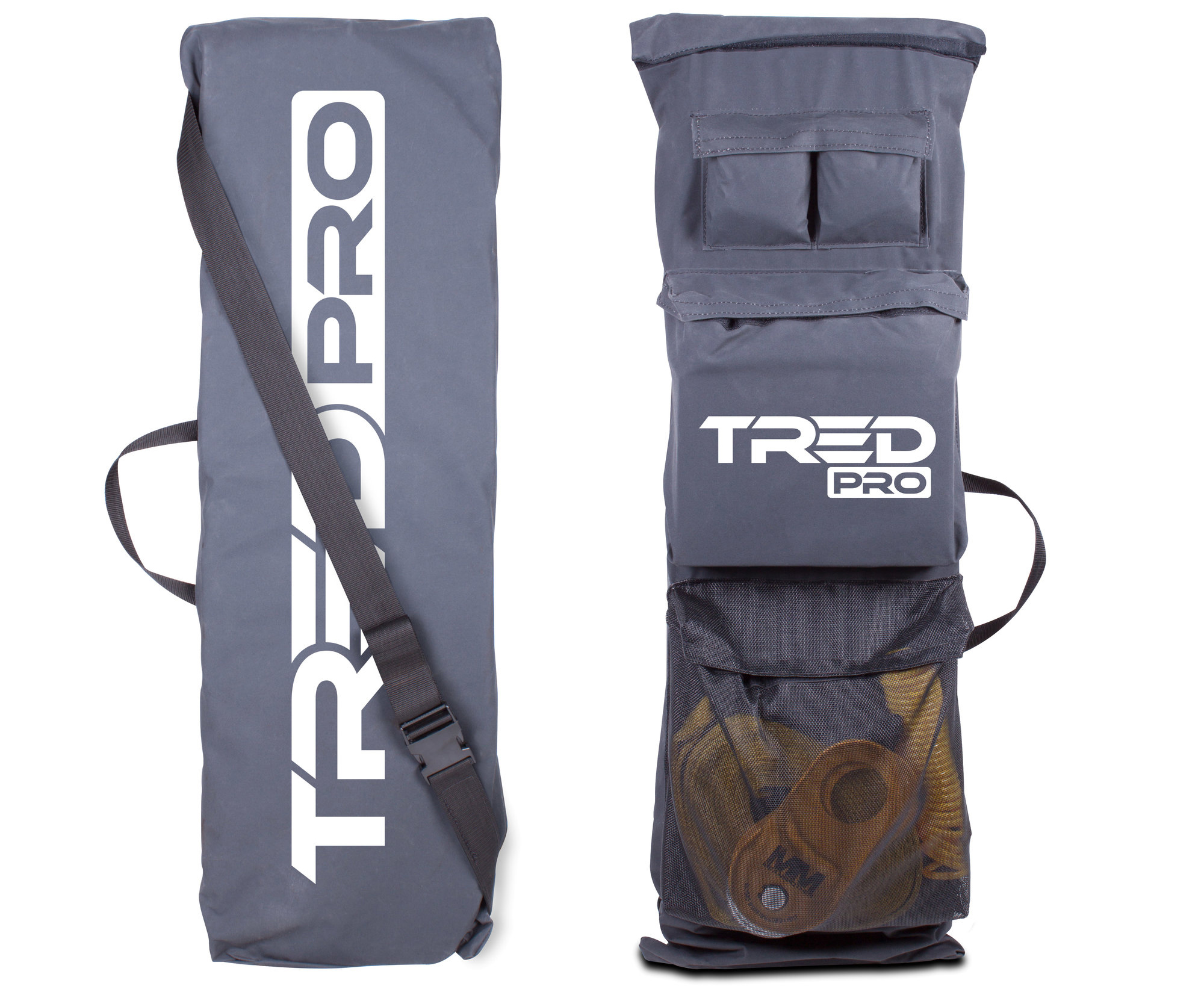
As far as storage, whether exterior or interior, there are plenty of solutions and understanding how you want to secure those boards before buying is definitely advantageous.
According to Ron Harrington, owner of Ridgeback Guide Service in Pownal, Vermont, "Traction Boards are useful in many ways. When used correctly in the proper situation, you will be glad that you had them in your recovery kit."
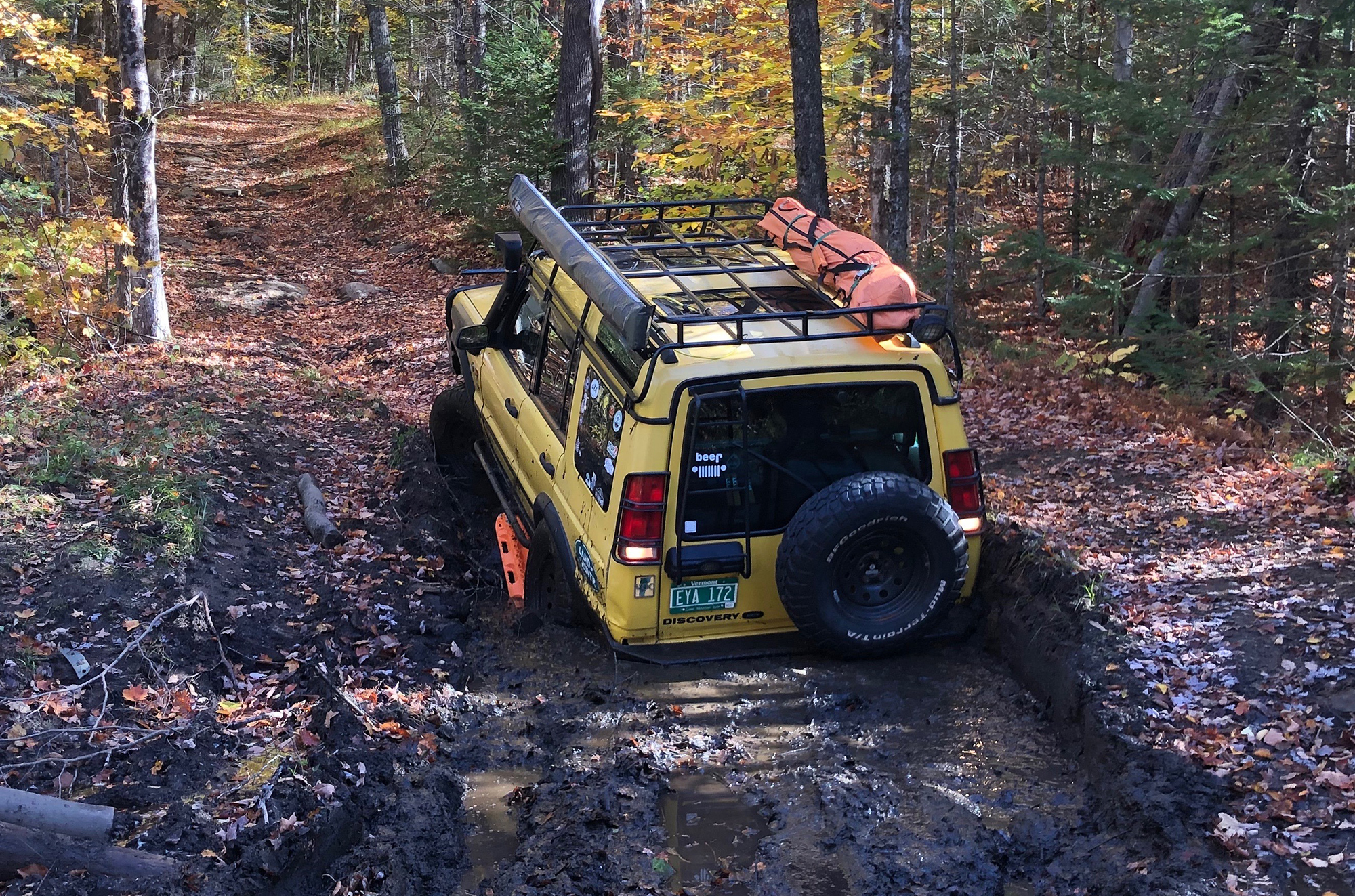
He’s not wrong, we successfully used a set of traction boards to get a trailer hooked up in Vermont at The 4x4 Center on Bolton Mountain last summer, a prospect that took a lot longer than necessary due to mud-caked tires, pouring rain and a wild incline. Sometimes the easiest solution isn’t the first one you think of, but those boards really proved their worth to me that day.