











by Matt Konkle
Managing Editor
Nobody expects to get in their Jeep for a trip to work, or around town, and have something go wrong. All you want to do is fire up the engine, start driving from point A to B, and expect to arrive without incident.
Odds are, for the most part, you will.
And then that patch of stuff in the road you think is water is actually ice. Or someone else decides these are the perfect conditions to see how fast they can drive. Trying to avoid the danger, you spin off into a guardrail. Maybe it is some debris on the road that's causing the problem.
It can happen that fast.
No matter how religious you are with sticking to a maintenance schedule, or how many mods you have on the vehicle, or even any of the recovery stuff you have in the cargo area. You can suddenly find yourself stuck.
This is why cobbling together functional and important items for your Jeep Winter Emergency Kit simply makes sense. Your success following an incident really does depend on previous preparation. In this situation, we’re not talking about things like winches, bumpers, side protection, or other modification items either. Just common sense, practical and useful things that will help you out if something happens on the road during cold months.
Of course, prefacing this list should always be an extra set or two of dry clothes, socks, water, food and a way to keep your smartphone charged.
Beyond those, though, are several top things you need to think about when building out that winter emergency kit.
Jumper Cables
Like a lot of stuff on or under your Jeep, those colder winter temperatures can also really mess with the vehicle’s battery. And if it should give out, then you may think the straight-up cold weather is to blame when in reality winter is actually the ‘closer’. Something that completes what those warmer summer months did to the battery’s strength.
See, among other things, hot weather tends to accelerate corrosion in that battery over time, which can act as an insulator and reduce current flow while also damaging the battery's interior. Heat also causes liquid inside the battery to evaporate which weakens its charge. When winter weather arrives, its colder temperatures mean the battery has to work much harder to start. On average, a battery loses about 35 percent of its strength when the temperature falls to 32 degrees F and 60 percent after the temperature hits zero degrees F.
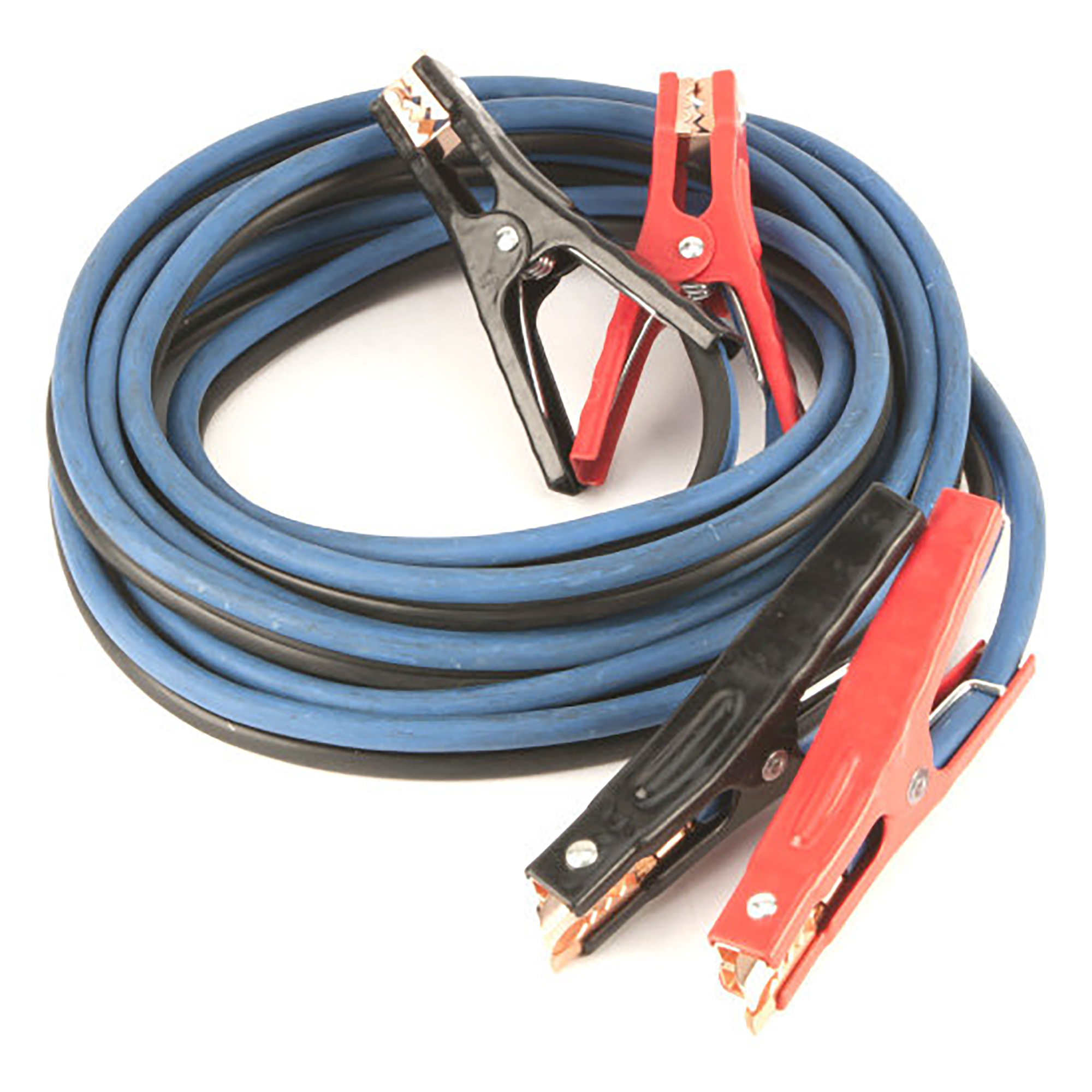
What this all means is that battery failure is common during the winter months. But a set of jumper cables is a smart item to include in your kit to make sure you aren’t stranded somewhere for long. After all, you should be able to find a friend or a Good Samaritan faster than waiting for Triple-A. Even if you know your battery is on its last legs, using those jumper cables to get it going will help you make it home (or to a garage) where you can work on a replacement.
We recommend utilizing a set of cables at least 20’ in length, as you really can never predict how your Jeep will end up should the battery fail, and you may really need that extra cable length if the corresponding vehicle can’t get that close.
Additionally, if you’ve never used jumper cables before, you may want to understand how the process works before attaching and starting the engine.
Traction Boards
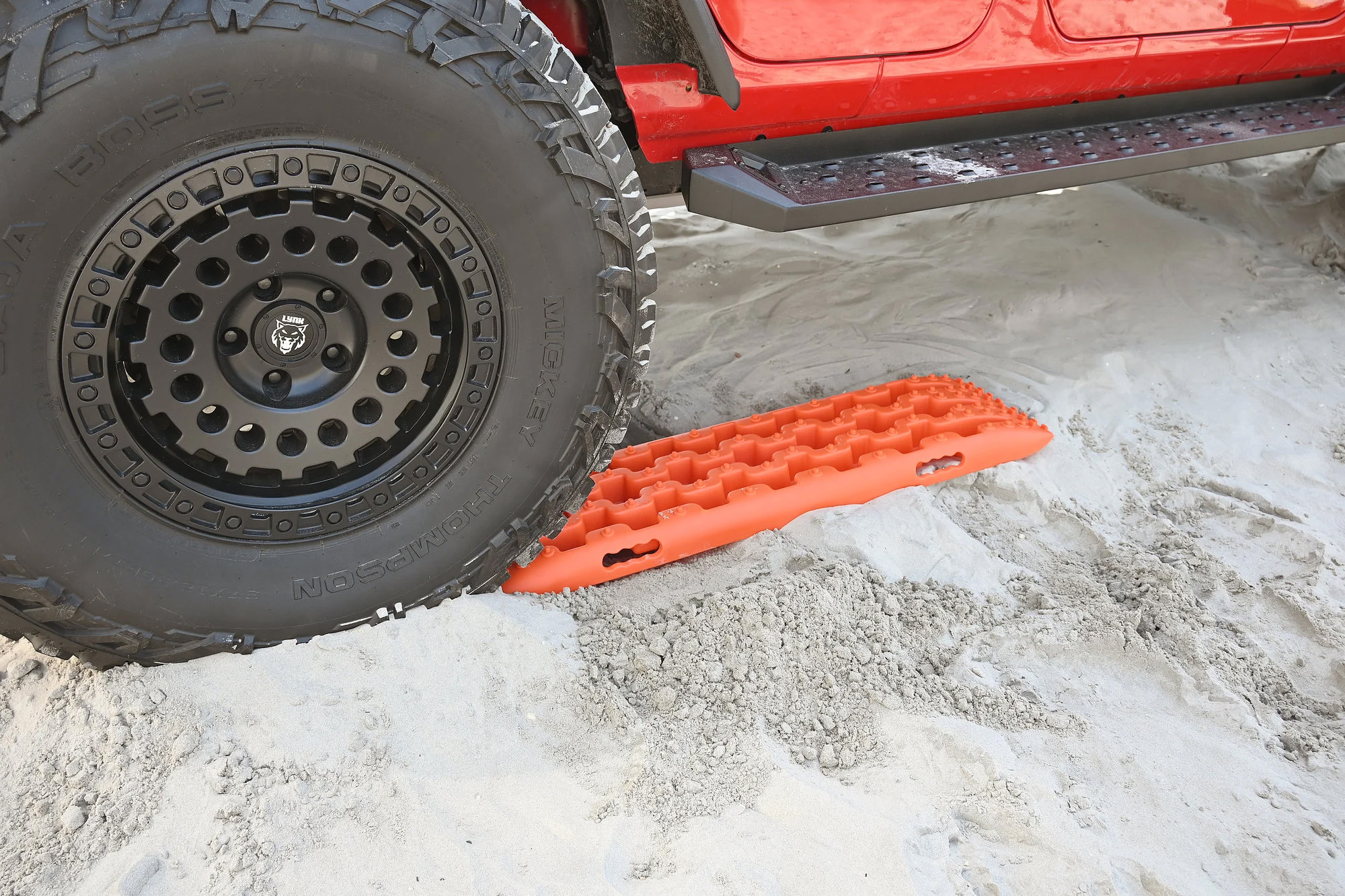
Drive or trail ride long enough in snowy, nasty weather, and you’ll most likely have some traction issue, causing you to spin your tires. And if you are stuck, the more you hit the gas to try and get free, the worse you’ll usually end up being stuck. Sure, having four-wheel-drive on the Jeep is helpful, but many times those wheels can dig themselves into a spot where you are just not getting out on your own.
So investing in a good set of traction ramps to augment your winter emergency kit is a solid plan. Unlike sand or cat litter, which can get mixed up in the snow and lose effectiveness as you try to escape, you can use traction ramps to help dig into the obstruction and then lay them down so your tires find the purchase they need.
Oh, and if you are newer to the Jeep world and are not sure how to use your vehicle’s four-wheel-drive system, it is definitely a good idea to learn the basics.
Recovery Kit
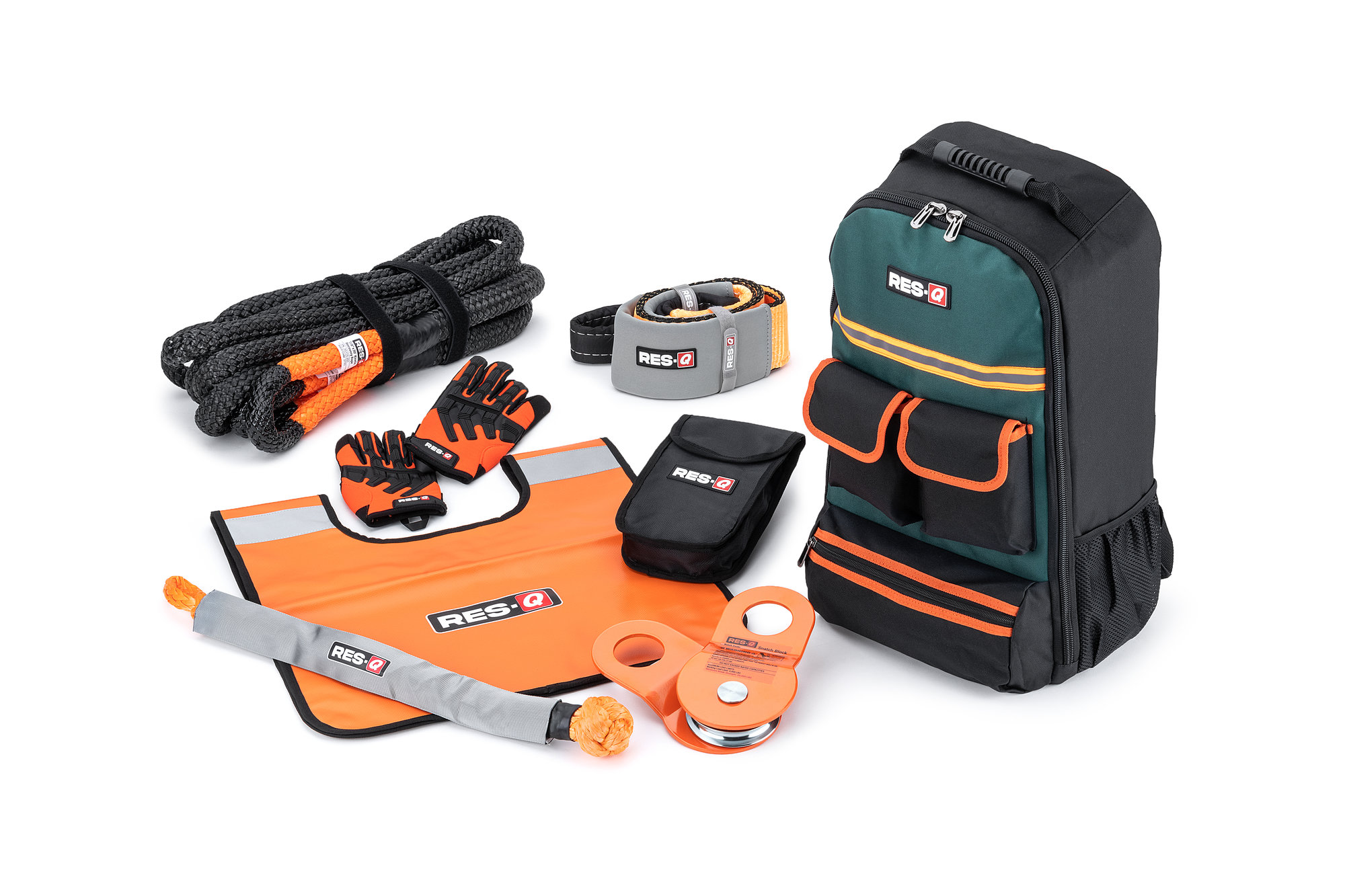
We really don’t need to mention that winter driving conditions can change in an instant. One minute you are cruising along fine, and the next you’ve hit something slippery and spun sideways into a ditch. Things happen. But like we’ve said, success in this situation depends on your preparation. In this case, it means having some good recovery products as part of your winter emergency kit.
These items can include protective gloves, tow straps, D-rings, snatch blocks and a tree truck protector. Most, or all, of these items will be packaged in inclusive recovery kits that also include a handy storage bag so everything isn’t strewn across your vehicle’s cargo area. These items won’t help stop you when snow or ice bumps you off the trail. But they certainly can help get your Jeep moving again after a minor emergency.
Flashlight
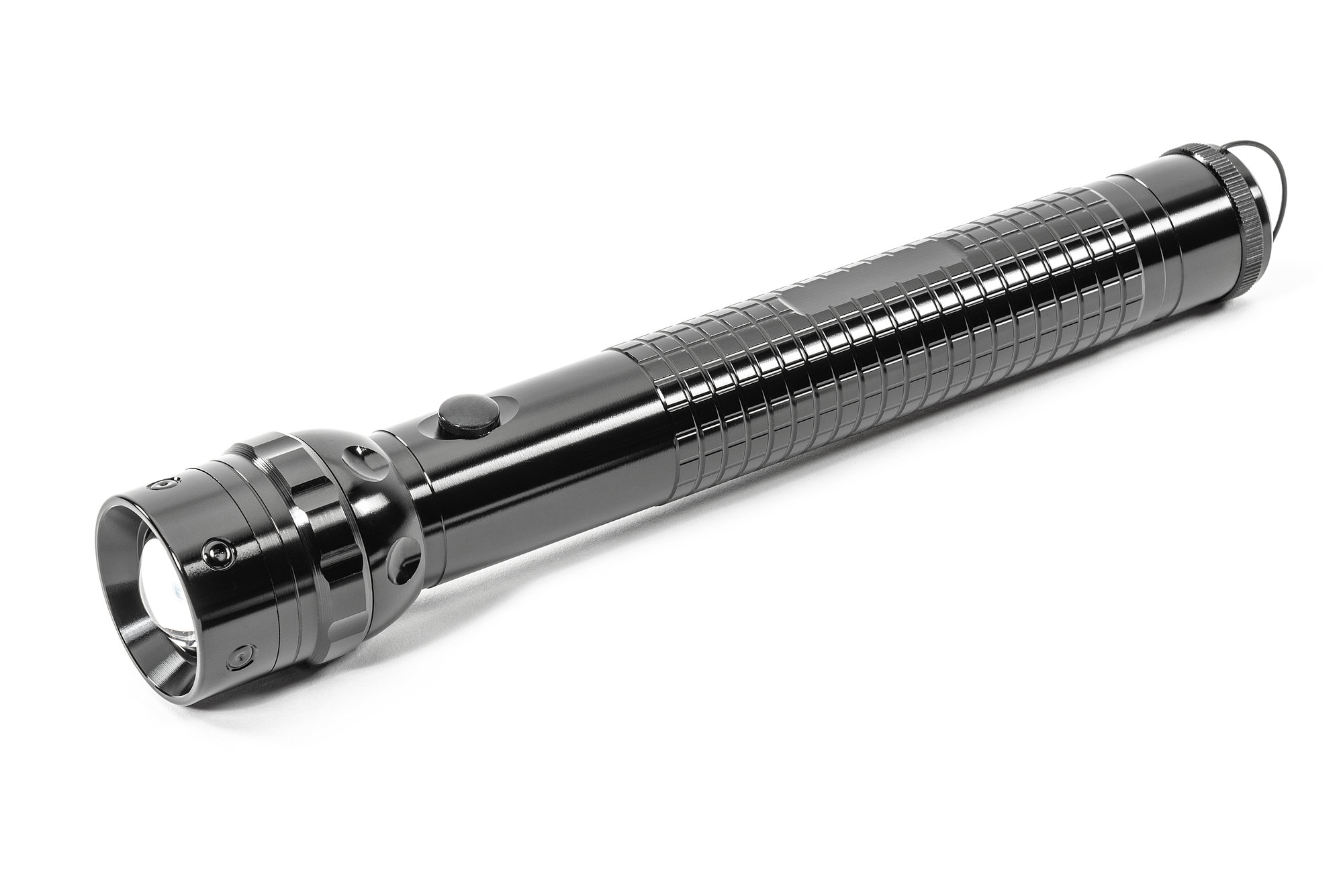
A working, reliable flashlight isn’t really something just for winter, as it should be somewhere inside your vehicle throughout the year. But it definitely makes the most sense now, when days are shorter and darkness seems to be a constant companion. Additionally, a durable, well-powered flashlight can be helpful at any time because you won't always have perfect light conditions when you are changing a tire or peering inside that engine bay.
Now, we’re not talking about some little keychain light or one of those weak-beamed dollar store versions, but a solid LED flashlight with a good lumen count behind it. That’s right, LED. These generally last longer than incandescent versions and still retain plenty of power even as the batteries fade. Still, it is always a good idea to pack a few spare batteries.
Tire Repair Kit
It should go without saying, but your Jeep’s tires are the only link it has to the road or trail. When that link is broken or damaged—when stuff like nails or other road debris gets sucked up and implanted in your tires—then a flat (at best) or an accident (at worst) can happen. Also, vehicles with severely low tire air pressure will see reduced gas mileage and are at a greater risk for other issues like tread separation because of added heat from road friction. See, winter temperatures can change dramatically day to day, and when that happens, tires can lose about one psi per 10 degrees. This pressure loss can accumulate quickly and cause those issues if left unaddressed.
So, to help provide peace of mind when driving, you can use some good tire safety measures before you even get into the vehicle during the colder winter months. A proactive Jeep walk-around can quickly identify potential problems, such as a flat or low tire pressure. However, without the proper tools, you won’t really be able to do anything about either. Sure, you can head to the local gas station if your tire is low on air, but that doesn't address the cause. Also, what if the tire is flat? Are you willing to risk rim damage trying to make it to the air filling station?
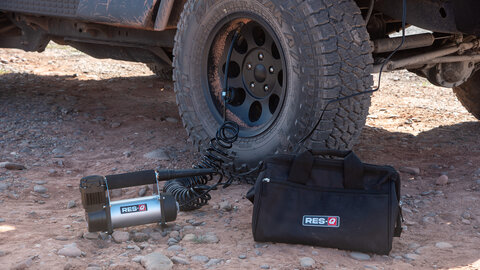
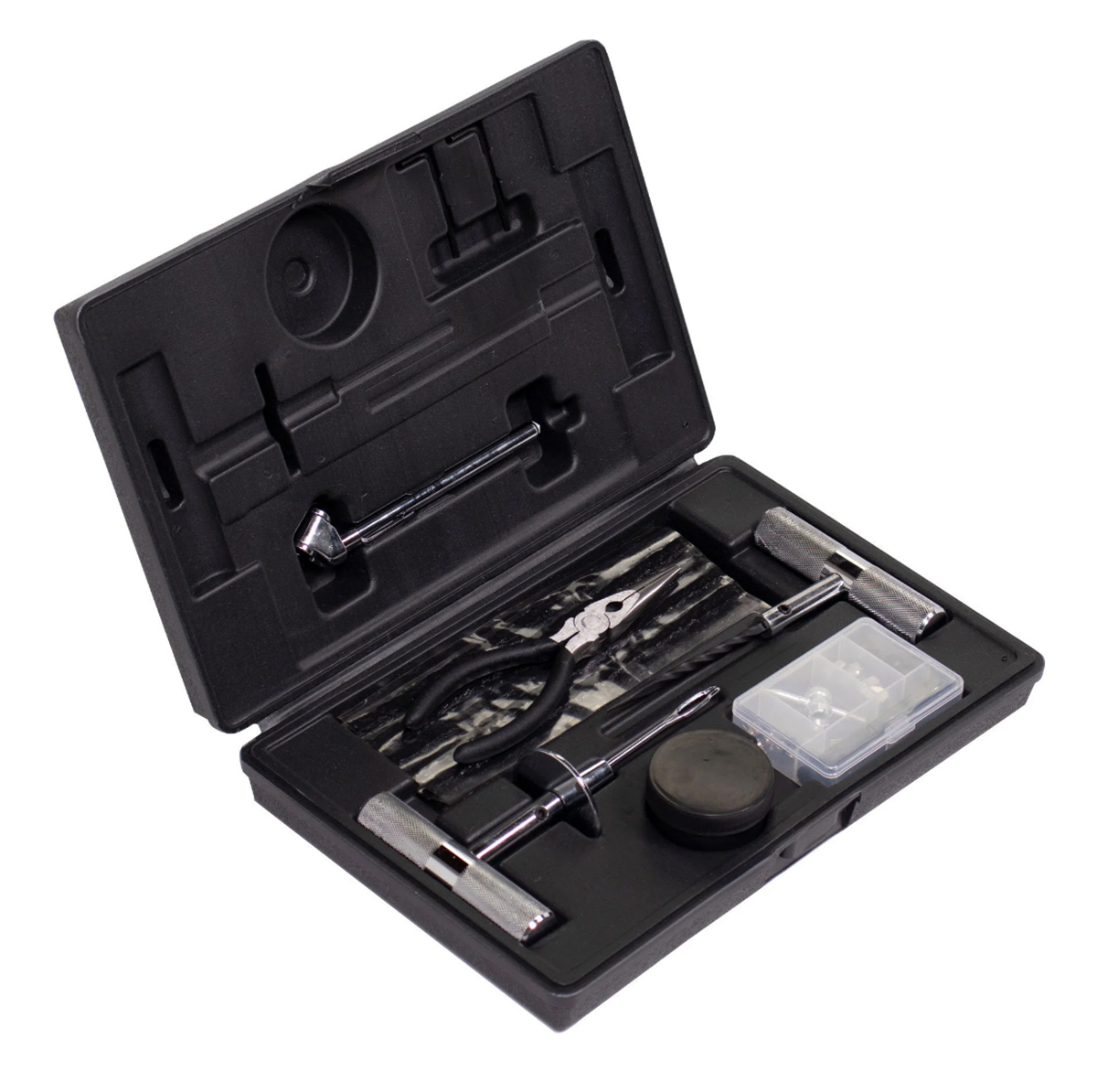
The best way to handle finding a nail or other debris in your tire is to have a solid tire repair kit handy. Add in an air compressor, and you have the perfect solution to plug the issue, as well as air up to the proper pressure. Most tire repair kits include a tool to remove the offending debris, a reamer to bore into the tire and clean up the hole, and an insertion needle and rubber repair cords to seal the area. If you are unsure how those kits work, here is a breakdown on tire kit use.
Sometimes, though, you can't avoid changing out a tire after it is damaged. It could be a bent rim causing the problem, or a sidewall issue on the tire that is not fixable. When in doubt, it is always wise to swap to your spare. For that to happen, you also need a high-strength jack and lug wrench included in your winter Jeep emergency kit. Carrying a larger jack like the Hi-Lift series or ARB Jack is definitely important if you have added a lift kit or larger tires, as the factory jack may not have enough reach. And then, of course, you won't be able to remove that tire, or the spare, without a lug wrench.
Tools
Sure, you can dial for roadside help should something happen when you are out driving this time of year. But, really, who knows how long it may take before help arrives. Plus, if you are on the trail, that service may cost a bunch of money. So instead, make sure to add some quality tools to your winter emergency kit, because many small issues can be solved before they become larger ones by having the right tools.
Perhaps it is to secure a bumper or hitch that has somehow come loose. Or maybe it is something inside the engine bay, like a cooling issue or battery, that needs to be addressed. Even something that happened on the trail, like a busted driveline part. You don't have to be a master mechanic to use these things either, as any fixes do not need to be permanent; just something adequate to get you back to the trailhead, or home and out of the elements, so you can more adequately correct the problem.
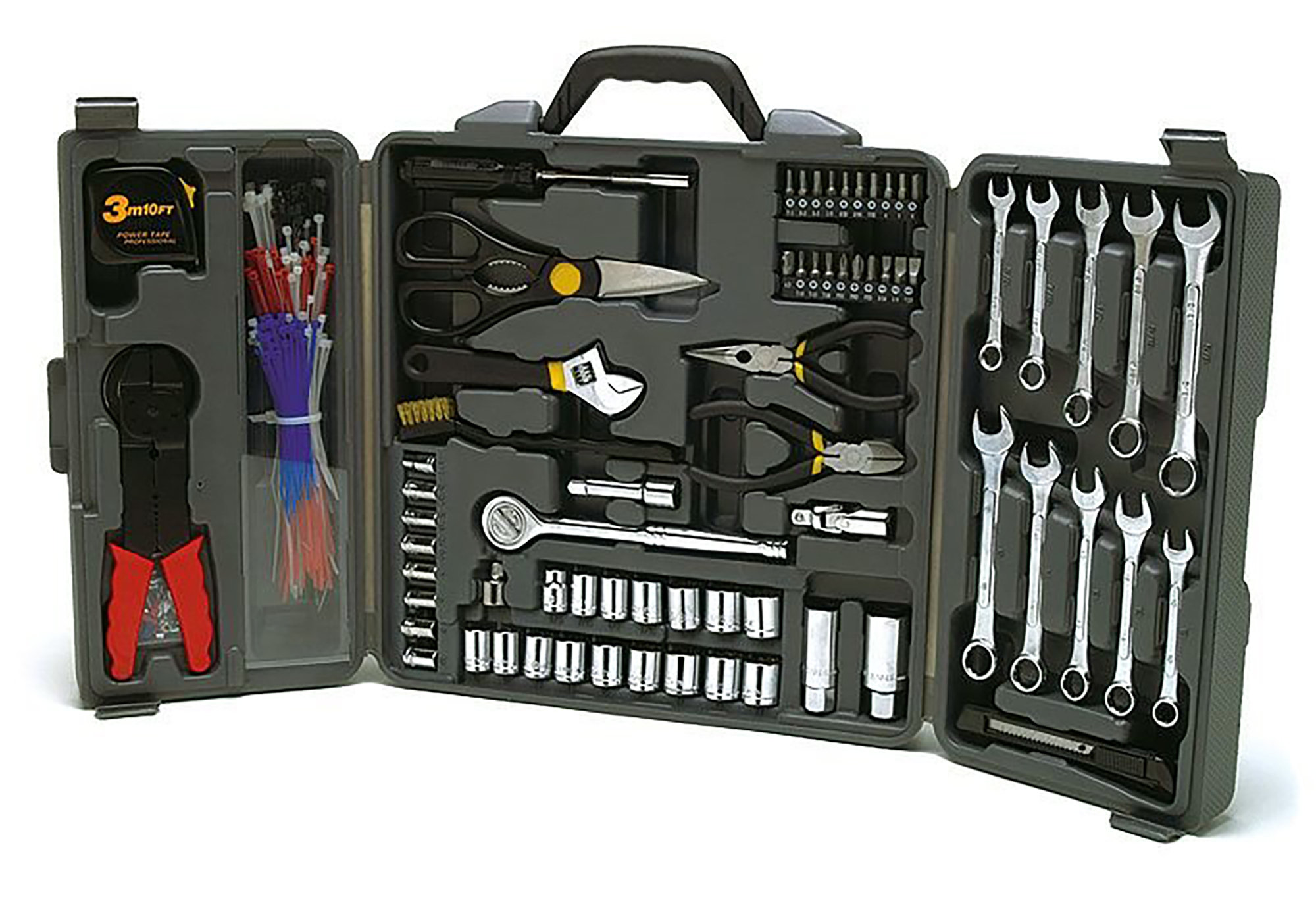
You also do not need to bring along a whole mechanics tool chest, air tools, or other high-powered accessories. Something like a 125- or 256-piece tool kit can ensure you have exactly what you need when you need it. Stuff like good, solid wrenches, Torx bits and sockets that can take on most situations.
Shovel
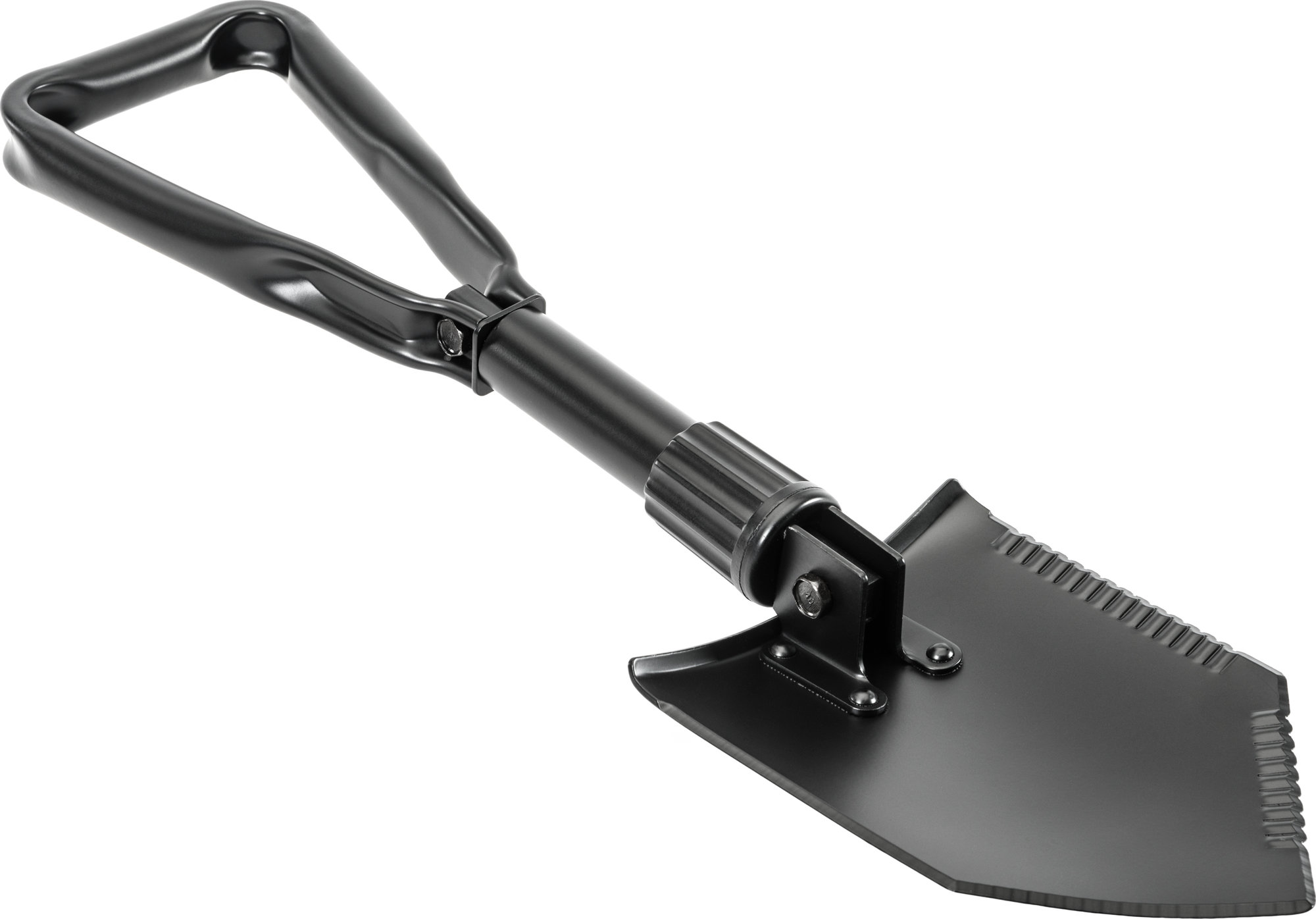
You’ve probably never tried clearing snow from the driveway or porch with just your hands, right? That’s what shovels do best. And just like you may keep one in your garage, you can also keep a smaller, folding shovel in your winter emergency kit. It makes removing snow, mud, or other debris around your tires much easier. Plus, because they do fold up nicely, they won’t take up much storage room at all. Additionally, many come with a serrated edge that is designed for cutting, should you need to perform any trail maintenance during a recovery.
First Aid Kit
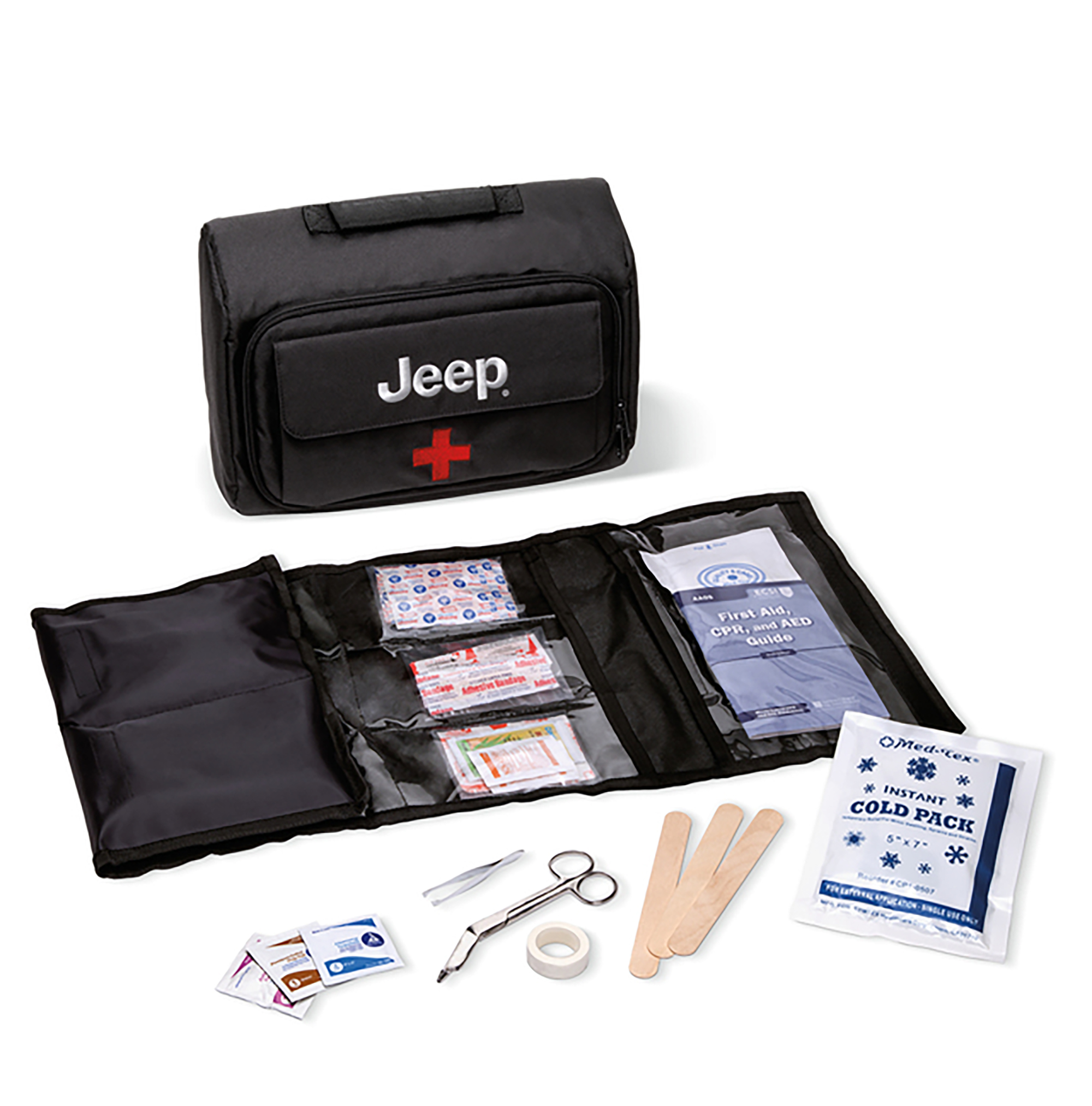
There are no guarantees that a winter accident, no matter how minor, will keep you or other riders free from injury. Or that your trail repairs will go off without cuts and bruises. So when something like that happens, then making sure you’ve packed a good, basic first aid kit can help ensure small injuries don’t turn into something a bit more major.
An inclusive first aid kit should involve items like ice packs, gauze pads, alcohol wipes, bandages, first-aid tape, tongue depressors, vinyl gloves, antiseptic wipes, scissors and tweezers—all grouped together inside an easily accessible storage bag so you aren’t looking here or there for what you need. Also helpful would be an instruction kit with basic first-aid tips for anyone who may be performing the treatment.
Fridge Freezers
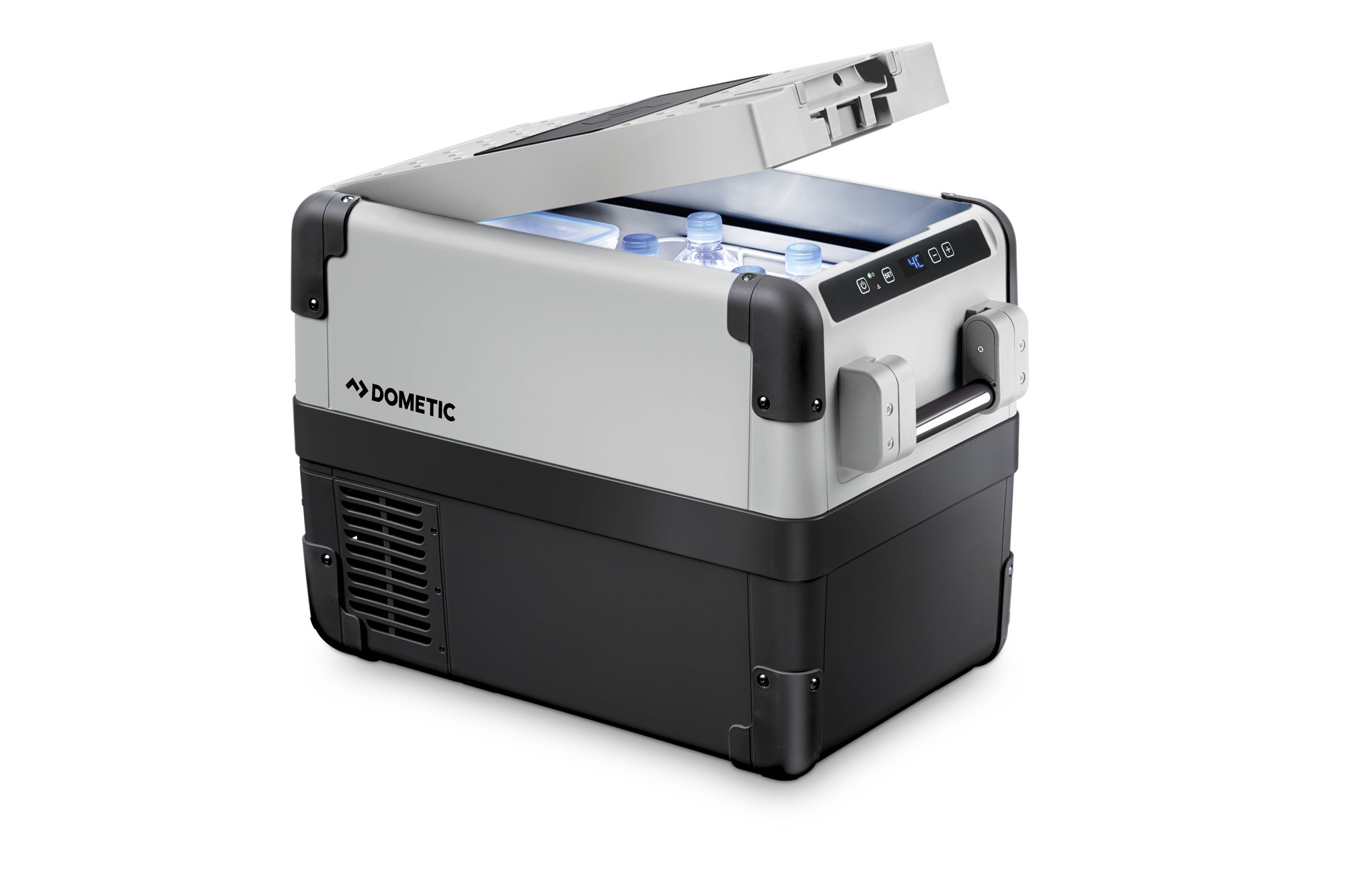
One of the smartest things you can add to any winter emergency kit is bottled water and food. Now, if you are planning an off-road adventure, then you may already know how to do this, but it also applies to your everyday excursions as well. This way, should you find yourself on the side of the road for any length of time, you’ll have what you need to tide you over until help arrives or you can fix the issue. And what better way to store those items than inside a fridge freezer or cooler.
By adding this kind of storage device, you are doing more than simply making sure those bottles of water aren’t rolling around on your Jeep floor. You are sealing them inside a properly insulated unit that will keep them cold until needed. Same with any food you prepare, such as lunch or dinner for your day (or longer) off pavement. Most fridge freezers are temperature-controlled, which helps prevent spoilage, and many have compartments where you can safely store food.
Non-electric coolers can still work well as a storage device, albeit for a shorter amount of time. These units can keep ice from melting for a few days, so they do make an excellent alternative to powered fridge-freezers during shorter trips, or as an overall storage unit. Plus, they will comfortably sit in the cargo area, or on the rear bench seat if you aren’t bringing along any passengers. Just remember to regularly change out any unused perishable food items.
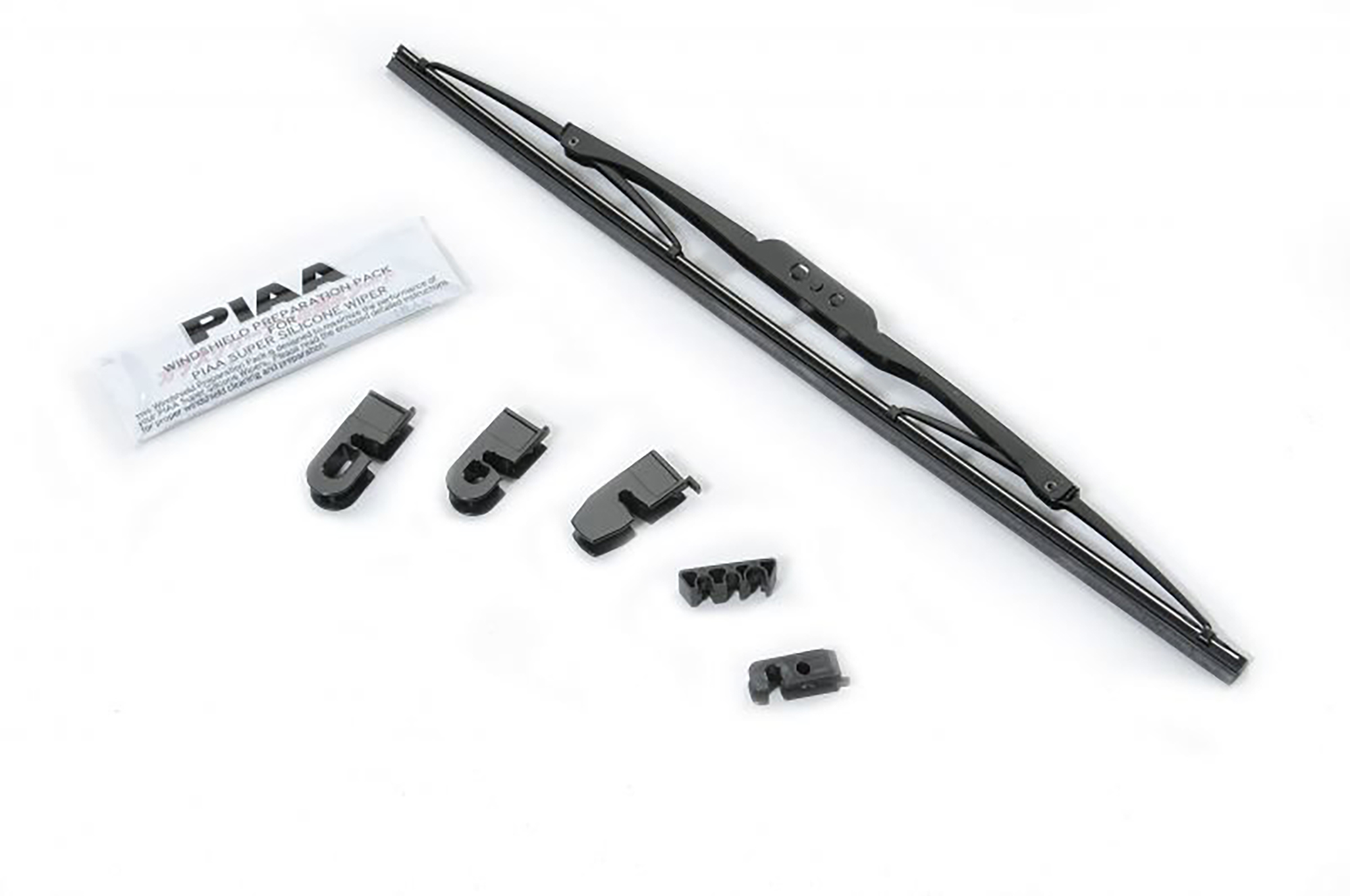
Wipers And Washer Fluid
The cold winter months are a perfect time to check the viability of your Jeep’s wipers. That’s because oven-like summer heat may have dried out that wiper rubber and seriously reduced its effectiveness. A set of new wiper blades, even ones specifically designed for winter conditions, can provide peace of mind so that no amount of road salt, snowmelt, or other debris will affect your visibility. Additionally, as you check those wipers, lift the hood and check your wiper fluid level. You’d be surprised how quickly that fluid can disappear this time of year. So definitely replace that wiper fluid as needed.
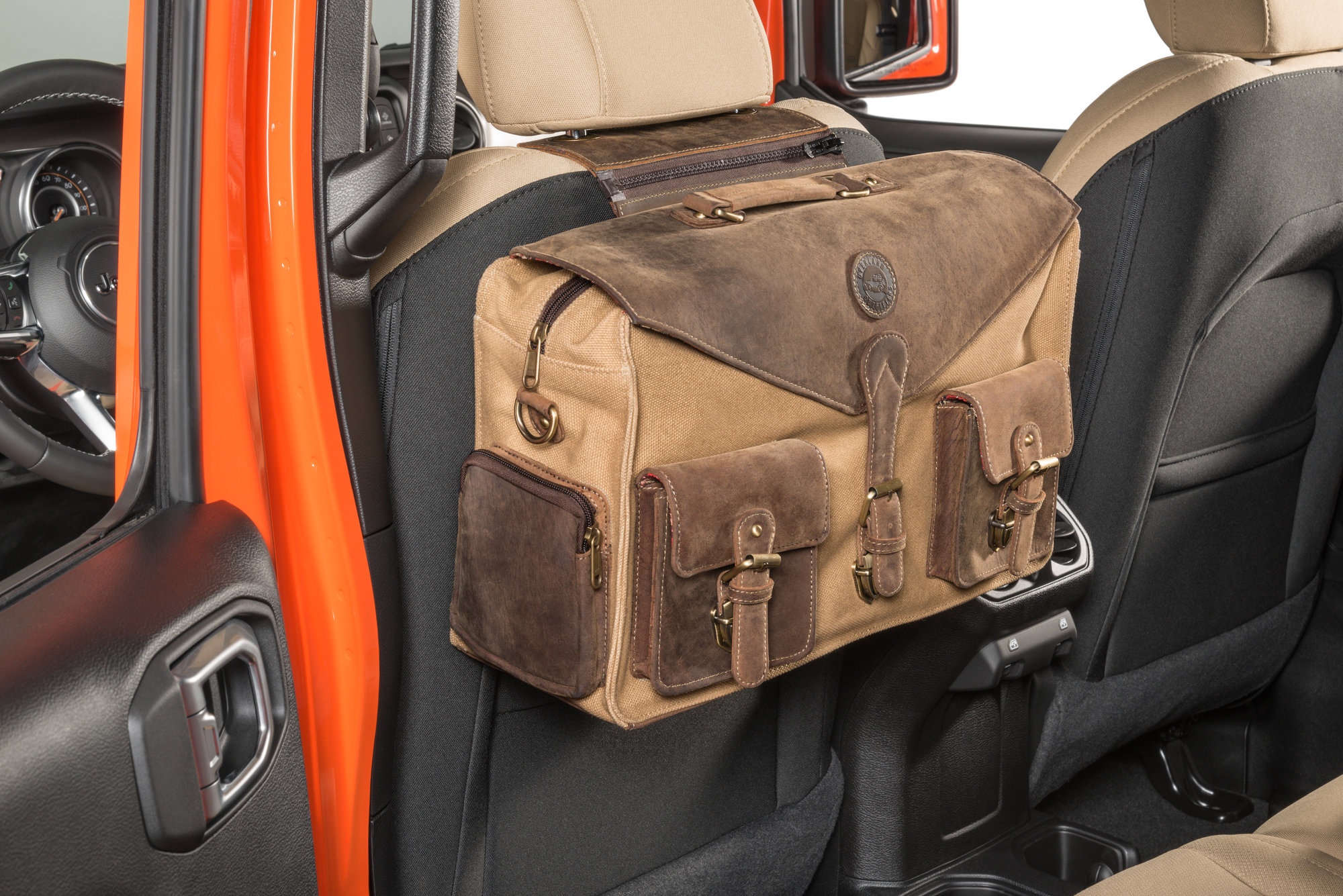
Storage
Just like food and beverages are important to add to any winter emergency kit, so are clothing items. We’re talking an extra set of clothes, socks, gloves and blankets. Nothing can make for a more miserable side-of-the-road experience than having to deal with wet or dirty clothes because you got snow or mud all over yourself when changing a tire or sliding under the vehicle. Even if you remain dry, though, having spare blankets for warmth makes sense if there is no power in the Jeep.
But we all know storage space is at a premium in these vehicles. And while the four-door versions have increased storage capacity, you can still run out of room when adding extra clothes and such to your cargo. So an excellent option that helps create more space is things like Underseat Storage and Storage Bags.
Underseat storage compartments are metal units that fit under either your driver or passenger seat, have slide-out drawers you can use to safely store items, and are lockable as well for an extra layer of security in case you are stashing anything of value.
Storage bags may not be lockable, but they can turn places like your rear roll bar area, or seat backs, into serviceable storage for your extra clothing. Some bags can even connect to the inside of your tailgate. Many of these bags are constructed from weather-resistant ballistic nylon or polyester, marine-grade vinyl, or reinforced nylon for durability. And they come in a variety of sizes, so you can customize your storage solutions how you like.
Recommended Reading:
Merry Jeepmas Day One: Are Jeeps Good In The Snow?
Merry Jeepmas Day Two: Top Ten Best Ways To Winterize Your Jeep