















by Matthew Konkle
Managing Editor
No matter which television channel you choose to watch, you’re bound to run across one of those Jeep advertisements. You know the one we mean.
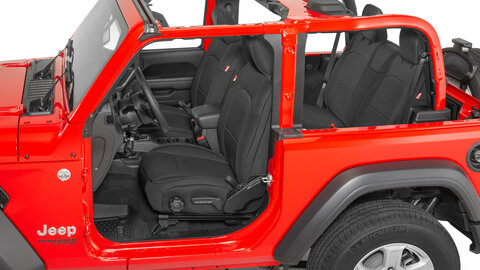
The one where that Wrangler top is reclined back, hair is blowing, and, more importantly, the doors are off, and the entire cabin is exposed to open air.
It’s one of the best things that makes owning a Jeep Wrangler or Gladiator special. That freedom to take it apart. Roof off. Doors off. Wind in your face and nothing but Mother Nature between you and the trail.
But after the initial excitement of removing those doors comes the question many owners eventually ask:
Where exactly do you put them?
Jeep doors aren’t small, light, or cheap pieces of equipment. They’re awkward to carry, easy to scratch, and expensive to replace if something goes wrong. Whether you’re taking them off for a weekend drive or leaving them off all summer, finding a safe place to store them is essential.
So, here are some of the most common and practical ways you can store those doors when they’re not on the vehicle.
Why Proper Door Storage Matters
Before diving into the options, it is worth understanding why door storage deserves some thought.
Jeep doors contain wiring, glass, paint, and trim that can easily be damaged if they’re simply leaned against a wall or left on the garage floor. Scratches, bent hinges, and broken mirrors are common problems when doors aren’t stored properly.
A good storage solution helps protect painted surfaces from scratches, prevents doors from tipping or falling, keeps wiring connectors and hinges safe, and makes reinstalling the doors easier.
With that in mind, Jeep owners typically choose between three main types of storage solutions.
Wall-Mounted Door Storage
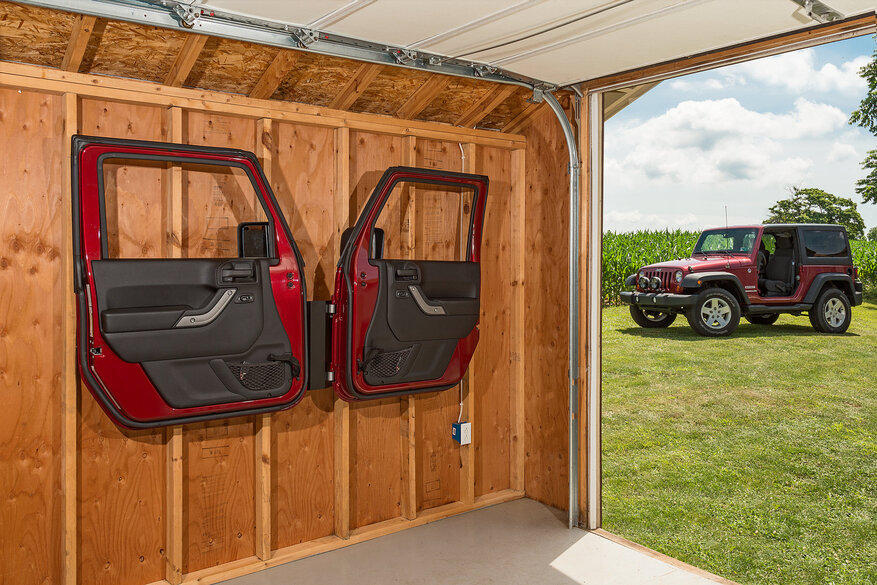
For many Jeep owners, wall-mounted storage brackets are one of the cleanest and most efficient solutions.
These systems mount directly to the wall of a garage or workshop and allow the doors to hang securely off the ground. The hinges slide onto hooks or brackets designed specifically to support the door’s weight.
The advantages are pretty clear. They keep doors safely off the floor, save garage space, reduce the chance of accidental damage, and keep doors organized until it is time to reinstall.
Wall mounts work especially well for owners who remove their doors frequently or plan to leave them off for extended periods. Once installed, they make taking doors on and off part of the routine instead of a juggling act.
The only real requirement for these storage brackets is having a suitable wall space and secure mounting points.
Rolling Door Storage Carts
If permanent wall mounting isn’t ideal, a rolling door storage cart can be another great option.
These carts are designed to hold multiple Jeep doors upright in padded slots while allowing you to move them around your garage easily. Many include casters so the entire rack can roll out of the way when not in use.
Rolling carts are particularly useful for those with smaller garages where space needs to stay flexible, owners who want to move doors between storage areas, and situations where wall mounting simply isn’t possible.
Another benefit is that carts typically store the doors vertically with padding between them, reducing the risk of scratches or pressure on the glass.
For Jeep owners who frequently swap between doors-on and doors-off setups, the mobility of a cart can make the process much easier.
Door Storage Bags and Covers
Sometimes the simplest solution works out best for people. And door storage bags or padded covers are easy to work with, wrapping around each door individually to protect the paint and glass during storage or transport.
These are an excellent choice for Jeep owners who remove doors seasonally rather than frequently, store doors in basements, sheds, or storage rooms, and transport doors to events or trail rides.
While bags don’t physically hold the doors like a rack or wall mount, they provide a layer of protection that prevents scratches and helps keep dirt and dust off the finish. They’re also useful when combined with other storage solutions, such as stacking doors on shelves or leaning them against padded surfaces.
A Few Helpful Door Removal Tips
If you plan to remove your doors regularly, a few simple habits can make the process easier and safer.
First, always disconnect wiring harnesses carefully and avoid pulling on the cables themselves. Jeep door wiring connectors are durable but not indestructible.
Second, consider marking the doors (front left, front right, etc.) if you plan to store them for long periods. While most owners can tell them apart easily, this method saves time when reinstalling them later.
Finally, remember that Jeep doors are heavier than they look. Having a second person help during removal can prevent accidental drops or chipped paint. Also, think about investing in some Delrin Replacement Door Hinge Bushings to press into the exposed hinge pin. These make door removal and re-attachment much easier.
Keeping the Doors-Off Lifestyle Easy
The ability to remove the doors is part of what defines the Jeep experience. It’s a feature that turns everyday drives into something more memorable. Especially once the weather warms up.
But like any removable component, those doors need a safe place to go once they come off.
Whether you choose a wall-mounted system, a rolling storage cart, or protective door bags, having a dedicated storage plan helps protect your investment and makes reinstalling the doors quick and easy when the time comes.
Because as every Jeep owner eventually learns, the doors-off season never lasts quite long enough, and when it’s time to put them back on, you’ll be glad they’ve been stored the right way.
Related Jeep Guides, Tips & Trail Advice:
The New Jeep Owner’s Handbook: What You Need to Know From Day One